Back to Toursटूर पर वापस
145 – 66 Million Years Ago 14.5 – 6.6 करोड़ वर्ष पूर्व

Cretaceous क्रेटेशियस

The final and most dramatic chapter of the dinosaurs. From T-Rex to the asteroid that ended it all. डायनासोरों का अंतिम और सबसे नाटकीय अध्याय। टी-रेक्स से लेकर उस क्षुद्रग्रह तक जिसने सब समाप्त किया।

Cretaceous Ambience
क्रेटेशियस परिवेश
Background theme
Background theme
📅79MYears Longवर्षों की अवधि

The longest Mesozoic period — 79 million years of continuous dinosaur evolution.

सबसे लंबा मेसोज़ोइक काल — 7.9 करोड़ वर्षों का निरंतर विकास।

🌡+4°CWarmer Than Todayआज से अधिक गर्म

Global average 4–10°C higher. No polar ice caps anywhere on Earth.

वैश्विक औसत 4–10°C अधिक। पृथ्वी पर कहीं भी ध्रुवीय बर्फ नहीं।

🦖700+Species Knownज्ञात प्रजातियाँ

Peak dinosaur diversity. More species than any other period.

डायनासोर विविधता का शिखर। किसी भी अन्य काल से अधिक प्रजातियाँ।

☄️10kmAsteroid Diameterक्षुद्रग्रह का व्यास

The Chicxulub impactor. Its crater is 150km wide and still exists.

चिक्सुलब प्रभावक। इसका गड्ढा 150 किमी चौड़ा है और आज भी मौजूद है।

145M

When giants walked a familiar worldजब दिग्गज एक परिचित दुनिया में चले

The Cretaceous Period spans from 145 to 66 million years ago — a staggering 79 million years. To put that in perspective: the gap between T-Rex and us is almost as large as the entire Cretaceous Period itself. By the start of the Cretaceous, the Atlantic Ocean was young and growing. India was a lonely island racing northward. The world was becoming recognisable — and the dinosaurs were thriving in it.

क्रेटेशियस काल 14.5 से 6.6 करोड़ वर्ष पूर्व तक फैला है — एक आश्चर्यजनक 7.9 करोड़ वर्ष। टी-रेक्स और हमारे बीच का अंतर लगभग पूरे क्रेटेशियस काल जितना बड़ा है। अटलांटिक महासागर युवा और बढ़ रहा था। भारत एशिया से टकराने की राह पर एक अकेला द्वीप था।

"The Cretaceous was the first period in Earth's history where the world looked anything like it does today — and it was ruled entirely by dinosaurs."

"क्रेटेशियस पृथ्वी के इतिहास में पहला काल था जहाँ दुनिया आज जैसी दिखती थी — और यह पूरी तरह डायनासोरों द्वारा शासित था।"
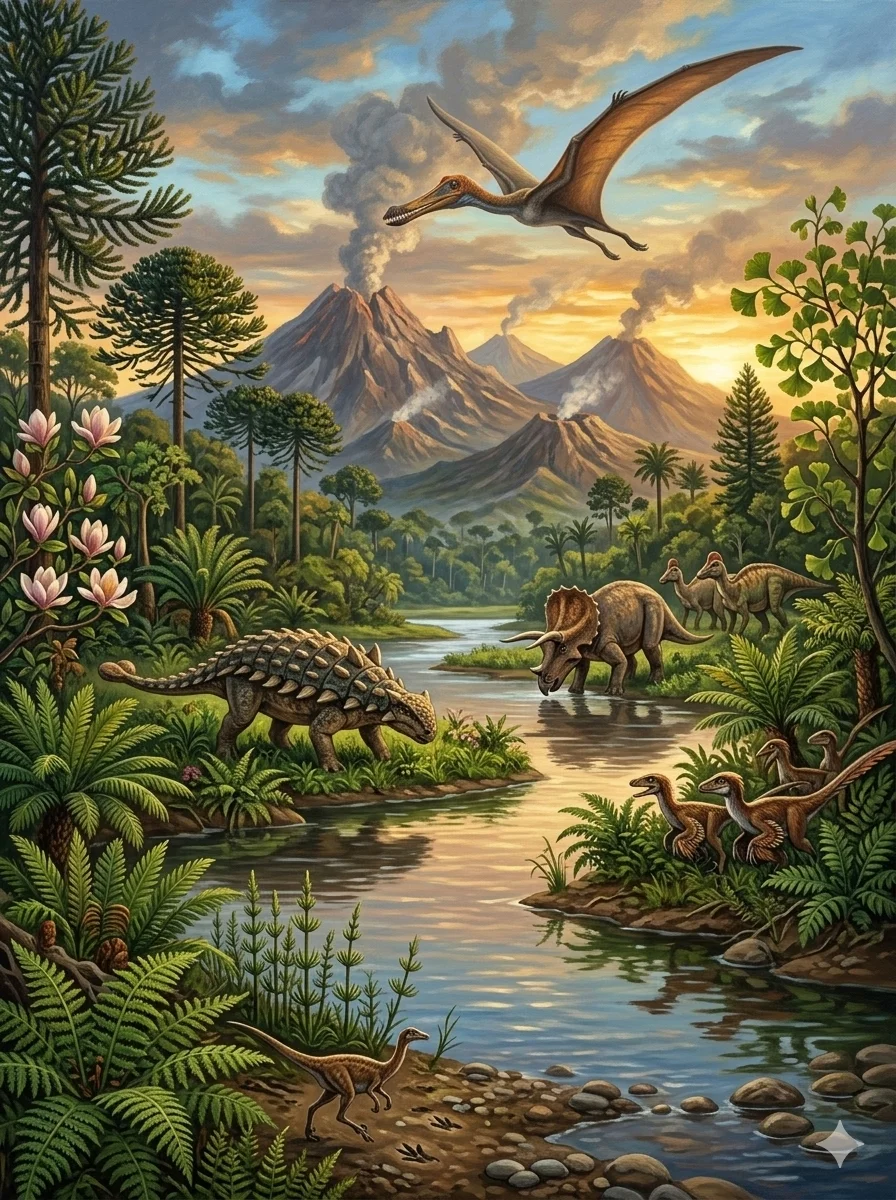
Cretaceous
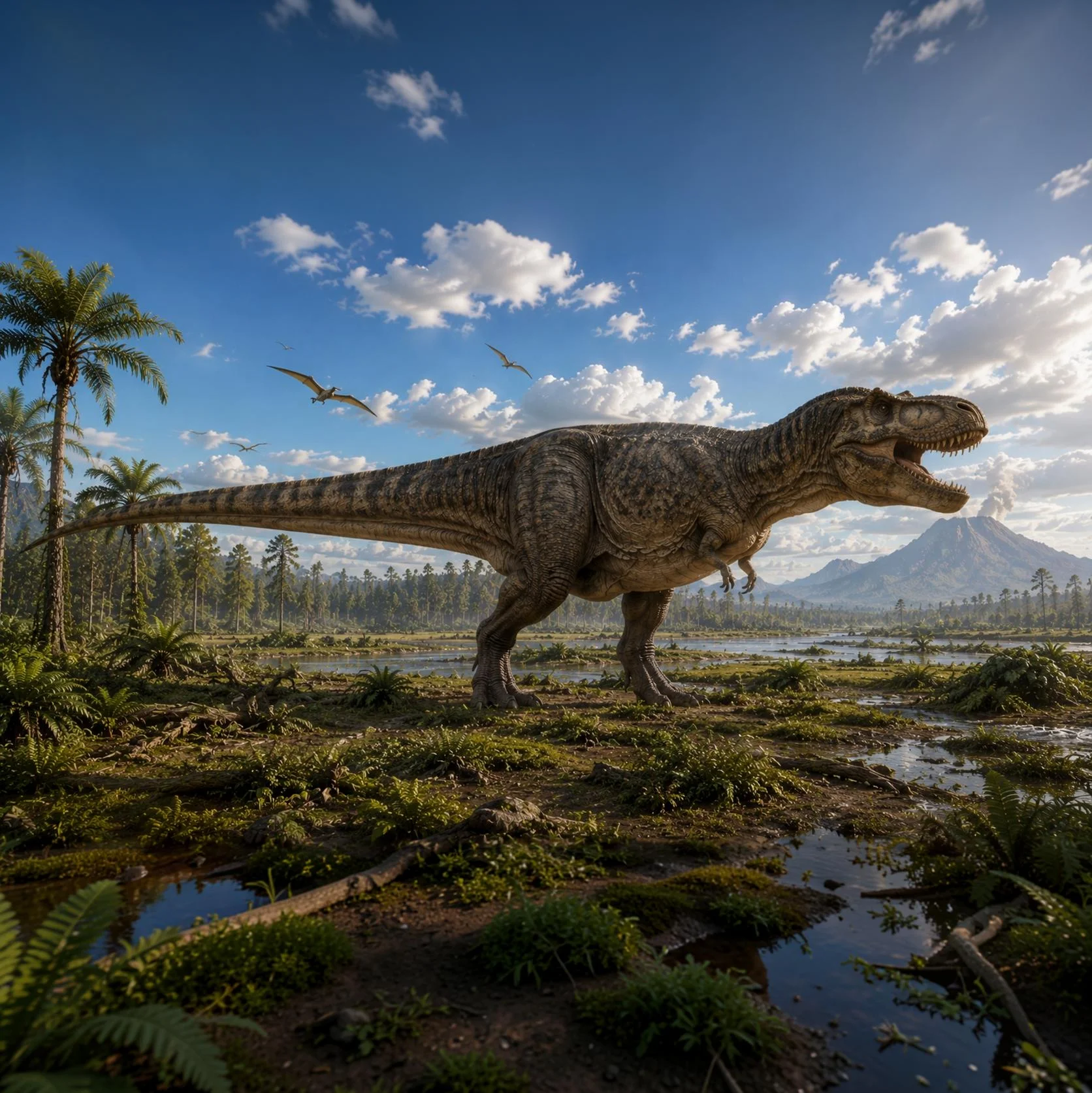
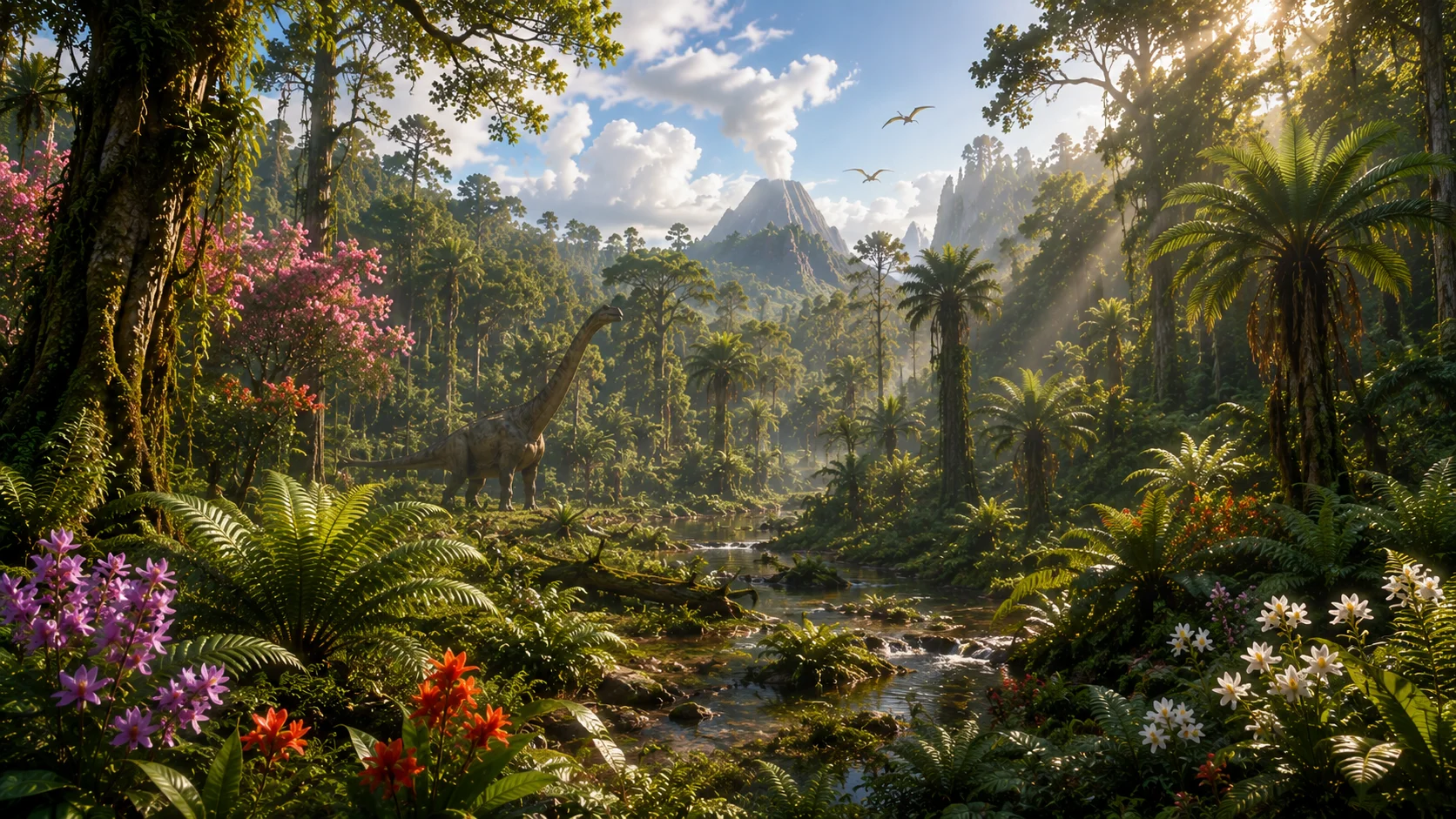
Artist's reconstruction of a Cretaceous landscape
क्रेटेशियस परिदृश्य का कलात्मक पुनर्निर्माण
145 Million Years Ago
14.5 करोड़ वर्ष पूर्व
Cretaceous Begins
क्रेटेशियस शुरू होता है

Giant sauropods decline. New, more diverse dinosaur groups emerge across every continent. The world is now split into separate landmasses, driving rapid independent evolution.

विशाल सॉरोपॉड घटते हैं। हर महाद्वीप पर नए, अधिक विविध डायनासोर समूह उभरते हैं।

130 Million Years Ago
13 करोड़ वर्ष पूर्व
Flowering Plants Appear
फूल वाले पौधे प्रकट होते हैं

Angiosperms evolve and spread globally. Bees, butterflies, and ants co-evolve alongside them. The world transforms from a fern-and-conifer landscape into one bursting with colour and fruit.

एंजियोस्पर्म विकसित होते हैं और विश्व में फैलते हैं। मधुमक्खियाँ, तितलियाँ और चींटियाँ उनके साथ सह-विकसित होती हैं।

100 Million Years Ago
10 करोड़ वर्ष पूर्व
Peak Dinosaur Diversity
डायनासोर विविधता का शिखर

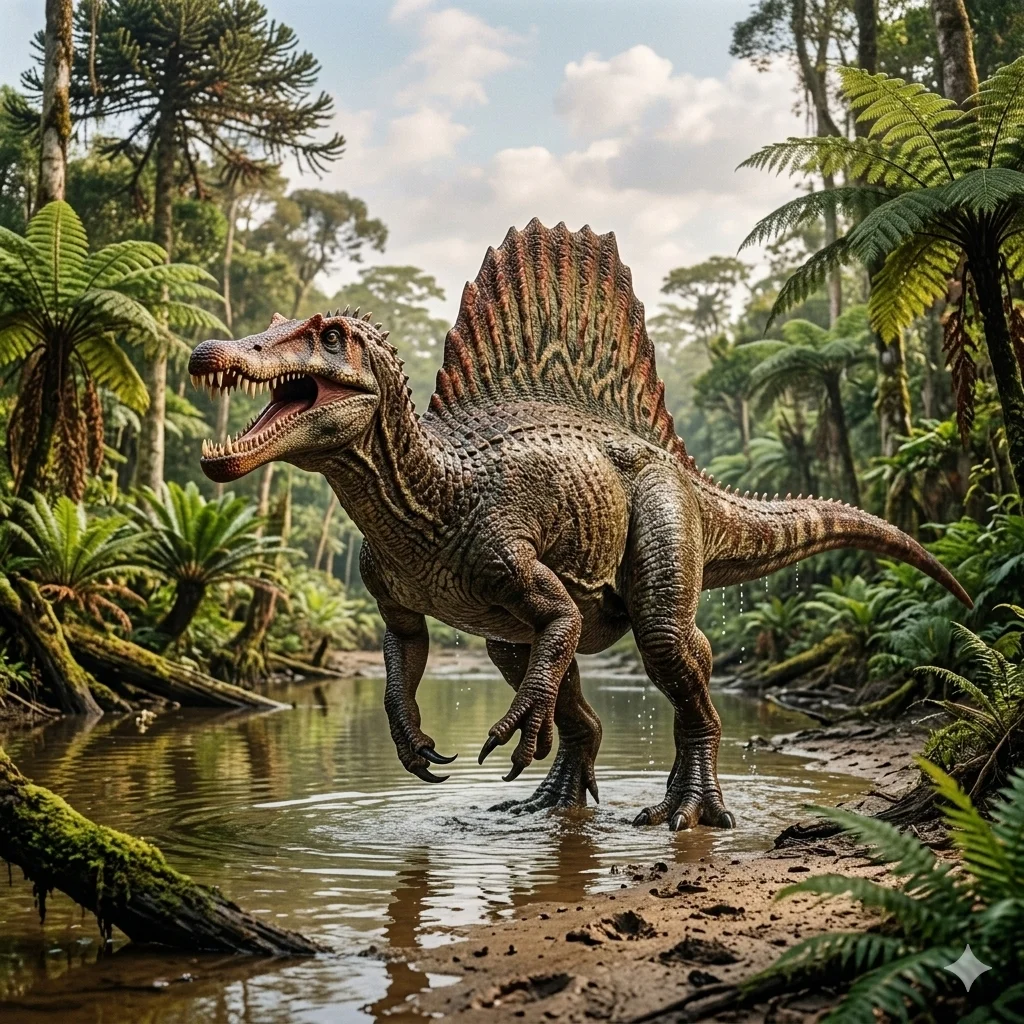
Over 700 known species. Spinosaurus rules African rivers. Ceratopsians evolve dramatic horns and frills. Hadrosaurs trumpet through vast herds. Raptors hunt with feathers and intelligence.

700 से अधिक ज्ञात प्रजातियाँ। स्पाइनोसॉरस अफ्रीकी नदियों पर राज करता है। सेराटोप्सियन नाटकीय सींग और फ्रिल विकसित करते हैं।

68 Million Years Ago
6.8 करोड़ वर्ष पूर्व
T-Rex at its Peak
टी-रेक्स अपने चरम पर

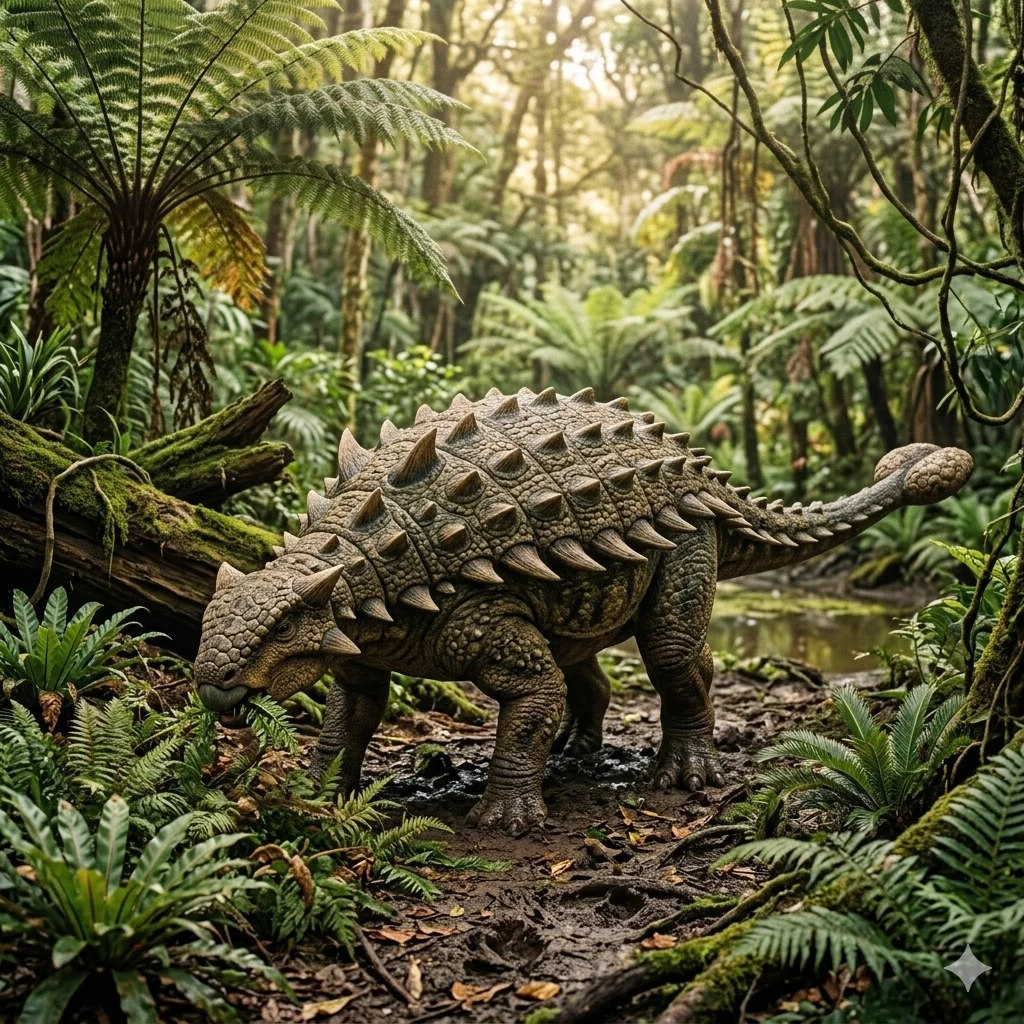
Tyrannosaurus Rex — the most powerful land predator ever — dominates western North America alongside Triceratops, Ankylosaurus, and herds of millions of hadrosaurs. The ecosystem is at its most complex and spectacular.

टाइरैनोसॉरस रेक्स — अब तक का सबसे शक्तिशाली स्थलीय शिकारी — पश्चिमी उत्तरी अमेरिका पर राज करता है।

66 Million Years Ago — THE END
Chicxulub Impact — Mass Extinction
चिक्सुलब प्रभाव — सामूहिक विनाश

A 10–15 km asteroid strikes Mexico. It releases 10 billion times the energy of Hiroshima. Mega-fires. Dust blocks sunlight for 1–2 years. Temperatures plummet. Photosynthesis fails. 75% of all species vanish. Every non-avian dinosaur is gone.

एक 10–15 किमी क्षुद्रग्रह मेक्सिको से टकराता है। हिरोशिमा से 10 अरब गुना ऊर्जा। धूल ने 1–2 वर्षों के लिए सूर्यप्रकाश अवरुद्ध किया। 75% प्रजातियाँ गायब। हर गैर-एवियन डायनासोर चला गया।
WARM
Cretaceous climate
Warm, humid Cretaceous forests stretched into what is now the Arctic
गर्म, आर्द्र क्रेटेशियस जंगल आज के आर्कटिक तक फैले थे

A world without ice — warm from pole to poleबर्फ रहित दुनिया — ध्रुव से ध्रुव तक गर्म

The Cretaceous climate was one of the warmest in Earth's entire history. Average global temperatures were 4–10°C higher than today. There were no polar ice caps — forests grew where Antarctica now sits. Shallow tropical seas covered vast areas of the continents, and the famous Western Interior Seaway split North America in two from the Arctic Ocean to the Gulf of Mexico.

क्रेटेशियस जलवायु पृथ्वी के पूरे इतिहास में सबसे गर्म में से एक थी। वैश्विक औसत तापमान आज से 4–10°C अधिक था। कोई ध्रुवीय बर्फ टोपियाँ नहीं थीं — जंगल वहाँ उगते थे जहाँ अब अंटार्कटिका है। पश्चिमी आंतरिक समुद्री मार्ग ने उत्तरी अमेरिका को दो भागों में विभाजित किया।

The most revolutionary development was the rise of flowering plants. They transformed every ecosystem — co-evolving with bees, butterflies, and fruiting plants — making the Cretaceous world the first that would look remotely familiar to our modern eyes.

सबसे क्रांतिकारी विकास फूल वाले पौधों का उदय था। उन्होंने हर पारितंत्र को बदल दिया — मधुमक्खियों, तितलियों के साथ सह-विकसित होते हुए — क्रेटेशियस दुनिया को पहली बार हमारी आधुनिक आँखों को परिचित बनाते हुए।

🌡Temperatureतापमान

Global average ~20–26°C vs today's ~15°C. Even Arctic regions had temperate forests with temperatures above freezing year-round. The equatorial belt was scorchingly hot and humid.

वैश्विक औसत ~20–26°C आज के ~15°C की तुलना में। आर्कटिक क्षेत्रों में भी शीतोष्ण जंगल थे। भूमध्यरेखीय पट्टी साल भर जलती हुई गर्म और आर्द्र थी।

🌧Rainfall & Seasonsवर्षा और मौसम

Abundant rainfall across most regions. Warm oceans drove intense monsoon systems. Seasonal patterns existed in inland areas, but no true winter — just cooler and warmer wet seasons.

अधिकांश क्षेत्रों में प्रचुर वर्षा। गर्म महासागरों ने तीव्र मानसून प्रणालियाँ चलाईं। आंतरिक क्षेत्रों में मौसमी पैटर्न, लेकिन कोई सच्ची सर्दी नहीं।

🌊Sea Levelsसमुद्र स्तर

100–200 metres higher than today. North America had a vast inland sea. Isolated landmasses drove rapid, independent evolution on each continent — creating unique dinosaur fauna on every major landmass.

आज से 100–200 मीटर ऊँचा। उत्तरी अमेरिका में एक विशाल अंतर्देशीय समुद्र था। अलग-थलग भूभागों ने प्रत्येक महाद्वीप पर तेज़, स्वतंत्र विकास को जन्म दिया।

🌺Flowering Plantsफूल वाले पौधे

Angiosperms replace ferns and conifers as dominant vegetation from ~130 MYA onward. Flowers attract bees and butterflies which co-evolve. Fruits appear for the first time — providing new, energy-rich food for small mammals and birds.

~13 करोड़ वर्ष पूर्व से एंजियोस्पर्म फर्न और कोनिफर को प्रमुख वनस्पति के रूप में बदल देते हैं। फल पहली बार प्रकट होते हैं।

🐝New Insects Evolveनए कीड़े विकसित होते हैं

Bees, ants, butterflies, and moths all evolve during the Cretaceous — the birth of pollination as we know it. The buzzing of bees is, quite literally, a Cretaceous sound that has lasted 130 million years.

मधुमक्खियाँ, चींटियाँ, तितलियाँ और पतंगे सभी क्रेटेशियस में विकसित होते हैं। मधुमक्खियों की गुनगुनाहट वस्तुतः एक क्रेटेशियस ध्वनि है।

💀Impact Winterप्रभाव शीतकाल

After the Chicxulub impact: billions of tonnes of dust and sulfur blocked sunlight for 1–2 years. Temperatures dropped 10–20°C. Photosynthesis failed globally within weeks. The food chain collapsed. 75% of all species vanished in under 10,000 years.

चिक्सुलब के बाद: अरबों टन धूल ने 1–2 वर्षों के लिए सूर्यप्रकाश अवरुद्ध किया। तापमान 10–20°C गिरा। हफ्तों में प्रकाश संश्लेषण विफल। 75% प्रजातियाँ 10,000 वर्षों से कम में गायब।

FOOD

An ecosystem of extraordinary eatersअसाधारण खाने वालों का पारितंत्र

The Cretaceous food web was the most complex in dinosaur history. Flowering plants created entirely new food sources — fruits, seeds, and nutritious flowering vegetation easier to digest than the tough conifers of earlier eras. Herbivores evolved increasingly specialised feeding equipment to take advantage.

क्रेटेशियस खाद्य जाल डायनासोर इतिहास में सबसे जटिल था। फूल वाले पौधों ने पूरी तरह नए खाद्य स्रोत बनाए — फल, बीज और पौष्टिक फूलों वाली वनस्पति।

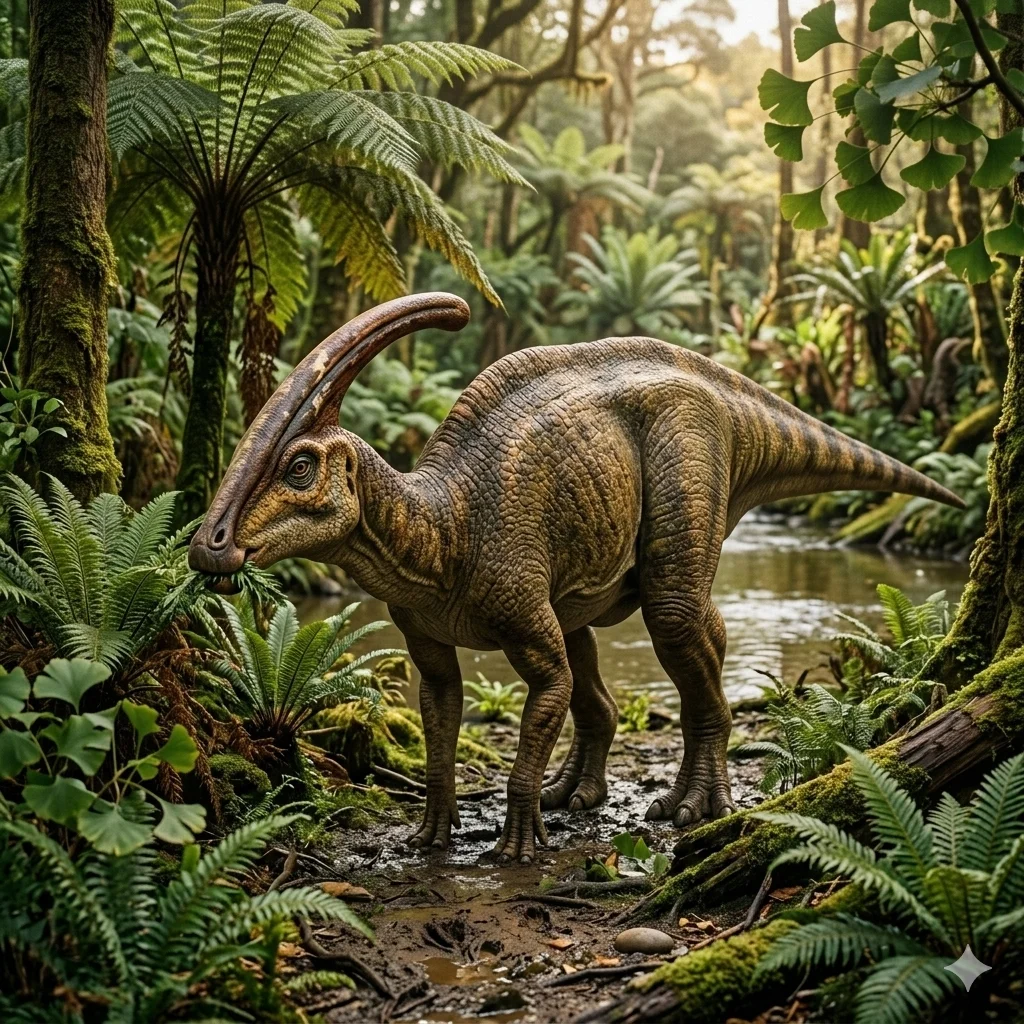
Hadrosaurs evolved dental batteries of up to 1,000 self-replacing teeth — the most sophisticated teeth of any vertebrate ever. Ceratopsians developed shearing beaks to crop tough shrubs. Titanosaurs swept entire treetops. And at the apex, T-Rex commanded the food chain with 57,000 Newtons of bite force — enough to crush a car roof — and the ability to consume 230 kg in a single feeding.

हैड्रोसॉर ने 1,000 तक स्व-बदलने वाले दाँतों की दंत बैटरी विकसित की। शीर्ष पर टी-रेक्स ने 57,000 न्यूटन की काटने की शक्ति के साथ खाद्य श्रृंखला पर नियंत्रण किया।

Cretaceous feeding
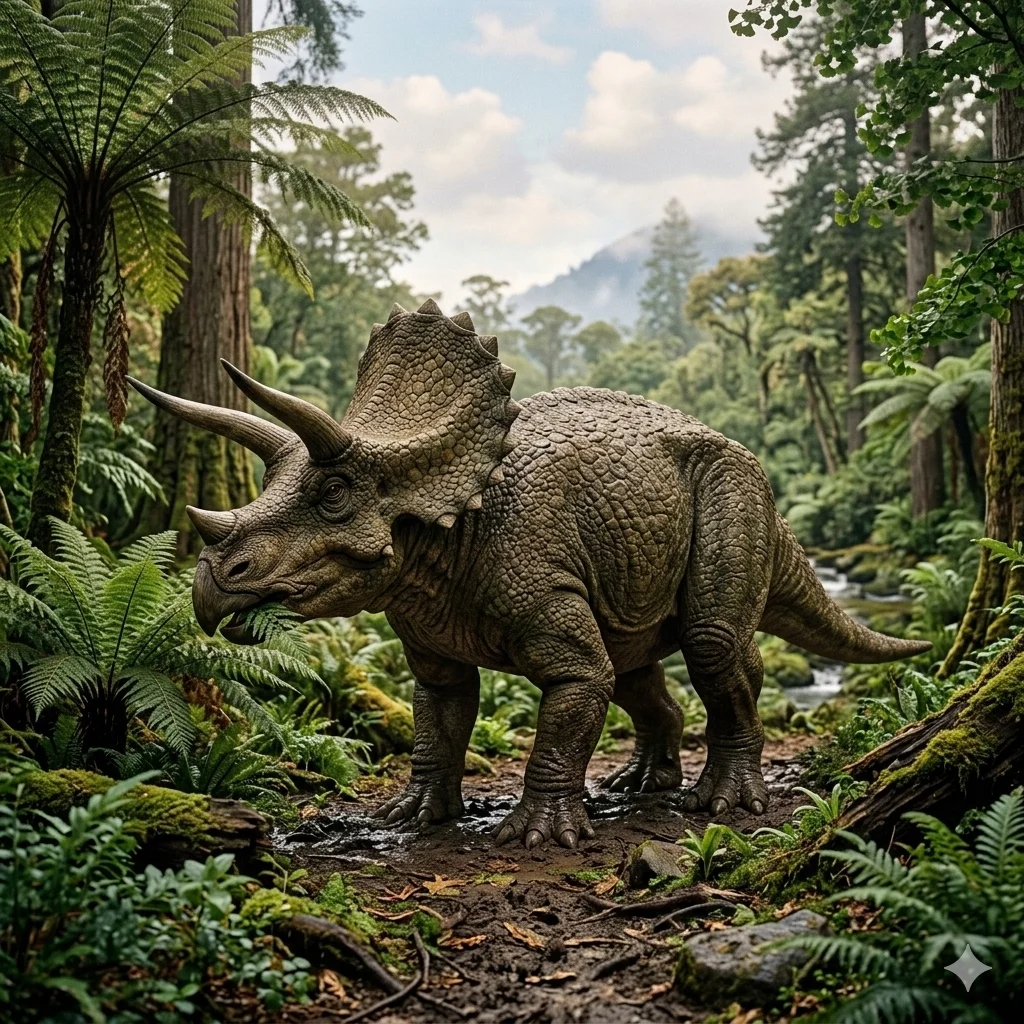
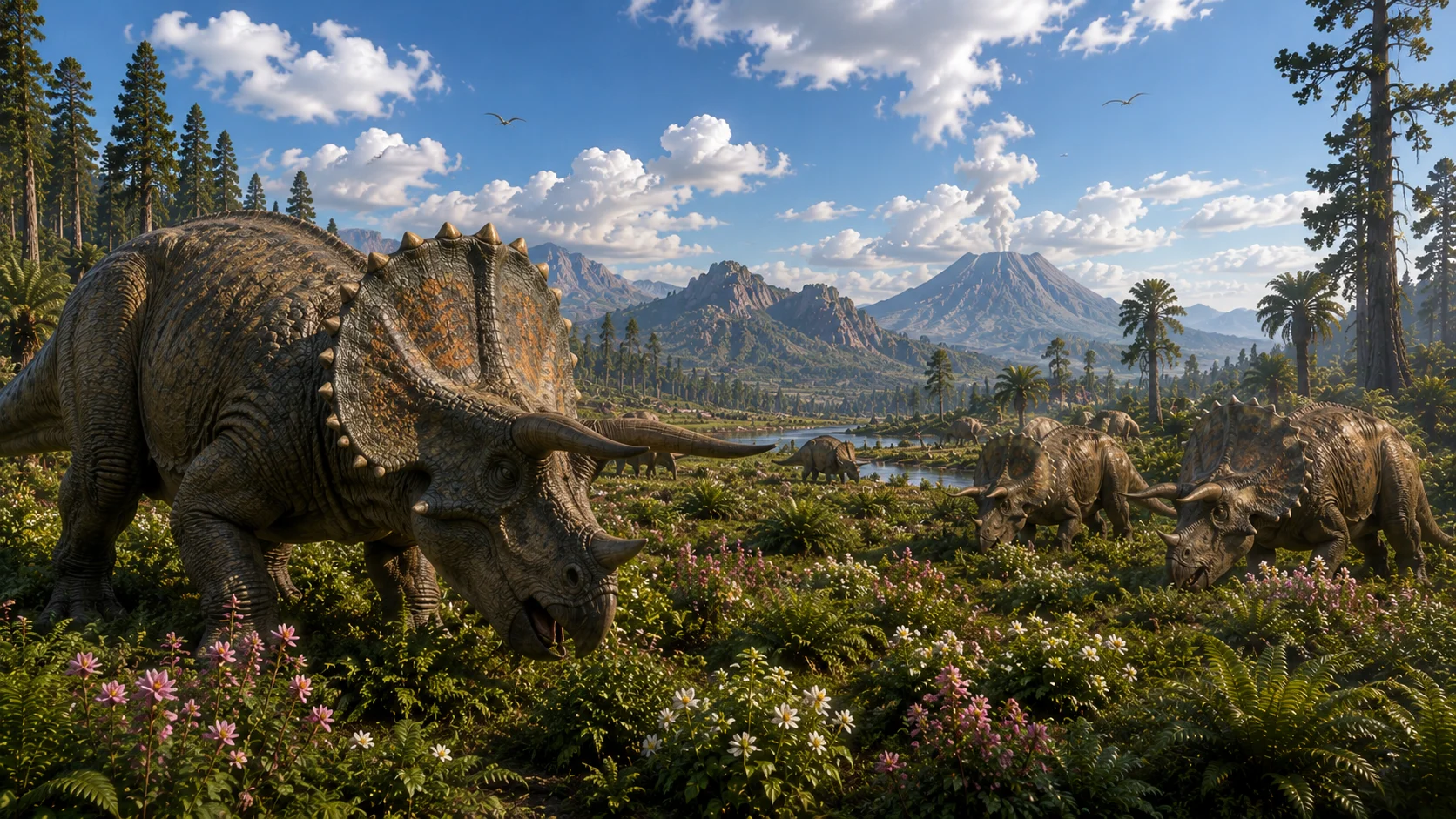
Ceratopsians dominated the low-browsing ecological niche
सेराटोप्सियन निम्न-चराई पारिस्थितिक निचे पर हावी थे
🌿
Plants & Flowers
पौधे और फूल
Producers
उत्पादक
🦗
Insects & Small Animals
कीड़े और छोटे जानवर
Primary Consumers
प्राथमिक उपभोक्ता
🦕
Hadrosaurs / Ceratopsians
हैड्रोसॉर / सेराटोप्सियन
Large Herbivores
बड़े शाकाहारी
🦖
Raptors / Mid Predators
रैप्टर / मध्य शिकारी
Secondary Predators
द्वितीयक शिकारी
👑
T-Rex
टी-रेक्स
Apex Predator
शीर्ष शिकारी
🌿Low BrowseCeratopsiansसेराटोप्सियन

Parrot beaks cropped tough shrubs close to the ground. Constant tooth replacement kept them always sharp and efficient.

तोते की चोंच ने ज़मीन के करीब कठोर झाड़ियाँ काटीं। लगातार दाँत प्रतिस्थापन ने उन्हें हमेशा तेज़ रखा।

🌱1000 TeethHadrosaursहैड्रोसॉर

The most sophisticated chewing system of any vertebrate ever. Dental batteries ground pine needles, bark, and tough seeds into digestible paste.

किसी भी कशेरुकी का सबसे परिष्कृत चबाने का तंत्र। दंत बैटरी ने चीड़ की सुइयाँ, छाल को पचाने योग्य पेस्ट में पीसा।

🎣River FishingSpinosaurusस्पाइनोसॉरस

Pressure receptor-lined crocodile snout detected fish underwater. Dense bones enabled swimming. Could catch 3-metre lungfish with a lightning-fast snap.

दबाव रिसेप्टर-युक्त मगरमच्छ थूथन ने पानी के अंदर मछलियाँ पहचानीं। 3 मीटर की मछलियाँ पकड़ सकता था।

💀230 kg/mealT-Rexटी-रेक्स

57,000 Newton bite force — enough to crush a car roof. Swallowed bone chunks whole. Could smell prey 1.5km away. Scavenged as well as hunted.

57,000 न्यूटन काटने की शक्ति। हड्डी के टुकड़े पूरे निगले। 1.5 किमी दूर से शिकार सूँघ सकता था।

HUGE

From turkey-sized to nine tonnesटर्की के आकार से नौ टन तक

The Cretaceous featured the most extreme size diversity of any geological period. At one end: Velociraptor, barely 15 kg, roughly the size of a large turkey. At the other: Tyrannosaurus Rex at 9 tonnes and titanosaur sauropods reaching 35–40 metres and 70+ tonnes. What determined size? Ecology and predator pressure. Large herbivores evolved bulk and armour for protection. Giants simply outgrew every predator. Raptors stayed small to be fast and intelligent in dense undergrowth.

क्रेटेशियस में किसी भी भूवैज्ञानिक काल की सबसे चरम आकार विविधता थी। एक तरफ: वेलोसिरैप्टर, केवल 15 किलो। दूसरी तरफ: टाइरैनोसॉरस रेक्स 9 टन पर और टाइटनोसॉर सॉरोपॉड 35–40 मीटर और 70+ टन तक।

T-Rex
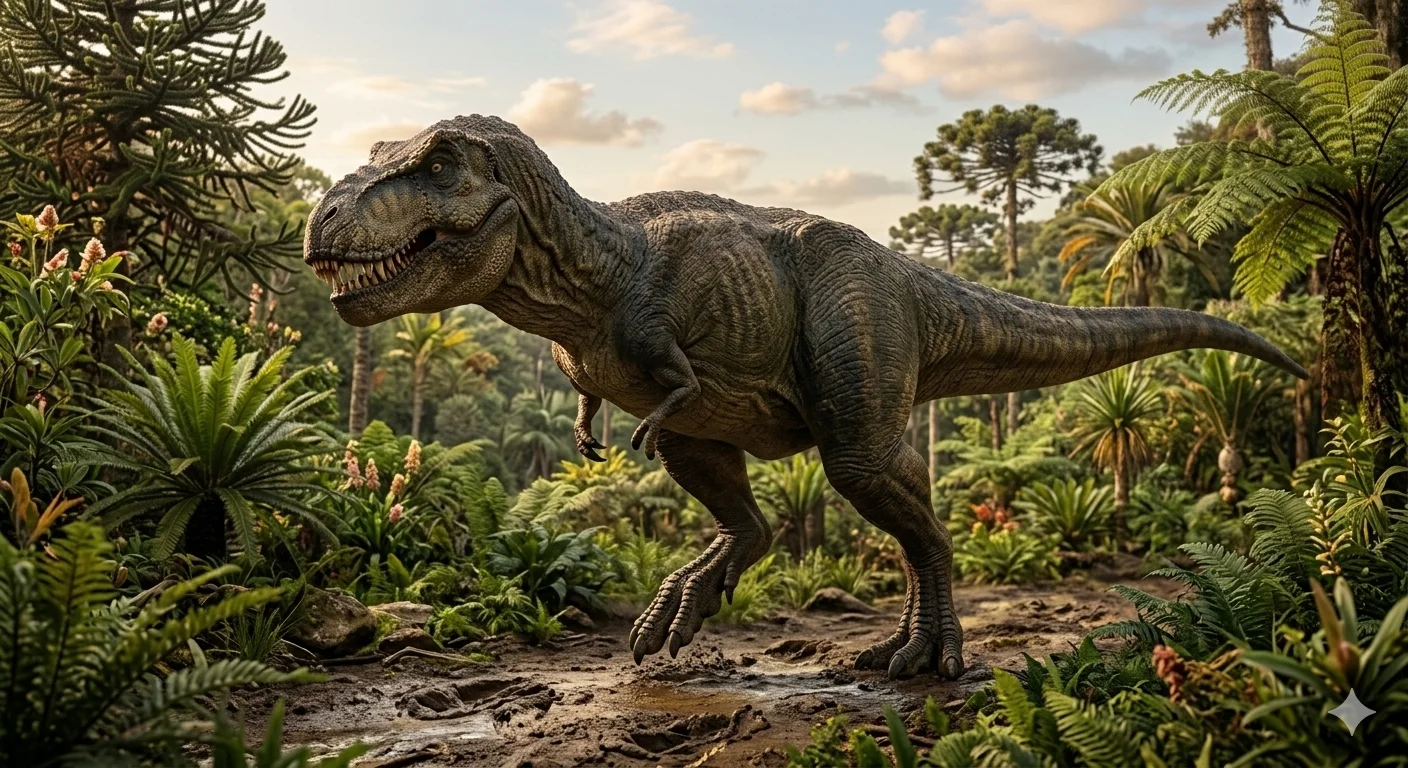
T-Rex — 13m long, 4m tall, up to 9 tonnes. The apex carnivore of the Cretaceous.
टी-रेक्स — 13 मीटर लंबा, 4 मीटर ऊँचा, 9 टन तक। क्रेटेशियस का शीर्ष मांसाहारी।
Spinosaurus
15m
T-Rex
13m
Ankylosaurus
10m
Triceratops
9m
Velociraptor
2m
You (Human)आप
1.7m

10 Most Significant Cretaceous Dinosaurs10 सबसे महत्वपूर्ण क्रेटेशियस डायनासोर

All Tours →सभी टूर →
☄️

66 million years ago — it all ended6.6 करोड़ वर्ष पूर्व — सब समाप्त हो गया

But not everything died. Small mammals survived. Birds survived. And 66 million years later, a curious primate dug up their bones and began to understand — what these creatures were, how they lived, and what made them extraordinary.लेकिन सब कुछ नहीं मरा। छोटे स्तनपायी बच गए। पक्षी बच गए। और 6.6 करोड़ वर्ष बाद, एक जिज्ञासु प्राइमेट ने उनकी हड्डियाँ खोदीं और समझने लगा — ये प्राणी क्या थे, वे कैसे जीते थे।

Jurassic Eraजुरासिक युग All Toursसभी टूर