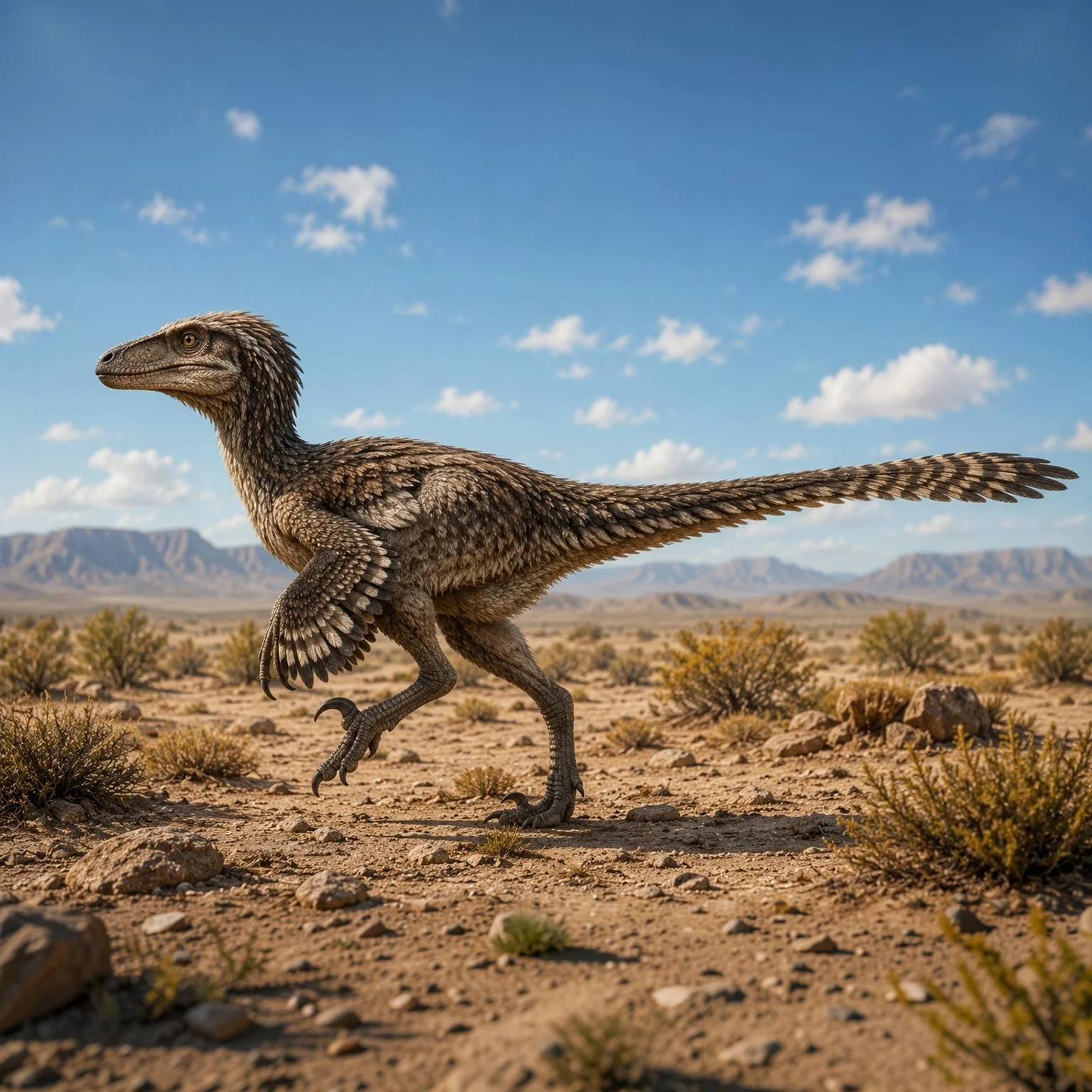
Velociraptor
← All Toursसभी टूर
🥩 Carnivoreमांसाहारी Cretaceousक्रेटेशियस

Velociraptor

"The Swift Thief"
"तेज़ चोर"
40 km/hTop Speedअधिकतम गति
2mLengthलंबाई
15kgWeightवजन
0.5mHeightऊँचाई
15–20Lifespanजीवनकाल
2Sickle Clawsदरांती पंजे
75MYears Agoवर्ष पूर्व

Smaller than you think, smarter than you expect. The real Velociraptor was turkey-sized and covered in feathers — more bird than monster — but its sickle claw and predatory intelligence made it one of the most effective hunters of its size class. आप सोचते हैं उससे छोटा, उम्मीद से ज़्यादा चालाक। असली वेलोसिरैप्टर टर्की के आकार का और पंखों से ढका था — राक्षस से अधिक पक्षी।
Name & Identityनाम और पहचान

What the name meansनाम का अर्थ क्या है

Scientific Nameवैज्ञानिक नाम
Velociraptor mongoliensis
Pronunciationउच्चारण
vuh-LOSS-ih-RAP-tor
/vəˌlɒsɪˈræptər/
Name Meaning (Etymology)नाम का अर्थ
Velociraptor means 'swift thief' or 'swift robber' from Latin velox (swift) and raptor (robber/plunderer), referring to its cursorial (running) nature and carnivorous diet.
वेलोसिरैप्टर का अर्थ है 'तेज़ चोर' या 'तेज़ लुटेरा' लैटिन velox (तेज़) और raptor (लुटेरा) से, इसके दौड़ने की प्रकृति और मांसाहारी आहार को दर्शाता है।
🏞

How it livedयह कैसे जीता था

Contrary to the famous film portrayal, the real Velociraptor was roughly the size of a large turkey — about 2 metres long and 15 kg. It was covered in feathers, not scales, and walked on two legs with a highly curved sickle claw held raised off the ground to keep it sharp. It lived in the semi-arid deserts of what is now Mongolia, China, and Central Asia. Evidence suggests it may have hunted alone or in loose pairs rather than coordinated packs. It was likely an agile, bird-like predator that relied on speed, intelligence, and precise claw strikes rather than brute force.

प्रसिद्ध फिल्मी चित्रण के विपरीत, असली वेलोसिरैप्टर लगभग एक बड़े टर्की के आकार का था — लगभग 2 मीटर लंबा और 15 किलो। यह शल्कों से नहीं, पंखों से ढका था।

What it ateयह क्या खाता था

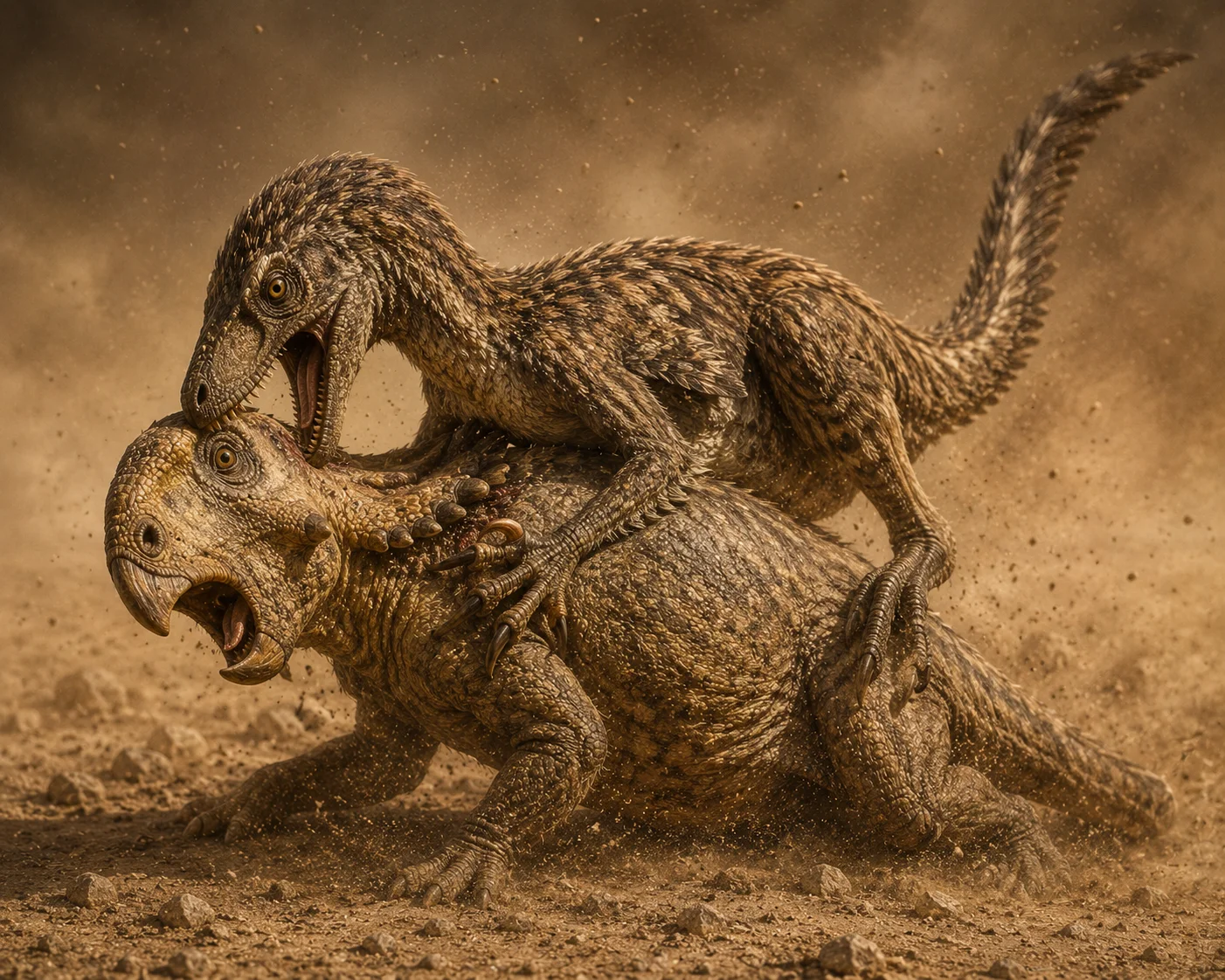
Velociraptor primarily hunted small lizards, early mammals, insects, and smaller dinosaurs. A famous fossil — the 'Fighting Dinosaurs' of Mongolia — shows a Velociraptor locked in mortal combat with a Protoceratops, preserved in the exact moment of their mutual death, buried alive by a collapsing sand dune. The sickle claw was not used to slash prey but to pin struggling animals down while the raptor delivered killing bites with its serrated teeth — a hunting technique remarkably similar to modern birds of prey like hawks and falcons.

वेलोसिरैप्टर मुख्य रूप से छोटी छिपकलियाँ, शुरुआती स्तनपायी, कीड़े और छोटे डायनासोर शिकार करता था। प्रसिद्ध 'लड़ते डायनासोर' जीवाश्म एक वेलोसिरैप्टर को प्रोटोसेराटॉप्स के साथ मृत्युघात में दिखाता है।

🍖
⏳

How long it livedयह कितने समय तक जीया

As a small, highly active predator with a high metabolic rate, Velociraptor lived fast and died young. Its feathered body and bird-like physiology suggests a warm-blooded metabolism. Most individuals likely succumbed to predation, injury, or starvation within 15–20 years. The harsh desert environments of Central Asia meant food could be scarce, and competition from other predators was intense.

एक छोटे, अत्यधिक सक्रिय शिकारी के रूप में उच्च चयापचय दर के साथ, वेलोसिरैप्टर तेज़ जीता और जल्दी मरता था। अधिकांश व्यक्ति 15–20 वर्षों के भीतर मर जाते थे।

Scientific Classificationवैज्ञानिक वर्गीकरण

The full family treeपूरा वंश वृक्ष

Scientific Nameवैज्ञानिक नाम
Velociraptor mongoliensis
Kingdomजगत
Animalia
Phylumसंघ
Chordata
Classवर्ग
Reptilia
Cladeक्लेड
Dinosauria
Orderगण
Saurischia
Suborderउपगण
Theropoda
Familyकुल
Dromaeosauridae
Subfamilyउपकुल
Velociraptorinae
Genusवंश
Velociraptor
Speciesप्रजाति
V. mongoliensis (type), V. osmolskae
Taxonomic Groupवर्गीकरण समूह
Dromaeosauridsड्रोमेओसॉरिड
Raptors with sickle claws. Include Velociraptor, Utahraptor, and Microraptor.
दरांती पंजे वाले रैप्टर। वेलोसिरैप्टर, यूटारैप्टर और माइक्रोरैप्टर शामिल हैं।
Cretaceous
Theropodsथेरोपॉड
Beast-footed dinosaurs - primarily meat-eaters. Include T-Rex, Velociraptor, Spinosaurus, and all birds.
पशु-पैर वाले डायनासोर - मुख्य रूप से मांसाहारी। T-Rex, वेलोसिरैप्टर, स्पाइनोसॉरस और सभी पक्षी शामिल हैं।
Triassic-Cretaceous
Anatomy & Fossil Featuresशरीर रचना और जीवाश्म विशेषताएँ
Furculaफर्कुला
Wishbone - V-shaped bone in theropod dinosaurs including birds, formed by fused collarbones.
विशबोन - पक्षियों सहित थेरोपॉड डायनासोरों में V-आकार की हड्डी, पिघली हुई कॉलरबोन से बनी।
Pneumatic Bonesन्यूमैटिक हड्डियां
Air-filled bones with hollow spaces connected to respiratory system, found in theropods and sauropods.
श्वसन प्रणाली से जुड़ी खोखली जगहों वाली हवा से भरी हड्डियां, थेरोपॉड और सॉरोपॉड में पाई जाती हैं।
Sclerotic Ringsस्क्लेरोटिक रिंग
Ring of bones inside the eye of many dinosaurs, birds, and reptiles that helped maintain eye shape.
कई डायनासोर, पक्षियों और रेंगने वाले जानवरों की आंख के अंदर हड्डियों की रिंग जो आंख के आकार को बनाए रखने में मदद करती थी।
Acetabulumएसिटाबुलम
Hip socket - dinosaurs have an open hip socket (hole) which is a key characteristic distinguishing them from other reptiles.
कूल्हे का सॉकेट - डायनासोरों में एक खुला कूल्हे का सॉकेट (छेद) होता है जो उन्हें अन्य रेंगने वाले जानवरों से अलग करने वाली एक प्रमुख विशेषता है।
Coprolitesकोप्रोलाइट
Fossilized dinosaur dung that provides evidence about diet and digestive processes.
जीवाश्मित डायनासोर मल जो आहार और पाचन प्रक्रियाओं के बारे में सबूत प्रदान करता है।
Habitat & Environmentनिवास स्थान और पर्यावरण

Where it lived and how it movedयह कहाँ रहता था और कैसे चलता था

Regionsक्षेत्र
Central AsiaGobi Desert region
Modern Locationsआधुनिक स्थान
MongoliaInner Mongolia (China)
Environmentपर्यावरण
Arid to semi-arid environment with sand dunes, seasonal rivers, and sparse vegetation
शुष्क से अर्ध-शुष्क वातावरण रेत के टीलों, मौसमी नदियों और विरल वनस्पति के साथ
Climateजलवायु
Semi-arid with seasonal variation
Time Periodसमय काल
Late Cretaceous, Campanian (75-71 million years ago)
Top Speedअधिकतम गति
40 km/h (25 mph)
Estimated 39-60 km/h (24-37 mph) based on leg proportions and cursorial adaptations
पैर के अनुपात और दौड़ने के अनुकूलन के आधार पर अनुमानित 39-60 किमी/घंटा (24-37 मील/घंटा)

Its greatest enemyइसका सबसे बड़ा दुश्मन

Close Relativesनिकट संबंधी

Family worth knowingजानने योग्य परिवार

Deinonychus
Larger North American cousin, same family
North America
Utahraptor
Much larger relative
North America (Utah)
Tsaagan
Close Asian relative
Mongolia
Linheraptor
Very close relative
China
Modern birds
Direct evolutionary descendants of dromaeosaurids
Worldwide

What Velociraptor actually looked likeVelociraptor वास्तव में कैसा दिखता था

The real Velociraptor looked almost nothing like its movie version. It was covered in quill-like feathers — fossil evidence shows quill knobs on the arm bones identical to those found on modern raptors like eagles. Its arms were wing-like, held folded against the body. The sickle claw on the second toe was held raised, never touching the ground. Its face was long and narrow, bird-like, with large eyes for excellent vision. Colouration is unknown, but likely camouflaged for desert environments.

असली वेलोसिरैप्टर अपनी फिल्मी संस्करण से लगभग बिल्कुल अलग दिखता था। यह पंख-जैसे पंखों से ढका था — जीवाश्म साक्ष्य भुजा की हड्डियों पर क्विल नॉब्स दिखाते हैं। इसका चेहरा लंबा और संकरा, पक्षी जैसा था।

🔨
3D Model — Under Development 3D मॉडल — विकासाधीन

A fully interactive 3D reconstruction of Velociraptor is being developed. This scientifically accurate model will feature feathered integument, skeletal articulation, and realistic animation. Check back soon! वेलोसिरैप्टर का एक पूरी तरह से इंटरैक्टिव 3D पुनर्निर्माण विकसित किया जा रहा है। यह वैज्ञानिक रूप से सटीक मॉडल जल्द ही उपलब्ध होगा!

Where Velociraptor has been foundVelociraptor कहाँ पाया गया है

01
Djadokhta Formation, Gobi Desert
Mongolia

The primary site for Velociraptor fossils, including the famous 'Fighting Dinosaurs' specimen discovered in 1971. The Gobi Desert's ancient dune systems preserved dinosaurs in remarkable detail.

गोबी रेगिस्तान — वेलोसिरैप्टर जीवाश्मों का प्राथमिक स्थल, जिसमें 1971 में खोजे गए 'लड़ते डायनासोर' नमूने शामिल हैं।

02
Bayan Mandahu Formation, China
China

Multiple Velociraptor specimens have been recovered from this formation in Inner Mongolia, China, demonstrating the raptor's wide range across Central Asia.

चीन के आंतरिक मंगोलिया में कई वेलोसिरैप्टर नमूने पाए गए हैं।

Discovery & Fossil Recordखोज और जीवाश्म रिकॉर्ड

Who found it, and what we haveकिसने खोजा, और हमारे पास क्या है

Discovered Byखोजकर्ता
Peter Kaisen (American Museum of Natural History expedition)
1923
Described Byवर्णनकर्ता
Henry Fairfield Osborn
1924
Discovery Locationखोज स्थान
Flaming Cliffs (Bayn Dzak), Djadochta Formation, Gobi Desert, Mongolia
Type Specimenप्रकार नमूना
AMNH 6515
Known Specimensज्ञात नमूने
Approximately 10-12 specimens of varying completeness
Best Preservedसर्वोत्तम संरक्षित
Fighting Dinosaurs (GIN 100/25) - one of paleontology's most iconic fossils
Significant Findsमहत्वपूर्ण खोजें
Fighting Dinosaurs (1971)
Djadochta Formation, Mongolia - GIN 100/25

World-famous fossil showing Velociraptor locked in combat with Protoceratops, both preserved in death struggle

Holotype specimen (1923)
Flaming Cliffs, Mongolia - AMNH 6515

First discovered Velociraptor skull and partial skeleton

What did Velociraptor sound like?Velociraptor कैसा सुनाई देता था?

The sounds of Velociraptor are still a matter of active scientific research. Given its close evolutionary relationship to modern birds, it likely produced bird-like vocalisations — possibly a combination of hisses, barks, and coos — rather than the dramatic screeches depicted in films. Its closest living analogue in terms of sound production would be large ground-dwelling birds like cassowaries or ostriches.

वेलोसिरैप्टर की ध्वनियाँ अभी भी सक्रिय वैज्ञानिक शोध का विषय हैं। आधुनिक पक्षियों के साथ इसके करीबी विकासवादी संबंध को देखते हुए, यह संभवतः पक्षी जैसी आवाज़ें उत्पन्न करता था।

🔬
ROARS / VOCALISATIONS — COMING SOON
ध्वनियाँ / स्वर — प्लेसहोल्डर

Coming Soon — Roar sounds will be added when audio files are sourced. The sounds of this dinosaur are still a matter of active scientific research — no direct recordings exist.

आने वाले समय में ध्वनि फ़ाइलें जोड़ी जाएंगी। इस डायनासोर की ध्वनियाँ अभी भी सक्रिय वैज्ञानिक शोध का विषय हैं।

🔮 Future Scope — Roar audio files will be added here once they are sourced and ready. The exact vocalisations of dinosaurs remain an active area of scientific research. 🔮 भविष्य की योजना — दहाड़ ऑडियो फ़ाइलें यहाँ जोड़ी जाएंगी जब वे तैयार होंगी। डायनासोरों की सटीक ध्वनियाँ वैज्ञानिक शोध का एक सक्रिय क्षेत्र बनी हुई हैं।

In Popular Cultureलोकप्रिय संस्कृति में

On screen and in museumsस्क्रीन और संग्रहालयों में

Jurassic Park
1993 - Film

Featured as intelligent pack hunters, though drastically oversized (based on Deinonychus). Made Velociraptor a household name despite inaccuracies.

Jurassic World
2015 - Film

Featured trained Velociraptors as protagonists

Primeval
2007 - TV Series

Featured as recurring creatures

Your Survival Odds Against VelociraptorVelociraptor के खिलाफ आपकी जीवित रहने की संभावना

0% Death Rate मृत्यु दर
🦅
Feathered and Fast
पंखदार और तेज़

Velociraptor was fast (~25 km/h), intelligent, and had a razor-sharp sickle claw capable of puncturing arteries. Its small size means it would target vulnerable areas — eyes, throat, tendons. You would likely not see it coming.

वेलोसिरैप्टर तेज़ (~25 किमी/घंटा), बुद्धिमान था और इसके पास नसों को छेदने में सक्षम तेज़ दरांती पंजा था।

🧠
Hunter Intelligence
शिकारी बुद्धि

Brain-to-body ratio analysis suggests Velociraptor had intelligence comparable to modern corvids (crows, ravens) — among the smartest living birds. It would adapt its strategy to your behaviour.

मस्तिष्क-से-शरीर अनुपात विश्लेषण बताता है कि वेलोसिरैप्टर की बुद्धि आधुनिक कौवों के समान थी।

Extinctionविनाश

Velociraptor disappeared in the Chicxulub mass extinction 66 million years ago. However, its close relatives — birds — survived. Modern birds are the direct evolutionary descendants of theropod dinosaurs like Velociraptor, meaning raptors never truly went extinct. Every time you see a crow, hawk, or even a chicken, you are looking at a living dinosaur descended from animals that ruled the Earth for 165 million years. वेलोसिरैप्टर 6.6 करोड़ वर्ष पूर्व गायब हो गया। हालाँकि, इसके करीबी रिश्तेदार — पक्षी — बच गए। आधुनिक पक्षी वेलोसिरैप्टर के प्रत्यक्ष विकासवादी वंशज हैं।

Cretaceous Eraक्रेटेशियस युग More Dinosaursऔर डायनासोर