Triceratops
All Toursसभी टूर
🌿 Herbivoreशाकाहारी Cretaceousक्रेटेशियस

Triceratops

"The Three-Horned Face"
"तीन सींगों वाला चेहरा"
9mLengthलंबाई
12TWeightवजन
3mHeightऊँचाई
30–40Lifespanजीवनकाल
3Hornsसींग
66MYears Agoवर्ष पूर्व

The three-horned titan of the Cretaceous. With a skull 2.5 metres long, a massive frill, and three deadly horns, Triceratops was T-Rex's most formidable rival — and one of the very last dinosaurs alive before the asteroid struck. क्रेटेशियस का तीन सींगों वाला टाइटन। 2.5 मीटर लंबी खोपड़ी, विशाल फ्रिल और तीन घातक सींगों के साथ, ट्राइसेराटॉप्स टी-रेक्स का सबसे दुर्जेय प्रतिद्वंद्वी था।
🏞

How it livedयह कैसे जीता था

Triceratops lived in small herds across the open woodlands and plains of what is now North America's western interior. Its enormous head — sometimes 2.5 metres long — was dominated by the iconic bony frill richly supplied with blood vessels. Scientists now believe the frill could flush red-pink with blood for species recognition, threat displays, and attracting mates — essentially a living signal board. The three horns were used in dramatic shoving contests between rival males, creating tremendous clashes of bone on bone audible from hundreds of metres away.

ट्राइसेराटॉप्स आज के उत्तरी अमेरिका के पश्चिमी आंतरिक भाग के खुले जंगलों में छोटे झुंडों में रहता था। इसका विशाल सिर — कभी-कभी 2.5 मीटर लंबा — रक्त वाहिकाओं से भरी प्रतिष्ठित बोनी फ्रिल द्वारा प्रभुत्व प्राप्त था। वैज्ञानिकों का अब मानना है कि फ्रिल प्रजाति पहचान और साथी आकर्षण के लिए रक्त से लाल-गुलाबी रंग में बदल सकती थी।

What it ateयह क्या खाता था

Triceratops was a specialised low-browser, using its sharp parrot-like beak to clip tough plants like cycads, ferns, and early flowering shrubs close to the ground. Its hundreds of self-replacing teeth were arranged in batteries that worked like scissors — cropping and processing plant material continuously. Its powerful neck muscles could drag down and break apart tough shrubs that other herbivores couldn't access. Fossil evidence shows Triceratops feeding zones are associated with areas rich in low-lying vegetation, suggesting they were landscape engineers, cropping vegetation and creating open zones.

ट्राइसेराटॉप्स एक विशेष निम्न-चराई करने वाला था, जो साइकैड, फर्न और ज़मीन के करीब फूल वाली झाड़ियों को काटने के लिए अपनी तेज़ तोते जैसी चोंच का उपयोग करता था। इसके सैकड़ों स्व-बदलने वाले दाँत बैटरी में व्यवस्थित थे जो कैंची की तरह काम करते थे।

🍖

How long it livedयह कितने समय तक जीया

Triceratops had a slow but steady growth rate compared to fast-growing theropods. Growth ring analysis from fossilised bone suggests individuals took 15–20 years to reach full adult size. With its formidable horns and frill providing effective predator deterrence, and its sturdy bone structure, healthy adults could potentially reach 30–40 years. Fossil evidence shows healed injuries, suggesting many individuals survived serious wounds — including T-Rex bite marks that subsequently healed over, proof of both terrifying encounters and remarkable survival.

ट्राइसेराटॉप्स की तेज़-बढ़ने वाले थेरोपॉड की तुलना में धीमी लेकिन स्थिर वृद्धि दर थी। जीवाश्म हड्डी से वृद्धि वलय विश्लेषण बताता है कि व्यक्तियों को पूर्ण वयस्क आकार तक पहुँचने में 15–20 वर्ष लगे। स्वस्थ वयस्क संभवतः 30–40 वर्ष तक पहुँच सकते थे।

Its greatest enemyइसका सबसे बड़ा दुश्मन

What Triceratops actually looked likeTriceratops वास्तव में कैसा दिखता था

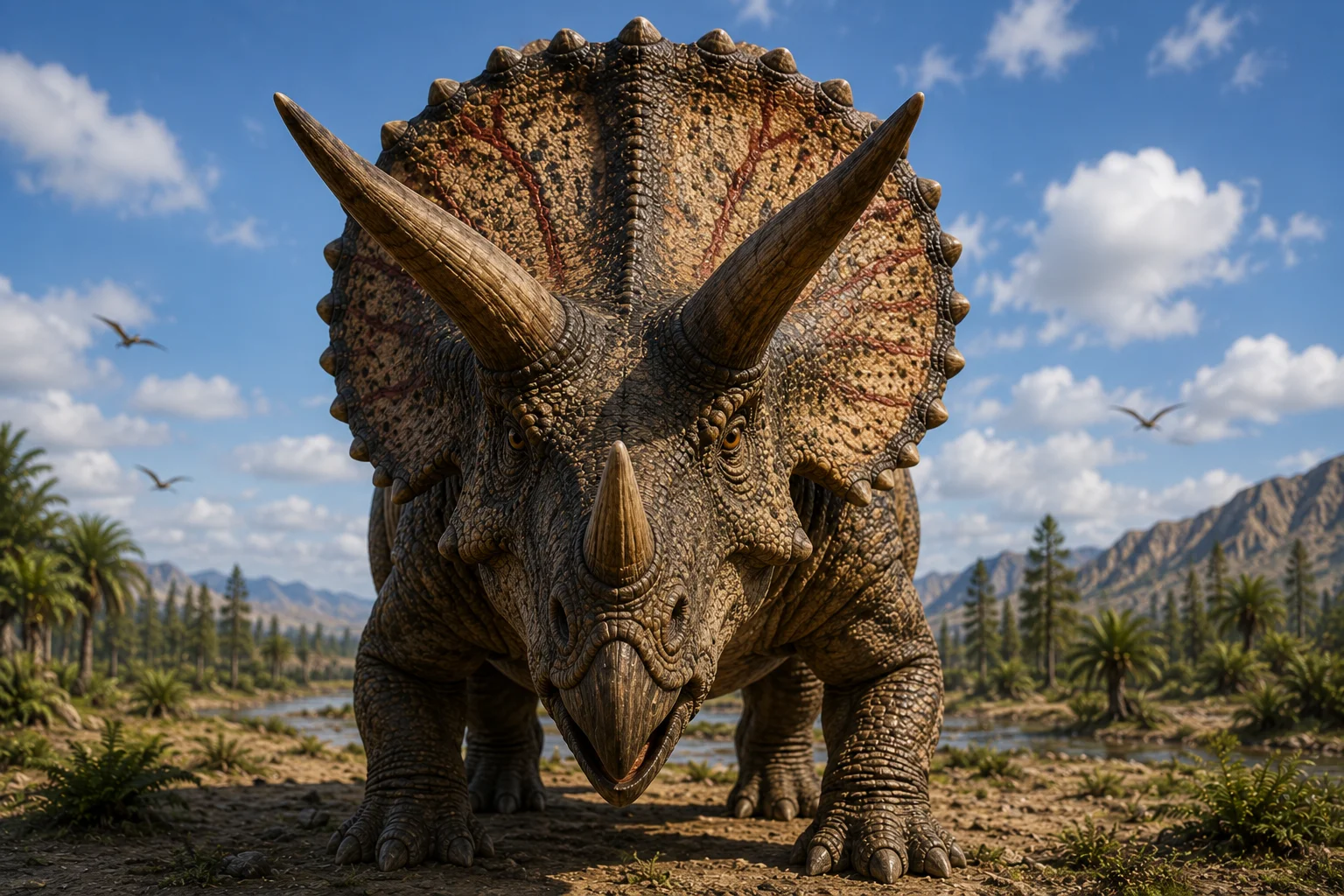
Triceratops had a massive, low-slung body carried on four powerful pillar-like legs. Its skull was one of the largest of any land animal, dominated by the bony frill and three horns. Scientists now believe the frill was brightly coloured — possibly red, orange, or patterned — used for display and communication. The two long brow horns could reach 90cm. The body was covered in pebbly, crocodile-like scales with larger, studded scales along the back.

ट्राइसेराटॉप्स का एक विशाल, नीचे झुका हुआ शरीर था जो चार शक्तिशाली खंभे जैसी टाँगों पर टिका था। इसकी खोपड़ी किसी भी स्थलीय जानवर की सबसे बड़ी में से एक थी। वैज्ञानिकों का अब मानना है कि फ्रिल चमकीले रंग की थी — संभवतः लाल, नारंगी, या पैटर्नयुक्त।

🔨
3D Model — Under Development 3D मॉडल — विकासाधीन

A fully interactive 3D reconstruction of Triceratops is being developed. This scientifically accurate model will feature skeletal articulation, textured skin, and realistic animation. Check back soon! ट्राइसेराटॉप्स का एक पूरी तरह से इंटरैक्टिव 3D पुनर्निर्माण विकसित किया जा रहा है। यह वैज्ञानिक रूप से सटीक मॉडल जल्द ही उपलब्ध होगा!

Where Triceratops has been foundTriceratops कहाँ पाया गया है

01
Hell Creek Formation, Montana
USA

The primary Triceratops fossil zone. Dozens of specimens found across the formation, including some with healed T-Rex bite marks that changed our understanding of predator-prey dynamics forever.

हेल क्रीक फॉर्मेशन — ट्राइसेराटॉप्स जीवाश्म क्षेत्र। दर्जनों नमूने, जिनमें ठीक हुए टी-रेक्स काटने के निशान वाले भी शामिल हैं।

02
Lance Formation, Wyoming
USA

Some of the most complete Triceratops skulls have been found here, providing vital data for reconstructing the species' appearance, frill colouration, and horn function.

यहाँ सबसे पूर्ण ट्राइसेराटॉप्स खोपड़ियाँ पाई गई हैं।

03
Denver Formation, Colorado
USA

Multiple Triceratops specimens including juveniles have been recovered from this formation, providing growth series data that revealed how Triceratops changed dramatically in appearance as it matured.

यहाँ किशोरों सहित कई ट्राइसेराटॉप्स नमूने पाए गए हैं।

What did Triceratops sound like?Triceratops कैसा सुनाई देता था?

Triceratops sounds are still a matter of active scientific research. Based on comparisons with its closest living relatives — birds and crocodilians — palaeontologists suggest it may have produced deep, resonant bellowing calls for herd communication and threat displays. Its large nasal passages may have acted as resonating chambers, producing low-frequency sounds that carried across the landscape.

ट्राइसेराटॉप्स की ध्वनियाँ अभी भी सक्रिय वैज्ञानिक शोध का विषय हैं। जीवित रिश्तेदारों के साथ तुलना के आधार पर, यह गहरी, गूँजने वाली पुकारें उत्पन्न कर सकता था।

🔬
ROARS / VOCALISATIONS — COMING SOON
ध्वनियाँ / स्वर — प्लेसहोल्डर

Coming Soon — Roar sounds will be added when audio files are sourced. The sounds of this dinosaur are still a matter of active scientific research — no direct recordings exist.

आने वाले समय में ध्वनि फ़ाइलें जोड़ी जाएंगी। इस डायनासोर की ध्वनियाँ अभी भी सक्रिय वैज्ञानिक शोध का विषय हैं।

🔮 Future Scope — Roar audio files will be added here once they are sourced and ready. The exact vocalisations of dinosaurs remain an active area of scientific research. 🔮 भविष्य की योजना — दहाड़ ऑडियो फ़ाइलें यहाँ जोड़ी जाएंगी जब वे तैयार होंगी। डायनासोरों की सटीक ध्वनियाँ वैज्ञानिक शोध का एक सक्रिय क्षेत्र बनी हुई हैं।

Your Survival Odds Against TriceratopsTriceratops के खिलाफ आपकी जीवित रहने की संभावना

0% Death Rate मृत्यु दर
⚔️
The Horns Don't Help You
सींग आपकी मदद नहीं करते

Triceratops's horns were 90cm long and designed for combat with similarly-sized dinosaurs. A human-sized target would be crushed underfoot before the horns even came into play.

ट्राइसेराटॉप्स के सींग 90 सेमी लंबे थे। मानव आकार के लक्ष्य को सींग काम आने से पहले ही कुचल दिया जाएगा।

🏃
Can't Outmanoeuvre It
इसे पैंतरेबाज़ी नहीं कर सकते

Despite its bulk (12 tonnes), Triceratops could turn and charge with surprising speed. Its wide, stable stance meant it could pivot rapidly. And it moved in herds — you wouldn't face just one.

अपने बड़े आकार (12 टन) के बावजूद, ट्राइसेराटॉप्स आश्चर्यजनक गति से मुड़ और आरोप लगा सकता था।

Extinctionविनाश

Like all non-avian dinosaurs, Triceratops perished in the Chicxulub mass extinction 66 million years ago. Ironically, fossil evidence suggests Triceratops was one of the very last dinosaurs alive before the impact — their fossils are found right up to the K-Pg boundary that marks the event. They survived everything the Cretaceous threw at them for millions of years, only to be wiped out by a single catastrophic event from space. सभी गैर-एवियन डायनासोरों की तरह, ट्राइसेराटॉप्स 6.6 करोड़ वर्ष पूर्व चिक्सुलब सामूहिक विनाश में नष्ट हो गया। विडंबना यह है कि ट्राइसेराटॉप्स प्रभाव से पहले जीवित अंतिम डायनासोरों में से एक था।

Cretaceous Eraक्रेटेशियस युग More Dinosaursऔर डायनासोर