Stegosaurus
All Toursसभी टूर
🥩 Carnivoreमांसाहारी Cretaceousक्रेटेशियस

Tyrannosaurus Rex

"The King of Dinosaurs"
"डायनासोरों का राजा"
13mLengthलंबाई
9TWeightवजन
4mHeightऊँचाई
20–30Lifespanजीवनकाल
57kNBite Forceकाटने की शक्ति
66MYears Agoवर्ष पूर्व

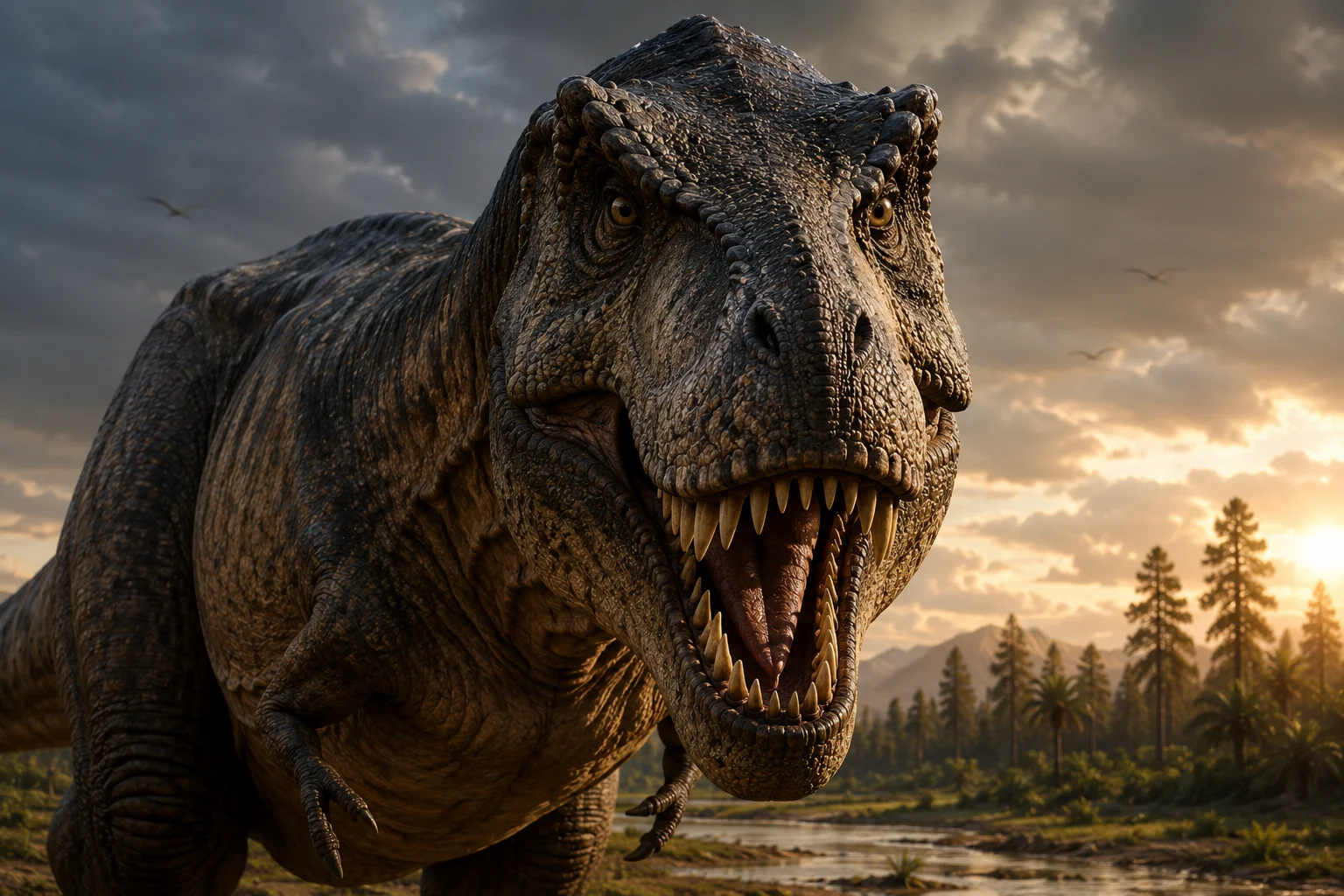
The apex predator of the Cretaceous. With banana-sized teeth, the strongest bite of any land animal, and an exceptional sense of smell — T-Rex was the undisputed king of its world for 2 million years. क्रेटेशियस का शीर्ष शिकारी। केले के आकार के दाँत, किसी भी स्थलीय जानवर की सबसे मजबूत काटने की शक्ति, और गंध की असाधारण क्षमता के साथ — टी-रेक्स 2 करोड़ वर्षों तक अपनी दुनिया का निर्विवाद राजा था।

🏞

Lone predator of the floodplainsबाढ़ के मैदानों का अकेला शिकारी

T-Rex likely lived and hunted alone across the open floodplains and forested river valleys of what is now western North America. It had an exceptional sense of smell — its olfactory bulbs were larger than those of any known dinosaur, comprising the largest portion of its brain. Forward-facing eyes gave it depth perception for accurately judging prey distances — a feature unique among dinosaurs.

टी-रेक्स संभवतः अकेले रहता और शिकार करता था, जो आज पश्चिमी उत्तरी अमेरिका है वहाँ के खुले बाढ़ के मैदानों में। इसकी गंध की अद्भुत क्षमता थी — इसके घ्राण बल्ब किसी भी ज्ञात डायनासोर से बड़े थे। आगे की ओर देखने वाली आँखें शिकार की दूरी सटीक रूप से आँकने के लिए गहराई की धारणा देती थीं।

Despite its fearsome reputation, T-Rex may have also been an opportunistic scavenger — using its extraordinary nose to locate carcasses from kilometres away. Its tiny arms, while seemingly useless for combat, may have had a surprising function: helping the animal brace itself to rise from a resting position, given that its enormous head and body would make standing up without arm leverage physically awkward.

अपनी भयानक प्रतिष्ठा के बावजूद, टी-रेक्स एक अवसरवादी मैला खाने वाला भी हो सकता था — किलोमीटर दूर से शवों का पता लगाने के लिए अपनी असाधारण नाक का उपयोग करता। इसकी छोटी भुजाएँ शायद इसे लेटी अवस्था से उठने में मदद करती थीं।

💡 Did You Know?
💡 क्या आप जानते हैं?

T-Rex could smell prey from over 1.5 kilometres away. Its olfactory bulb was the size of a grapefruit — proportionally larger than a modern bloodhound's.

टी-रेक्स 1.5 किलोमीटर से अधिक दूर से शिकार को सूँघ सकता था। इसका घ्राण बल्ब अंगूर के आकार का था — आनुपातिक रूप से एक आधुनिक ब्लडहाउंड से बड़ा।
The ultimate killing machineपरम हत्या की मशीन

T-Rex was a hypercarnivore — meat made up nearly 100% of its diet. It preyed on large ceratopsians like Triceratops and hadrosaurs like Edmontosaurus. Its banana-sized teeth — some up to 30 cm long including the root — were not designed for slicing like a knife, but for puncturing and crushing: once those teeth sank in, nothing pulled free. Bite force measurements from fossilised bite marks confirm 57,000 Newtons — the strongest bite of any land animal ever recorded.

टी-रेक्स एक हाइपरकार्निवोर था — लगभग 100% खाना मांस था। यह ट्राइसेराटॉप्स जैसे बड़े सेराटोप्सियन और एडमॉन्टोसॉरस जैसे हैड्रोसॉर का शिकार करता था। इसके केले के आकार के दाँत — जड़ सहित कुछ 30 सेमी तक लंबे — काटने के लिए नहीं बल्कि छेदने और कुचलने के लिए डिज़ाइन किए गए थे। 57,000 न्यूटन — किसी भी स्थलीय जानवर की सबसे शक्तिशाली काटने की शक्ति।

T-Rex could consume an estimated 230 kg of meat in a single feeding — roughly the weight of 3 adult humans. It swallowed chunks of flesh and bone whole, relying on powerful stomach acids to dissolve even dense bone tissue. Fossilised T-Rex droppings (coprolites) have been found containing crushed bone fragments from hadrosaurs, confirming this extraordinary digestive capacity.

टी-रेक्स एक भोजन में अनुमानित 230 किलो मांस खा सकता था — लगभग 3 वयस्क मनुष्यों के वजन के बराबर। यह मांस और हड्डी के टुकड़े पूरे निगल लेता था। टी-रेक्स के जीवाश्म मलों में हैड्रोसॉर की कुचली हुई हड्डी के टुकड़े पाए गए हैं।

🍖

20–30 years of absolute dominance20–30 साल का पूर्ण वर्चस्व

T-Rex grew at a staggering rate during adolescence — gaining up to 2 kg per day between the ages of 14–18 — which put enormous strain on its skeleton and organs. Growth ring analysis from fossilised T-Rex bones shows that individuals reached near-adult size rapidly, then growth slowed dramatically. Most T-Rex died between ages 20–28. The oldest confirmed T-Rex — nicknamed "Sue" — was approximately 28–33 years old at death.

टी-रेक्स किशोरावस्था में तेज़ी से बढ़ता था — 14–18 वर्ष की आयु के बीच प्रतिदिन 2 किलो तक — जिससे उसके कंकाल और अंगों पर भारी दबाव पड़ता था। जीवाश्म हड्डियों से वृद्धि वलय विश्लेषण दिखाता है कि व्यक्ति तेज़ी से लगभग वयस्क आकार तक पहुँचते थे। अधिकांश टी-रेक्स 20–28 वर्ष की आयु के बीच मरे।

Fossil evidence reveals a harsh life: healed bone fractures, bite wounds from other T-Rex (suggesting fierce territorial disputes), severe joint infections from parasites, and extreme dental wear. For an animal growing so fast and fighting so hard, reaching 30 was an extraordinary achievement.

जीवाश्म साक्ष्य एक कठोर जीवन दिखाते हैं: ठीक हुए हड्डी के फ्रैक्चर, अन्य टी-रेक्स के काटने के घाव (भीषण क्षेत्रीय विवादों का सुझाव), परजीवियों से गंभीर जोड़ संक्रमण। इतनी तेज़ी से बढ़ने और इतनी मुश्किल से लड़ने वाले जानवर के लिए, 30 तक पहुँचना एक असाधारण उपलब्धि थी।

Not all prey went quietlyसभी शिकार चुपचाप नहीं गए

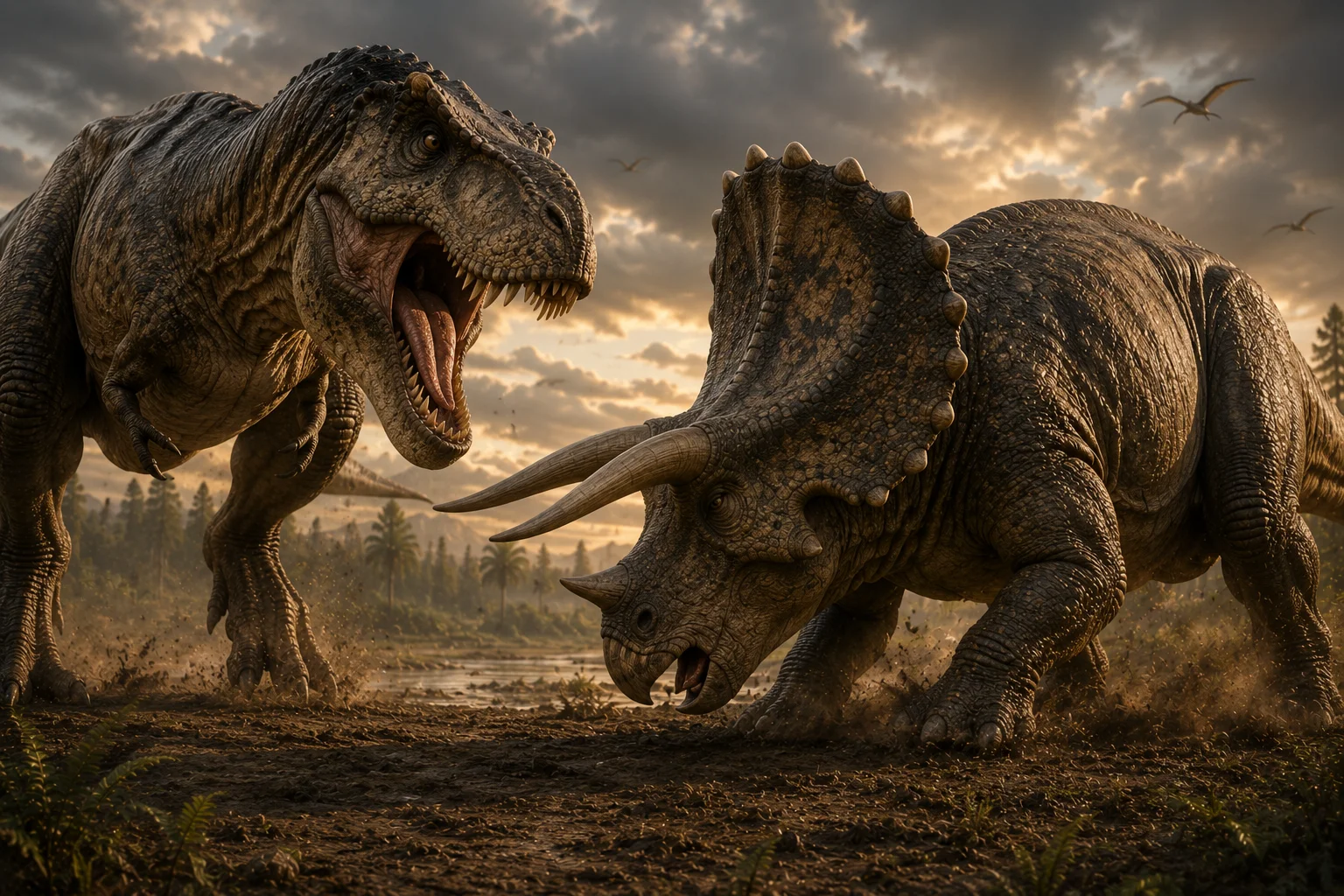
Fossil evidence proves these weren't just hunts — they were epic battles. Both Triceratops and Ankylosaurus were capable of seriously injuring or killing a T-Rex.

जीवाश्म साक्ष्य साबित करते हैं कि ये सिर्फ शिकार नहीं थे — ये महाकाव्य युद्ध थे। ट्राइसेराटॉप्स और एंकिलोसॉरस दोनों टी-रेक्स को गंभीर रूप से घायल या मारने में सक्षम थे।

Triceratops
⚔️ Rivalप्रतिद्वंद्वी
Triceratops

Fossil evidence is undeniable: healed T-Rex bite marks on Triceratops bones, and Triceratops horn puncture wounds on T-Rex skulls. These two were locked in an evolutionary arms race for millions of years — horn vs jaw, armour vs force.

जीवाश्म साक्ष्य अटल है: ट्राइसेराटॉप्स की हड्डियों पर ठीक हुए टी-रेक्स के काटने के निशान, और टी-रेक्स की खोपड़ियों पर ट्राइसेराटॉप्स के सींग के घाव। ये दोनों लाखों वर्षों तक विकासवादी हथियारों की दौड़ में बंद थे।

Ankylosaurus
⚔️ Rivalप्रतिद्वंद्वी
Ankylosaurus

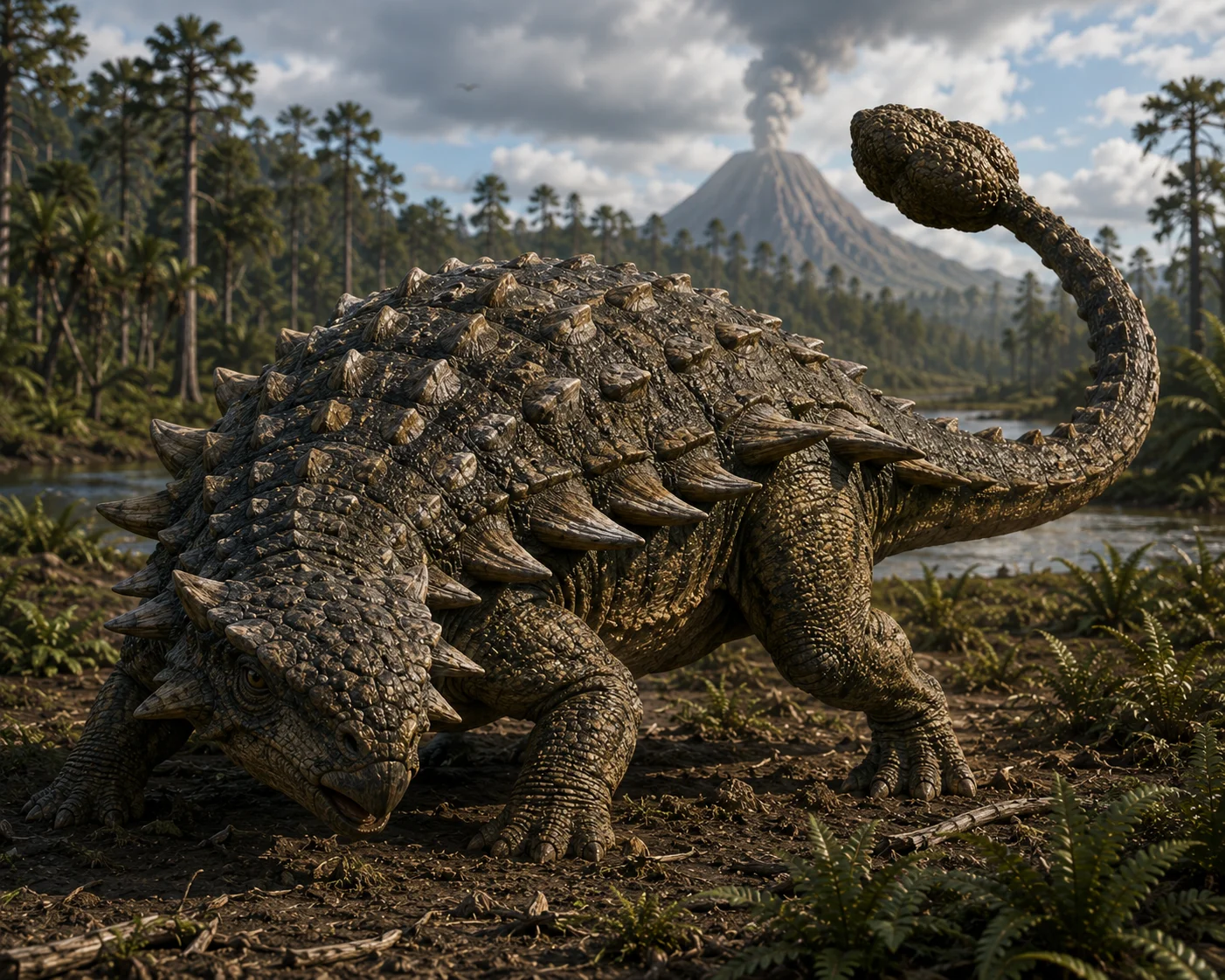
The living tank. T-Rex's only attack option was the soft underbelly — but Ankylosaurus kept that pressed to the ground. Computer models confirm the tail club could generate enough force to shatter T-Rex's leg bones. Many T-Rex fossils show healed lower limb fractures consistent with this.

जीवित टैंक। टी-रेक्स का एकमात्र हमले का विकल्प नरम पेट था — लेकिन एंकिलोसॉरस उसे ज़मीन पर दबाए रखता था। कम्प्यूटर मॉडल पुष्टि करते हैं कि पूँछ की गदा टी-रेक्स की टाँग की हड्डियाँ तोड़ने के लिए पर्याप्त बल उत्पन्न कर सकती थी।

What T-Rex actually looked likeटी-रेक्स वास्तव में कैसा दिखता था

Based on fossilised bones, skin impressions, and comparisons with living relatives, this is the most scientifically accurate reconstruction of T-Rex available. Rotate the model below to explore all angles.

जीवाश्म हड्डियों, त्वचा छापों और जीवित रिश्तेदारों के साथ तुलना के आधार पर, यह टी-रेक्स का सबसे वैज्ञानिक रूप से सटीक पुनर्निर्माण है।

🔨
3D Model — Under Development 3D मॉडल — विकासाधीन

A fully interactive 3D reconstruction of Tyrannosaurus Rex is being developed. This scientifically accurate model will feature skeletal articulation, textured skin, and realistic animation. Check back soon! टायरानोसॉरस रेक्स का एक पूरी तरह से इंटरैक्टिव 3D पुनर्निर्माण विकसित किया जा रहा है। यह वैज्ञानिक रूप से सटीक मॉडल जल्द ही उपलब्ध होगा!

Skin Texture
त्वचा बनावट
Large scales on head, fine pebbly scales on body. Likely dark grey-brown above, lighter below (counter-shading for camouflage).
सिर पर बड़े शल्क, शरीर पर महीन कंकड़ जैसे शल्क। संभवतः ऊपर गहरा भूरा-स्लेटी, नीचे हल्का (छलावरण के लिए)।
Posture
मुद्रा
Horizontal body held parallel to ground, stiff tail used as counterbalance. Not upright as old reconstructions showed — more like a see-saw with the hips as the pivot.
शरीर ज़मीन के समानांतर क्षैतिज, कठोर पूँछ काउंटरबैलेंस के रूप में। पुरानी पुनर्निर्माण जैसी सीधी नहीं — कूल्हे धुरी के साथ सीसॉ की तरह।
Feathers?
पंख?
Probably not on adult T-Rex. Fossilised skin impressions show scales, not feathers. Juvenile T-Rex may have had proto-feather fuzz, lost as they grew larger (as large size generates more body heat).
वयस्क टी-रेक्स पर शायद नहीं। जीवाश्म त्वचा छाप पंखों की नहीं, शल्कों की दिखाती हैं। किशोर टी-रेक्स में प्रोटो-फेदर फज़ हो सकता था।

Where T-Rex has been foundटी-रेक्स कहाँ पाया गया है

Over 50 T-Rex specimens have been discovered, all from the Hell Creek and Lance Formations of western North America. T-Rex had a surprisingly limited geographic range — it only lived in a narrow strip of western North America.

50 से अधिक टी-रेक्स नमूने खोजे गए हैं, सभी पश्चिमी उत्तरी अमेरिका के हेल क्रीक और लांस फॉर्मेशन से। टी-रेक्स की एक आश्चर्यजनक रूप से सीमित भौगोलिक सीमा थी — यह केवल पश्चिमी उत्तरी अमेरिका की एक संकरी पट्टी में रहता था।

01
Hell Creek Formation, Montana
हेल क्रीक फॉर्मेशन, मोंटाना
USA — Primary T-Rex Zone
यूएसए — प्राथमिक टी-रेक्स क्षेत्र

The most productive T-Rex fossil site in the world. "Sue" (the largest and most complete T-Rex ever found) was discovered here in 1990 by Sue Hendrickson. Over 40% of all known T-Rex specimens come from this formation.

दुनिया में सबसे उत्पादक टी-रेक्स जीवाश्म स्थल। "सू" (अब तक पाया गया सबसे बड़ा और सबसे पूर्ण टी-रेक्स) 1990 में यहाँ मिला। सभी ज्ञात टी-रेक्स नमूनों का 40% से अधिक इस फॉर्मेशन से आता है।

02
Black Hills, South Dakota
ब्लैक हिल्स, साउथ डकोटा
USA — "Stan" Discovery Site
यूएसए — "स्टैन" खोज स्थल

"Stan" — one of the most complete T-Rex skeletons ever found (188 bones) — was discovered here. Stan's skull shows healed puncture wounds that match T-Rex tooth dimensions, evidence of fierce intraspecific combat.

"स्टैन" — अब तक पाए गए सबसे पूर्ण टी-रेक्स कंकालों में से एक (188 हड्डियाँ) — यहाँ खोजा गया। स्टैन की खोपड़ी टी-रेक्स दाँत आयामों से मेल खाने वाले ठीक हुए पंचर घाव दिखाती है।

03
Lance Formation, Wyoming
लांस फॉर्मेशन, व्योमिंग
USA — First T-Rex Discovery
यूएसए — पहली टी-रेक्स खोज

The first specimens ever attributed to T-Rex were found here. Barnum Brown discovered the first T-Rex skeleton in 1902 in this formation, which stretches across Wyoming and into Montana.

टी-रेक्स को जिम्मेदार पहले नमूने यहाँ पाए गए। बर्नम ब्राउन ने 1902 में इस फॉर्मेशन में पहला टी-रेक्स कंकाल खोजा।

04
Frenchman Formation, Saskatchewan
फ्रेंचमैन फॉर्मेशन, सस्केचेवान
Canada — Northern Range
कनाडा — उत्तरी सीमा

T-Rex specimens found here represent the northernmost known range of the species. The Canadian specimens are slightly smaller on average than US finds, possibly reflecting differences in prey availability or climate.

यहाँ पाए गए टी-रेक्स नमूने प्रजाति की सबसे उत्तरी ज्ञात सीमा का प्रतिनिधित्व करते हैं।

What did T-Rex sound like?टी-रेक्स कैसा सुनाई देता था?

Scientists believe T-Rex likely produced deep, low-frequency rumbles and booming calls rather than the classic Hollywood screech. Birds (its closest living relatives) and crocodilians both use closed-mouth vocalisation — producing resonant, low booms. Palaeoacoustics research suggests T-Rex communicated through infrasound vibrations that could travel kilometres through the ground.

वैज्ञानिकों का मानना है कि टी-रेक्स संभवतः क्लासिक हॉलीवुड चीख की बजाय गहरी, कम आवृत्ति की गड़गड़ाहट और गूँजने वाली पुकारें उत्पन्न करता था। पक्षी (इसके सबसे करीबी जीवित रिश्तेदार) और मगरमच्छ दोनों बंद-मुँह स्वर का उपयोग करते हैं।

🔬
ROAR / VOCALISATIONS
दहाड़ / स्वर

Coming Soon — Roar sounds will be added when audio files are sourced. The sounds of dinosaurs are still a matter of active scientific research — no direct recordings exist.

आने वाले समय में ध्वनि फ़ाइलें जोड़ी जाएंगी। डायनासोरों की ध्वनियाँ अभी भी सक्रिय वैज्ञानिक शोध का विषय हैं — कोई प्रत्यक्ष रिकॉर्डिंग नहीं है।

🔮 Future Scope — Roar audio files will be added here once they are sourced and ready. The exact vocalisations of dinosaurs remain an active area of scientific research. 🔮 भविष्य की योजना — दहाड़ ऑडियो फ़ाइलें यहाँ जोड़ी जाएंगी जब वे तैयार होंगी। डायनासोरों की सटीक ध्वनियाँ वैज्ञानिक शोध का एक सक्रिय क्षेत्र बनी हुई हैं।

Your Survival Odds Against T-Rexटी-रेक्स के खिलाफ आपकी जीवित रहने की संभावना

Based on T-Rex's known sensory capabilities, speed, bite force, and hunting behaviour — here's the cold hard science of what would happen if you encountered one in the wild.

टी-रेक्स की ज्ञात संवेदी क्षमताओं, गति, काटने की शक्ति और शिकार व्यवहार के आधार पर — यहाँ वह कठोर विज्ञान है जो तब होता जब आप जंगल में एक से मिलते।

0% Death Rate मृत्यु दर
👃
You Can't Hide
आप छुप नहीं सकते

T-Rex can smell you from 1.5km away. Even if you're completely silent and hidden in thick vegetation, its olfactory system is more powerful than any modern land predator including lions and wolves.

टी-रेक्स आपको 1.5 किमी दूर से सूँघ सकता है। यहाँ तक कि यदि आप पूरी तरह चुप और घनी वनस्पति में छिपे हों, इसकी घ्राण प्रणाली शेर और भेड़ियों सहित किसी भी आधुनिक स्थलीय शिकारी से अधिक शक्तिशाली है।

👁
It Sees You
यह आपको देखता है

T-Rex's forward-facing eyes gave it binocular vision 13 times sharper than a human's. Unlike predators that detect movement, T-Rex could identify stationary prey. Standing perfectly still would not help you.

टी-रेक्स की आगे की ओर देखने वाली आँखों ने इसे मानव से 13 गुना तेज़ द्विनेत्री दृष्टि दी। स्थिर खड़े रहना आपकी मदद नहीं करता।

🏃
You Can't Outrun It
आप इससे तेज़ नहीं दौड़ सकते

T-Rex's top speed was ~20 km/h — approximately the same as a fast human sprinter. But T-Rex could sustain this pace for far longer. An average human peaks at ~24 km/h for under 30 seconds. A T-Rex could run at 20 km/h for minutes.

टी-रेक्स की अधिकतम गति ~20 किमी/घंटा थी — लगभग एक तेज़ मानव धावक के समान। लेकिन टी-रेक्स इस गति को बहुत लंबे समय तक बनाए रख सकता था।

💥
One Bite Ends It
एक काट से खत्म

57,000 Newtons of bite force — strong enough to bite through steel. A human body offers essentially zero resistance. The bite of a T-Rex would be over before your nervous system registered the pain. Death would be instantaneous.

57,000 न्यूटन काटने की शक्ति — स्टील के माध्यम से काटने के लिए पर्याप्त। एक मानव शरीर अनिवार्य रूप से शून्य प्रतिरोध प्रदान करता है। मृत्यु तात्कालिक होती।

Extinction — 66 Million Years Agoविनाश — 6.6 करोड़ वर्ष पूर्व

T-Rex vanished 66 million years ago when a 10–15 km wide asteroid struck the Yucatán Peninsula in Mexico. The impact released energy equivalent to a billion nuclear bombs, triggering massive wildfires, a 'nuclear winter' from dust blocking sunlight for years, and the collapse of food chains. T-Rex, as the apex predator, was entirely dependent on a functioning ecosystem — when the herbivores starved, so did the hunters. Every non-avian dinosaur was gone within 10,000 years of the impact. टी-रेक्स 6.6 करोड़ वर्ष पूर्व समाप्त हो गया जब एक 10–15 किमी चौड़े क्षुद्रग्रह ने मेक्सिको के युकाटान प्रायद्वीप पर प्रहार किया। प्रभाव ने एक अरब परमाणु बमों के बराबर ऊर्जा छोड़ी। टी-रेक्स, शीर्ष शिकारी के रूप में, एक कार्यशील पारितंत्र पर पूरी तरह निर्भर था — जब शाकाहारी भूखे मरे, तो शिकारी भी मरे।

Cretaceous Era →क्रेटेशियस युग → More Dinosaursऔर डायनासोर