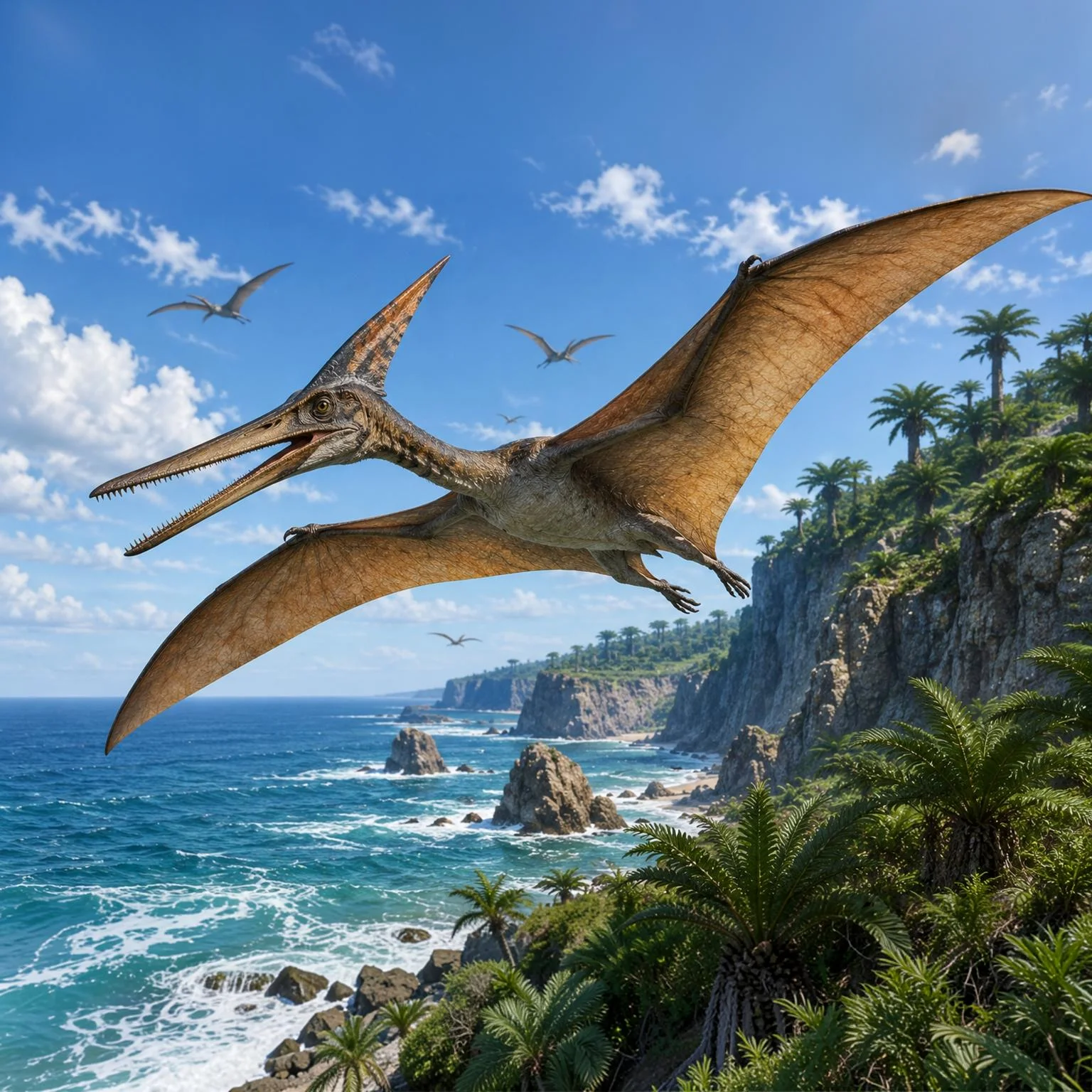
Pterodactylus
All Toursसभी टूर
🐟 Fish-eaterमछली खाने वाला Jurassicजुरासिक

Pterodactylus

"The Ancient Flyer"
"प्राचीन उड़ने वाला"
1mWingspanपंख फैलाव
1kgWeightवजन
0.25mHeightऊँचाई
10–15Lifespanजीवनकाल
NOTa dinosaurडायनासोर नहीं
150MYears Agoवर्ष पूर्व

Technically not a dinosaur — Pterodactylus was a flying reptile (pterosaur) that lived alongside dinosaurs. It soared above Jurassic coastal waters on wings of skin and bone, snatching fish with its long, toothed jaws. तकनीकी रूप से डायनासोर नहीं — टेरोडैक्टिलस एक उड़ने वाला सरीसृप (टेरोसॉर) था जो जुरासिक तटीय जल के ऊपर उड़ता था।
🏞

How it livedयह कैसे जीता था

Pterodactylus was NOT a dinosaur — it was a pterosaur, a flying reptile that evolved independently from the same archosaur ancestors. It lived along the coasts, cliffs, and lakeshores of what is now Europe and Africa, nesting in colonial rookeries like modern seabirds. On the ground, it walked awkwardly on all four limbs — its wing membrane folded against its body like an enormous bat. In the air, it was efficient and graceful, soaring on thermals and diving for fish. Its head crest (more prominent in males) was used for species and sex recognition.

टेरोडैक्टिलस एक डायनासोर नहीं था — यह एक टेरोसॉर था। यह आज के यूरोप और अफ्रीका के तटों के साथ रहता था। ज़मीन पर यह चार अंगों पर अजीब तरह से चलता था।

What it ateयह क्या खाता था

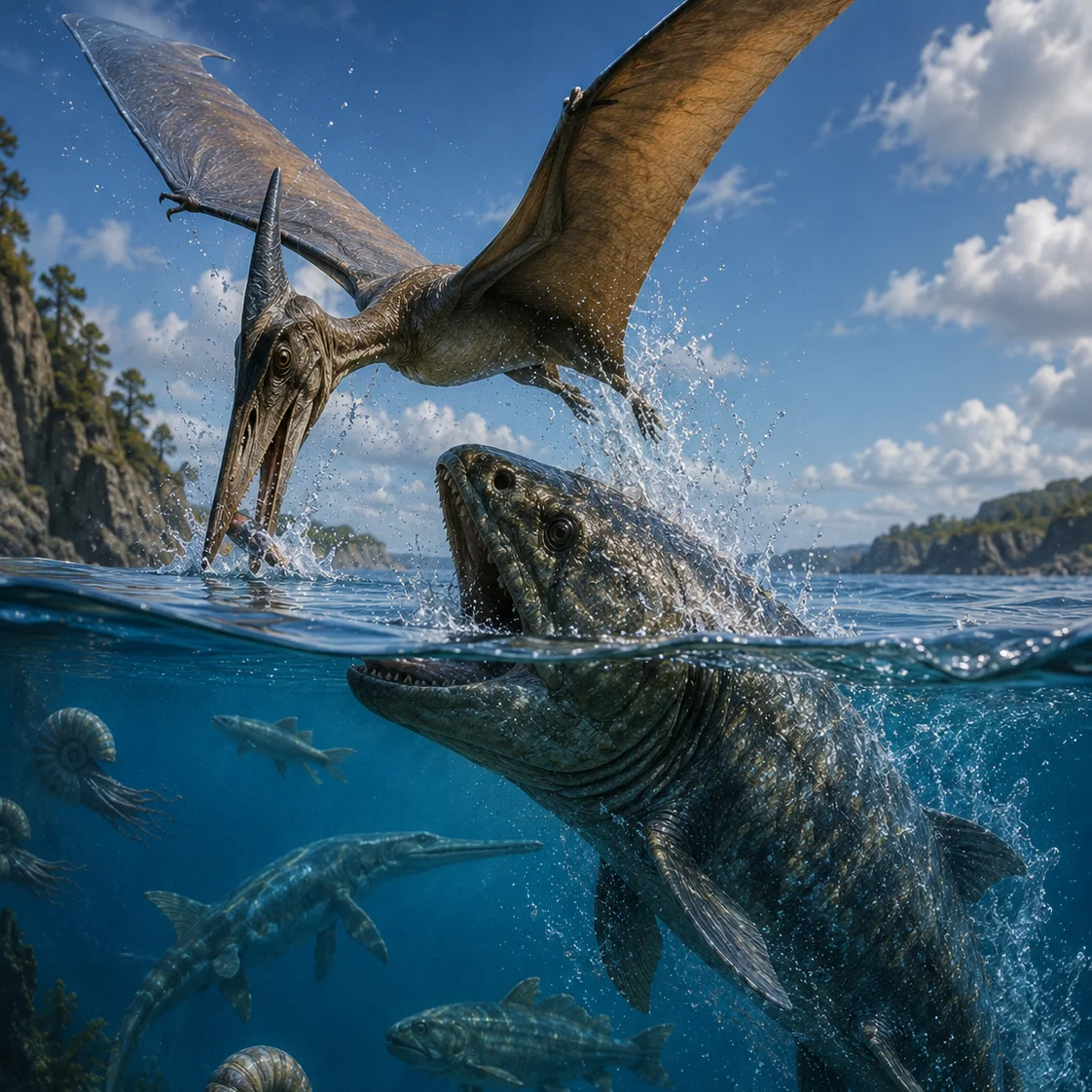
Pterodactylus was primarily a fish hunter, using its long, narrow jaw lined with 90 backward-curved teeth to grip slippery fish. It likely employed two techniques: soaring over water and diving to snatch surface fish, and wading in shallow water and striking like a heron. Fossil stomach contents have revealed fish bones and scales, confirming the fish-heavy diet. It may also have eaten insects and small lizards opportunistically.

टेरोडैक्टिलस मुख्य रूप से मछली शिकारी था, 90 पीछे की ओर मुड़े दाँतों वाले लंबे, संकरे जबड़े का उपयोग करता था। जीवाश्म पेट की सामग्री में मछली की हड्डियाँ और शल्क मिले हैं।

🍖

How long it livedयह कितने समय तक जीया

As a small, flying creature with a high metabolic rate, Pterodactylus lived fast and died young. Its lightweight hollow bones were optimised for flight efficiency but were fragile. The high energy demands of flight, combined with the risks of injury from diving and colonial nesting competition, meant most individuals lived 10–15 years.

एक छोटे, उड़ने वाले प्राणी के रूप में उच्च चयापचय दर के साथ, टेरोडैक्टिलस तेज़ जीता था। इसकी हल्की खोखली हड्डियाँ नाज़ुक थीं। अधिकांश व्यक्ति 10–15 वर्ष जीते थे।

Its greatest enemyइसका सबसे बड़ा दुश्मन

What Pterodactylus actually looked likePterodactylus वास्तव में कैसा दिखता था

Pterodactylus had a distinctly bird-like yet alien appearance. Its wings were formed from a membrane of skin and muscle stretching from its enormously elongated fourth finger to its body. Fossil impressions show it had a covering of hair-like pycnofibers (proto-feathers) for insulation. Its head bore a small bony crest. Its neck was long and flexible, its toothless-near-tip beak lined with fish-gripping teeth.

टेरोडैक्टिलस का एक विशिष्ट पक्षी जैसा फिर भी अलौकिक रूप था। इसके पंख एक त्वचा और मांसपेशी की झिल्ली से बने थे। जीवाश्म छाप बालों जैसे पाइक्नोफाइबर की परत दिखाते हैं।

🔨
3D Model — Under Development 3D मॉडल — विकासाधीन

A fully interactive 3D reconstruction of Pterodactylus is being developed. This scientifically accurate model will feature its winged membrane, elongated skull with crest, and realistic flight animation. Check back soon! टेरोडैक्टिलस का एक पूरी तरह से इंटरैक्टिव 3D पुनर्निर्माण विकसित किया जा रहा है। यह वैज्ञानिक रूप से सटीक मॉडल जल्द ही उपलब्ध होगा!

Where Pterodactylus has been foundPterodactylus कहाँ पाया गया है

01
Solnhofen Limestone, Bavaria
Germany

The world's most important Pterodactylus fossil site. The exceptional preservation of these Late Jurassic lagoon sediments has yielded dozens of complete Pterodactylus specimens, revealing unprecedented detail of soft tissue and wing membranes.

सोलनहोफेन — दुनिया का सबसे महत्वपूर्ण टेरोडैक्टिलस जीवाश्म स्थल, उत्कृष्ट संरक्षण के साथ।

02
Tendaguru Formation, Tanzania
Tanzania

African pterosaur specimens related to Pterodactylus have been found here, demonstrating the wide geographic range of Jurassic pterosaurs across the ancient Tethys Sea region.

तंज़ानिया में टेरोडैक्टिलस से संबंधित अफ्रीकी टेरोसॉर नमूने पाए गए हैं।

What did Pterodactylus sound like?Pterodactylus कैसा सुनाई देता था?

The sounds of Pterodactylus are still a matter of active scientific research. Being closely related to both birds and crocodilians, it likely produced a range of calls — possibly honking, hissing, and clattering beak sounds similar to modern pelicans and gannets in colonial nesting situations. Its crest may have also served as a resonating structure.

टेरोडैक्टिलस की ध्वनियाँ अभी भी सक्रिय वैज्ञानिक शोध का विषय हैं। पक्षियों और मगरमच्छों से संबंधित, यह संभवतः आधुनिक पेलिकन के समान पुकारें उत्पन्न करता था।

🔬
ROARS / VOCALISATIONS — COMING SOON
ध्वनियाँ / स्वर — प्लेसहोल्डर

Coming Soon — Roar sounds will be added when audio files are sourced. The sounds of this dinosaur are still a matter of active scientific research — no direct recordings exist.

आने वाले समय में ध्वनि फ़ाइलें जोड़ी जाएंगी। इस डायनासोर की ध्वनियाँ अभी भी सक्रिय वैज्ञानिक शोध का विषय हैं।

🔮 Future Scope — Roar audio files will be added here once they are sourced and ready. The exact vocalisations of dinosaurs remain an active area of scientific research. 🔮 भविष्य की योजना — दहाड़ ऑडियो फ़ाइलें यहाँ जोड़ी जाएंगी जब वे तैयार होंगी। डायनासोरों की सटीक ध्वनियाँ वैज्ञानिक शोध का एक सक्रिय क्षेत्र बनी हुई हैं।

Your Survival Odds Against PterodactylusPterodactylus के खिलाफ आपकी जीवित रहने की संभावना

0% Death Rate मृत्यु दर
✈️
Small and Avoidable
छोटा और टालने योग्य

Pterodactylus was only 1 metre wingspan and 1 kg — roughly the size of a crow. Its only real threat to humans is in colonial nesting environments where it might peck defensively. It primarily hunted fish too small to harm a human.

टेरोडैक्टिलस केवल 1 मीटर पंख फैलाव और 1 किलो था — लगभग एक कौवे के आकार का। यह मुख्य रूप से बहुत छोटी मछलियाँ शिकार करता था।

🦟
Disease Risk
बीमारी का खतरा

Living in dense colonial rookeries, Pterodactylus would have carried a significant parasite and disease load. The primary real-world risk from an encounter would be bites causing infection rather than direct injury.

घने औपनिवेशिक घोंसलों में रहते हुए, टेरोडैक्टिलस एक महत्वपूर्ण परजीवी और रोग भार लेकर चलता था।

Extinctionविनाश

All pterosaurs went extinct in the Chicxulub mass extinction 66 million years ago. The collapse of insect and fish populations following the asteroid impact eliminated the food sources that pterosaurs depended on. Despite surviving for 150+ million years and evolving into giants like Quetzalcoatlus (wingspan of 11 metres), all pterosaur lineages were wiped out in the same global catastrophe that ended the dinosaurs. सभी टेरोसॉर 6.6 करोड़ वर्ष पूर्व विलुप्त हो गए। 150+ करोड़ वर्षों तक जीवित रहने के बावजूद, सभी टेरोसॉर वंश उसी वैश्विक तबाही में नष्ट हो गए।

Jurassic Eraजुरासिक युग More Dinosaursऔर डायनासोर