Back to Toursटूर पर वापस
201 – 145 Million Years Ago 20.1 – 14.5 करोड़ वर्ष पूर्व

Jurassicजुरासिक

The golden age of the dinosaurs. A world of giants, lush forests, and the birth of the first birds. डायनासोरों का स्वर्णिम युग। दिग्गजों, हरे-भरे जंगलों और पहले पक्षियों के जन्म की दुनिया।

Jurassic Ambience
जुरासिक परिवेश
Background theme
Background theme
📅56MYears Longवर्षों की अवधि

56 million years of lush abundance — the most spectacular sustained period of dinosaur life.

56 करोड़ वर्षों की हरी-भरी प्रचुरता — डायनासोर जीवन का सबसे शानदार निरंतर काल।

🌡+6°CWarmer Than Todayआज से अधिक गर्म

No polar ice caps. Global tropical forests stretched from pole to pole.

कोई ध्रुवीय बर्फ नहीं। वैश्विक उष्णकटिबंधीय जंगल ध्रुव से ध्रुव तक फैले।

🦕56THeaviest Dinosaurसबसे भारी डायनासोर

Brachiosaurus weighed 56 tonnes — the heaviest land animal ever to walk the Earth.

ब्रैकियोसॉरस का वजन 56 टन था — पृथ्वी पर चलने वाला सबसे भारी स्थलीय जानवर।

🐦~150MFirst Bird Appearsपहला पक्षी प्रकट होता है

Archaeopteryx — the transitional fossil linking dinosaurs to birds — evolved in the Late Jurassic.

आर्कियोप्टेरिक्स — डायनासोरों को पक्षियों से जोड़ने वाला संक्रमणकालीन जीवाश्म — देर के जुरासिक में विकसित हुआ।

JURASSIC

The golden age of the dinosaursडायनासोरों का स्वर्णिम युग

The Jurassic Period (201–145 million years ago) was Earth's most spectacular era of animal life. It began when the end-Triassic extinction cleared the way for dinosaurs to dominate every terrestrial ecosystem. As the supercontinent Pangaea split apart into Laurasia and Gondwana, new coastlines formed, bringing moisture deep inland. Temperatures were 5–10°C warmer than today, with no polar ice caps. Global tropical forests stretched from what is now Alaska to Antarctica.

जुरासिक काल (20.1–14.5 करोड़ वर्ष पूर्व) पृथ्वी पर पशु जीवन का सबसे शानदार युग था। पैंजिया के लॉरेशिया और गोंडवाना में विभाजित होने पर, नए समुद्र तट बने। वैश्विक उष्णकटिबंधीय जंगल आज के अलास्का से अंटार्कटिका तक फैले।

The abundance of plant life drove an explosion in dinosaur size that had no precedent. Sauropods grew to 27+ metres. Stegosaurus evolved its iconic plates. Allosaurus became a 12-metre apex predator. And near the end, one of evolution's most momentous events occurred: the first birds evolved from small feathered theropods.

पौधों के जीवन की प्रचुरता ने डायनासोर के आकार में एक अभूतपूर्व विस्फोट को जन्म दिया। सॉरोपॉड 27+ मीटर तक बढ़े। और अंत के पास, विकास की सबसे महत्वपूर्ण घटनाओं में से एक हुई: पहले पक्षी छोटे पंखदार थेरोपॉड से विकसित हुए।

"The Jurassic was the moment Earth reached its peak — a world more alive, more abundant, and more spectacular than anything before or since."

"जुरासिक वह क्षण था जब पृथ्वी अपने चरम पर पहुँची — पहले या बाद की किसी भी चीज़ से अधिक जीवंत, अधिक प्रचुर और अधिक शानदार दुनिया।"
Jurassic
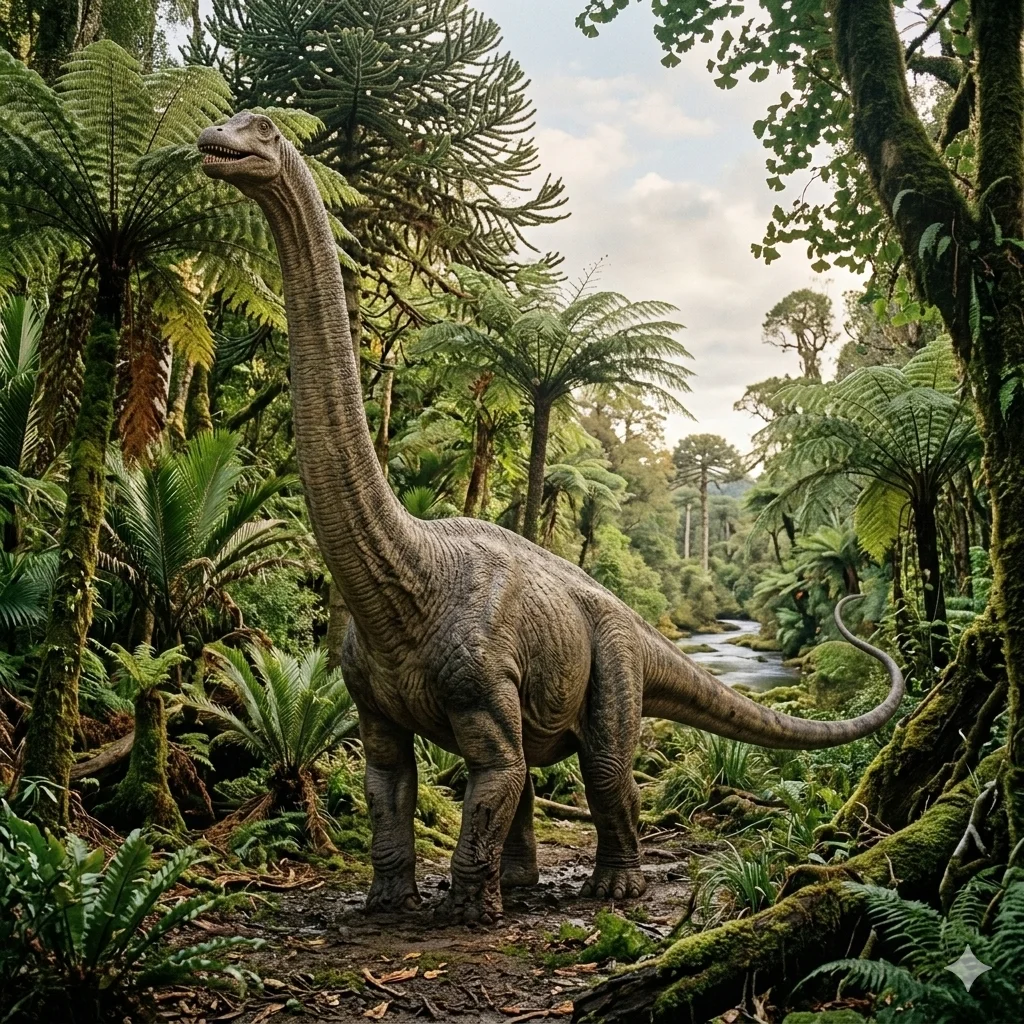
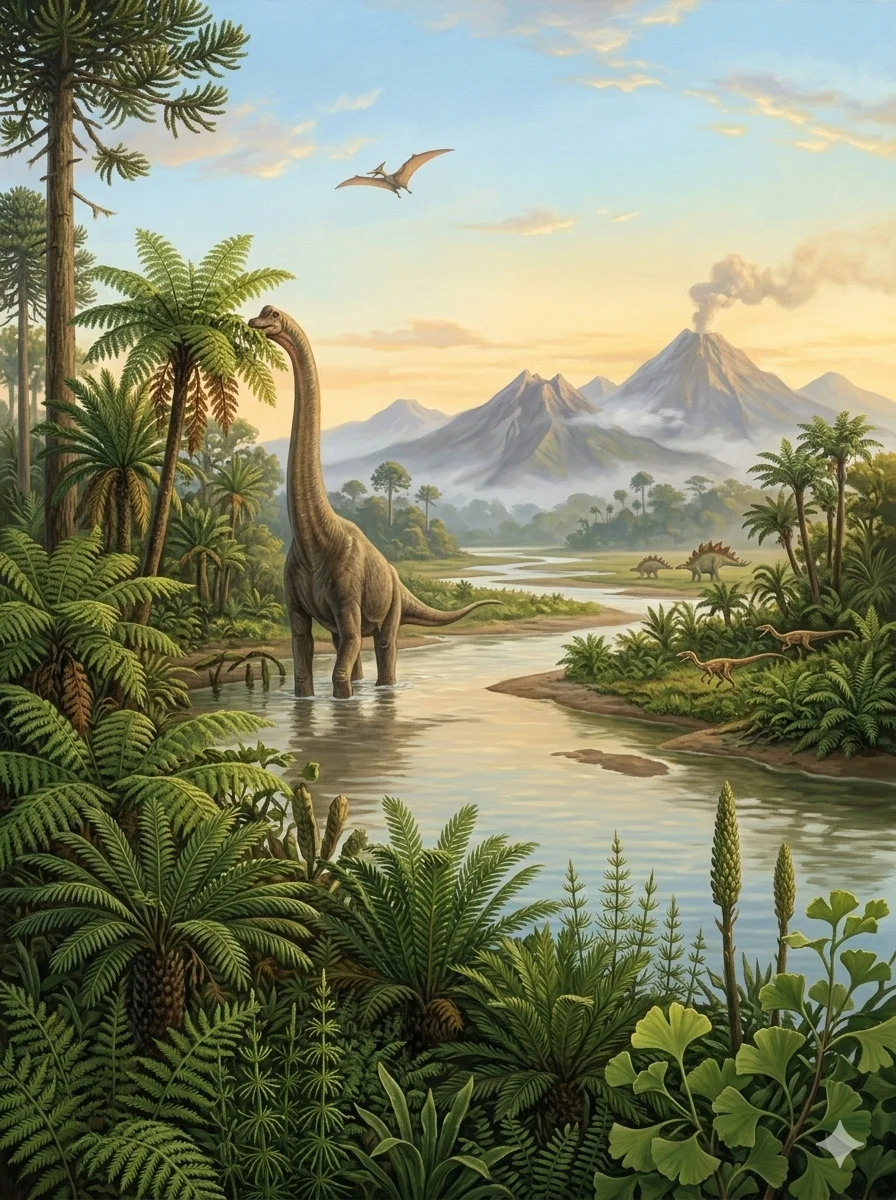
Lush Jurassic forests covered the Earth from pole to pole
हरे-भरे जुरासिक जंगल ध्रुव से ध्रुव तक पृथ्वी को ढकते थे
201 Million Years Ago
20.1 करोड़ वर्ष पूर्व
Jurassic Begins
जुरासिक शुरू होता है

The end-Triassic extinction eliminates Triassic competitors. Dinosaurs inherit the land. Within 10 million years they dominate every terrestrial ecosystem on Earth.

ट्राइऐसिक-अंत विनाश ट्राइऐसिक प्रतिद्वंद्वियों को समाप्त करता है। डायनासोर भूमि के वारिस बनते हैं।

175 Million Years Ago
17.5 करोड़ वर्ष पूर्व
Pangaea Splits Apart
पैंजिया अलग होता है

The Atlantic Ocean forms. North America and Europe separate. Africa and South America begin to drift apart. New coastlines bring moisture inland, transforming the world's climate and creating the lush environments that drive the size explosion.

अटलांटिक महासागर बनता है। उत्तरी अमेरिका और यूरोप अलग होते हैं। नए समुद्र तट अंदर नमी लाते हैं, दुनिया की जलवायु को बदलते हैं।

155 Million Years Ago
15.5 करोड़ वर्ष पूर्व
Giants Dominate
दिग्गजों का राज

The peak of the sauropod age. Brachiosaurus (56 tonnes), Diplodocus (27 metres), Supersaurus (possibly the longest animal ever at 33+ metres). Stegosaurus roams the plains. Allosaurus hunts in packs. The Jurassic ecosystem reaches maximum complexity.

सॉरोपॉड युग का शिखर। ब्रैकियोसॉरस (56 टन), डिप्लोडोकस (27 मीटर)। स्टेगोसॉरस मैदानों में घूमता है।

150 Million Years Ago
15 करोड़ वर्ष पूर्व
The First Bird Evolves
पहला पक्षी विकसित होता है

Archaeopteryx — the famous transitional fossil between dinosaurs and birds — appears in what is now Bavaria, Germany. A feathered theropod with clawed wings and a toothed beak. It is the direct ancestor of every bird alive today.

आर्कियोप्टेरिक्स — डायनासोर और पक्षियों के बीच प्रसिद्ध संक्रमणकालीन जीवाश्म — प्रकट होता है। यह आज जीवित हर पक्षी का प्रत्यक्ष पूर्वज है।

145 Million Years Ago
14.5 करोड़ वर्ष पूर्व
Jurassic-Cretaceous Boundary
जुरासिक-क्रेटेशियस सीमा

A minor extinction event marks the end of the Jurassic. Giant sauropods decline. The world begins to change. But the dinosaurs continue — evolving into even more diverse forms in the Cretaceous that follows.

एक छोटी विनाश घटना जुरासिक के अंत का प्रतीक है। विशाल सॉरोपॉड घटते हैं। लेकिन डायनासोर जारी रहते हैं।
GREEN
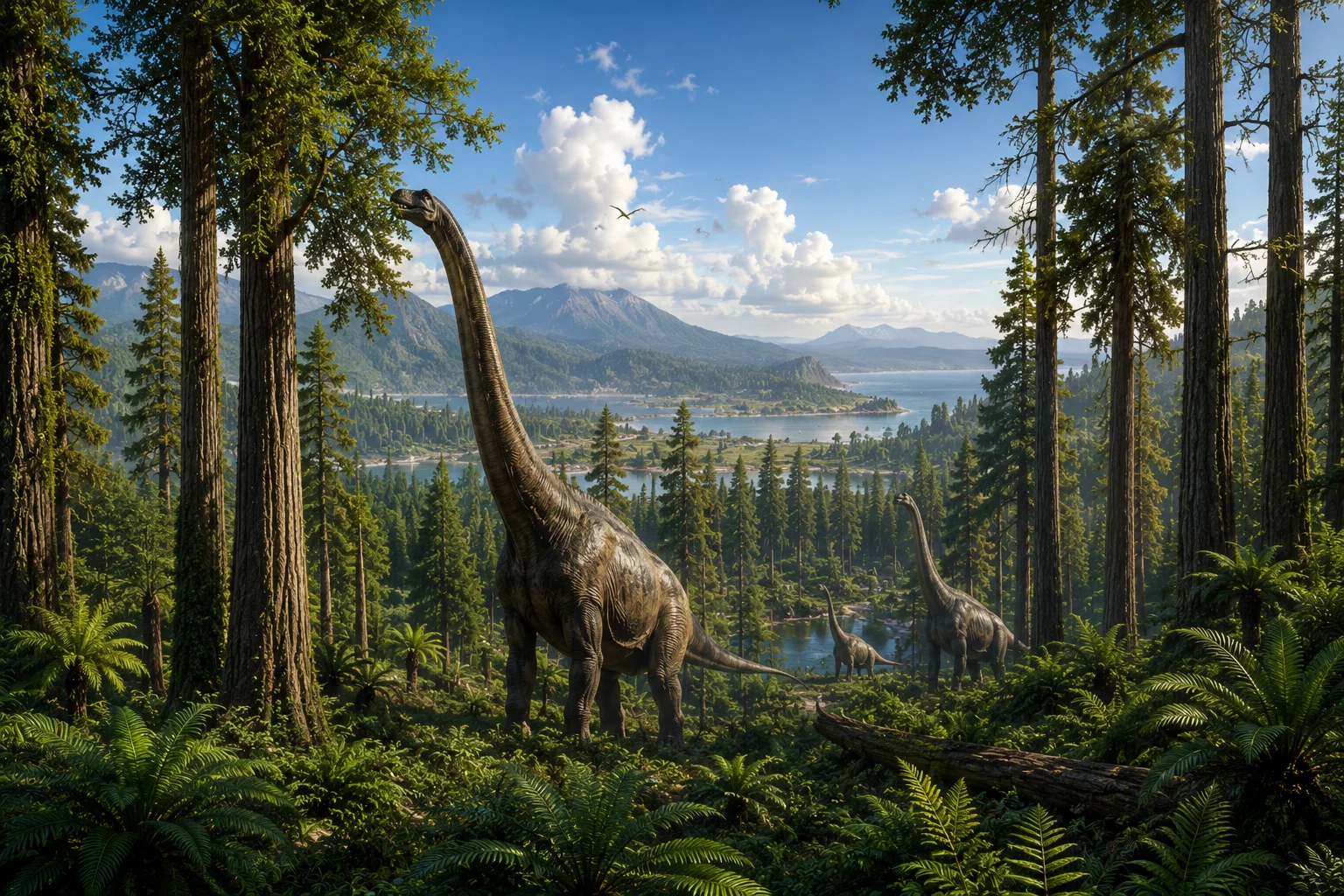
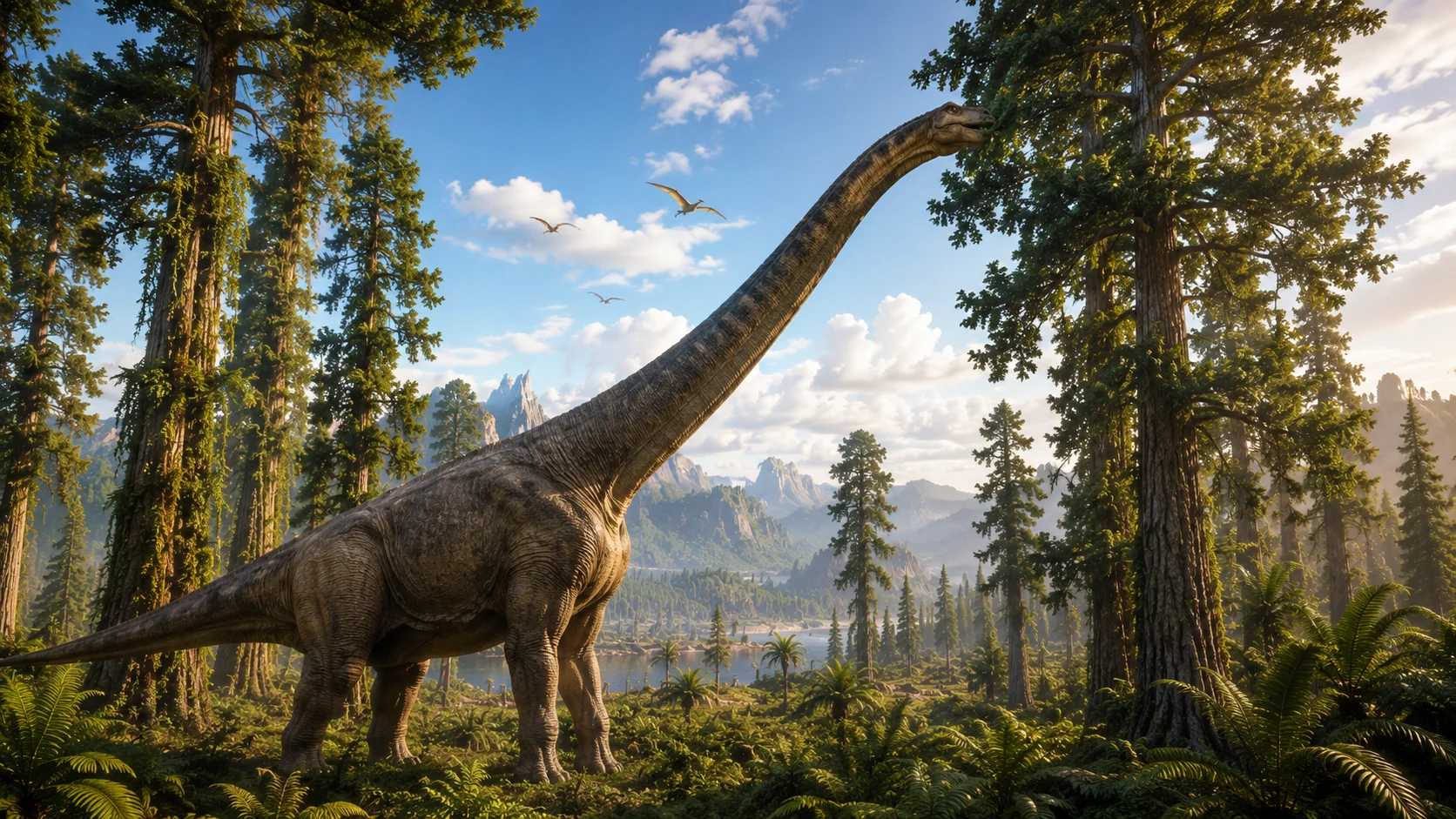
Jurassic forests
Vast conifer forests stretched across Jurassic continents, feeding the sauropod giants
विशाल कोनिफर जंगल जुरासिक महाद्वीपों में फैले थे, सॉरोपॉड दिग्गजों को पोषण देते थे

A world dripping green — the most lush Earth has ever beenहरियाली से भरी दुनिया — पृथ्वी का सबसे हरा-भरा युग

The Jurassic climate was exceptionally warm and humid. Average global temperatures were 5–10°C higher than today — there were no polar ice caps, and forests of ferns, cycads, and towering conifers covered every continent from the Arctic to the Antarctic. The splitting of Pangaea created thousands of kilometres of new coastlines, which brought moisture far inland via monsoon systems.

जुरासिक जलवायु असाधारण रूप से गर्म और आर्द्र थी। वैश्विक औसत तापमान आज से 5–10°C अधिक था। पैंजिया के विभाजन ने हज़ारों किलोमीटर के नए समुद्र तट बनाए, जो मानसून प्रणालियों के माध्यम से अंदर तक नमी लाए।

This green abundance was the engine that drove everything — more plants meant more food for herbivores, which meant larger herbivores, which meant larger predators to hunt them. The Jurassic was a positive feedback loop of ecological abundance that produced the largest land animals Earth has ever seen.

यह हरी प्रचुरता वह इंजन था जिसने सब कुछ चलाया — अधिक पौधे मतलब शाकाहारियों के लिए अधिक भोजन, जिसका मतलब था बड़े शाकाहारी, जिसका मतलब था उन्हें शिकार करने के लिए बड़े शिकारी।

🌡Temperatureतापमान

Global average ~20–25°C — no polar ice, no true winter anywhere. Even what is now Alaska had subtropical forests year-round. CO₂ levels were 4–5 times higher than today, driving the greenhouse warmth.

वैश्विक औसत ~20–25°C — कोई ध्रुवीय बर्फ नहीं। आज के अलास्का में भी साल भर उपोष्णकटिबंधीय जंगल थे।

🌧Rainfallवर्षा

The splitting of Pangaea created new coastlines that brought monsoon rainfall deep inland. While some inland areas remained arid (like parts of central Pangaea), coastal regions had lush tropical rainfall. Vast river systems crisscrossed the continents.

पैंजिया के विभाजन ने मानसून वर्षा को अंदर तक ले आने वाले नए समुद्र तट बनाए। विशाल नदी तंत्र महाद्वीपों को पार करते थे।

🌲Vegetationवनस्पति

Vast forests of araucaria conifers (100+ metres tall), cycads, tree ferns, and horsetails. No flowering plants yet — that revolution wouldn't come until the Cretaceous. But the volume and density of plant life was extraordinary — some areas had tree canopies 40+ metres high.

अरौकेरिया कोनिफर (100+ मीटर ऊँचे), साइकैड, पेड़ फर्न के विशाल जंगल। अभी तक फूल वाले पौधे नहीं। लेकिन पौधों के जीवन का आयतन असाधारण था।

🌊Sea Levelsसमुद्र स्तर

Higher than today, with shallow epicontinental seas flooding parts of every continent. The splitting of Pangaea created new mid-ocean ridges that displaced ocean water upward — flooding low-lying coastal areas and creating isolated island ecosystems that drove rapid evolution.

आज से अधिक, हर महाद्वीप के हिस्सों में बाढ़ के साथ उथले एपिकॉन्टिनेंटल समुद्र। पैंजिया के विभाजन ने अलग-थलग द्वीप पारितंत्र बनाए।

🦟Insectsकीड़े

Giant Jurassic insects thrived in the oxygen-rich forests. Dragonflies with 60cm wingspans. Enormous beetles and cockroaches. Mosquitoes evolved (yes — Jurassic Park's DNA-in-amber concept is based on real mosquito fossils in amber from this era).

ऑक्सीजन-समृद्ध जंगलों में विशाल जुरासिक कीड़े पनपे। 60 सेमी पंख फैलाव वाली ड्रैगनफ्लाई। मच्छर विकसित हुए (हाँ — जुरासिक पार्क की अवधारणा वास्तविक जीवाश्मों पर आधारित है)।

🌙Nights & Seasonsरातें और मौसम

Earth's day was slightly shorter (~23 hours). The Moon was slightly closer. Seasons existed but were milder than today — rather than cold winters, there were simply drier or wetter periods. The lack of ice caps meant more stable, predictable climates worldwide.

पृथ्वी का दिन थोड़ा छोटा था (~23 घंटे)। मौसम थे लेकिन आज से हल्के। बर्फ टोपियों की कमी का मतलब दुनिया भर में अधिक स्थिर जलवायु था।

GIANTS

Feeding the largest animals that ever livedअब तक के सबसे बड़े जानवरों को भोजन देना

The Jurassic food web was dominated by the sauropod-Allosaurus dynamic. Vast herds of sauropods — Brachiosaurus, Diplodocus, Apatosaurus — consumed enormous quantities of vegetation daily. Brachiosaurus alone needed approximately 400 kg per day; a herd of 50 would consume the equivalent of an entire forest every week.

जुरासिक खाद्य जाल सॉरोपॉड-एलोसॉरस गतिशीलता द्वारा प्रभुत्व था। विशाल सॉरोपॉड झुंड प्रतिदिन भारी मात्रा में वनस्पति का उपभोग करते थे। ब्रैकियोसॉरस को अकेले प्रतिदिन लगभग 400 किलो की आवश्यकता थी।

Unlike the Cretaceous where herbivores specialised into diverse feeding niches, Jurassic herbivores were predominantly high-browsers (sauropods reaching tree canopies) and low-browsers (Stegosaurus cropping ferns). The lack of flowering plants meant no fruits or seeds — herbivores processed tough conifers and ferns using gastroliths and fermentation chambers.

क्रेटेशियस के विपरीत जहाँ शाकाहारी विविध भोजन निचों में विशेष हुए, जुरासिक शाकाहारी मुख्य रूप से ऊँचे-चरने वाले और निम्न-चरने वाले थे। फूल वाले पौधों की कमी का मतलब कोई फल या बीज नहीं था।

Jurassic feeding
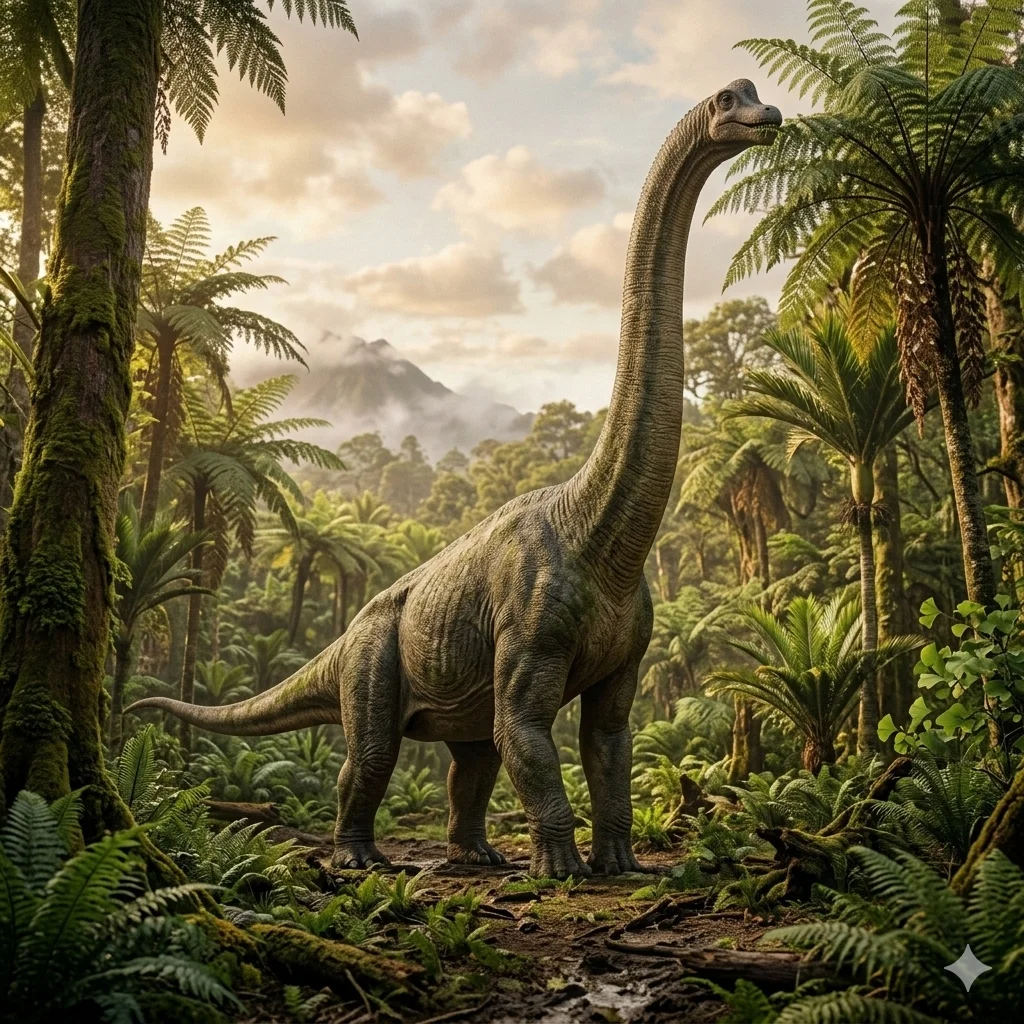
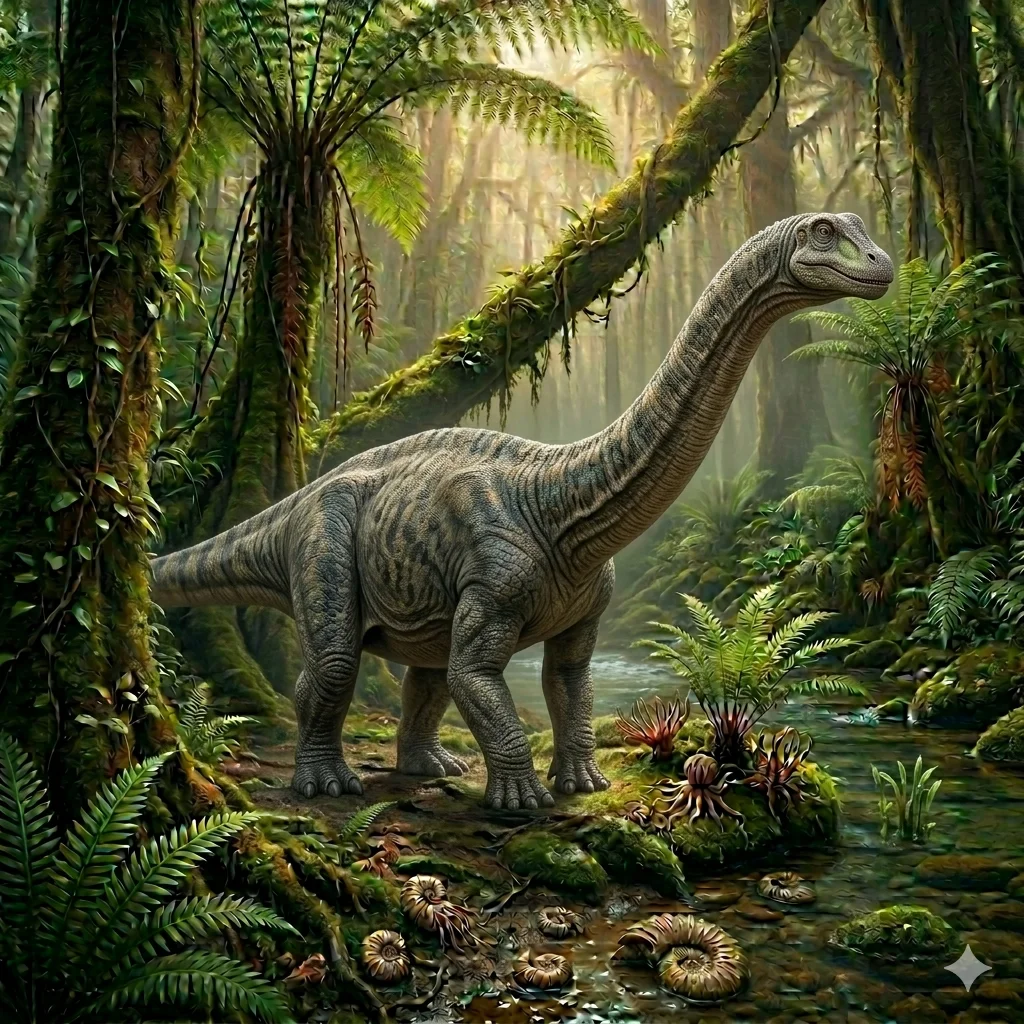
Brachiosaurus — the ultimate high-browser, reaching 13 metres to feast on treetops
ब्रैकियोसॉरस — परम ऊँचा चरने वाला, 13 मीटर तक पेड़ों की चोटी पर दावत करता
🌲
Conifers & Ferns
कोनिफर और फर्न
Producers
उत्पादक
🦗
Insects
कीड़े
Primary Consumers
प्राथमिक उपभोक्ता
🦕
Sauropods / Stegosaurus
सॉरोपॉड / स्टेगोसॉरस
Large Herbivores
बड़े शाकाहारी
🦖
Ceratosaurus / Ornitholestes
सेराटोसॉरस
Mid Predators
मध्य शिकारी
👑
Allosaurus
एलोसॉरस
Apex Predator
शीर्ष शिकारी
🌲High BrowseBrachiosaurusब्रैकियोसॉरस

Peg-like teeth raked leaves from 30m conifers. Swallowed whole, ground by gastroliths. Required 400kg/day — equivalent to eating 4,000 heads of lettuce daily.

खूँटी जैसे दाँत 30 मीटर कोनिफर से पत्तियाँ खुरचते थे। गैस्ट्रोलिथ द्वारा पीसा गया। प्रतिदिन 400 किलो की आवश्यकता।

🌿Horizontal SweepDiplodocusडिप्लोडोकस

Neck swept horizontally like a vacuum cleaner, stripping a wide arc of mid-height vegetation without moving. Teeth designed only for raking — no chewing capability at all.

गर्दन क्षैतिज रूप से वैक्यूम क्लीनर की तरह झूलती थी। दाँत केवल खुरचने के लिए — बिल्कुल चबाने की क्षमता नहीं।

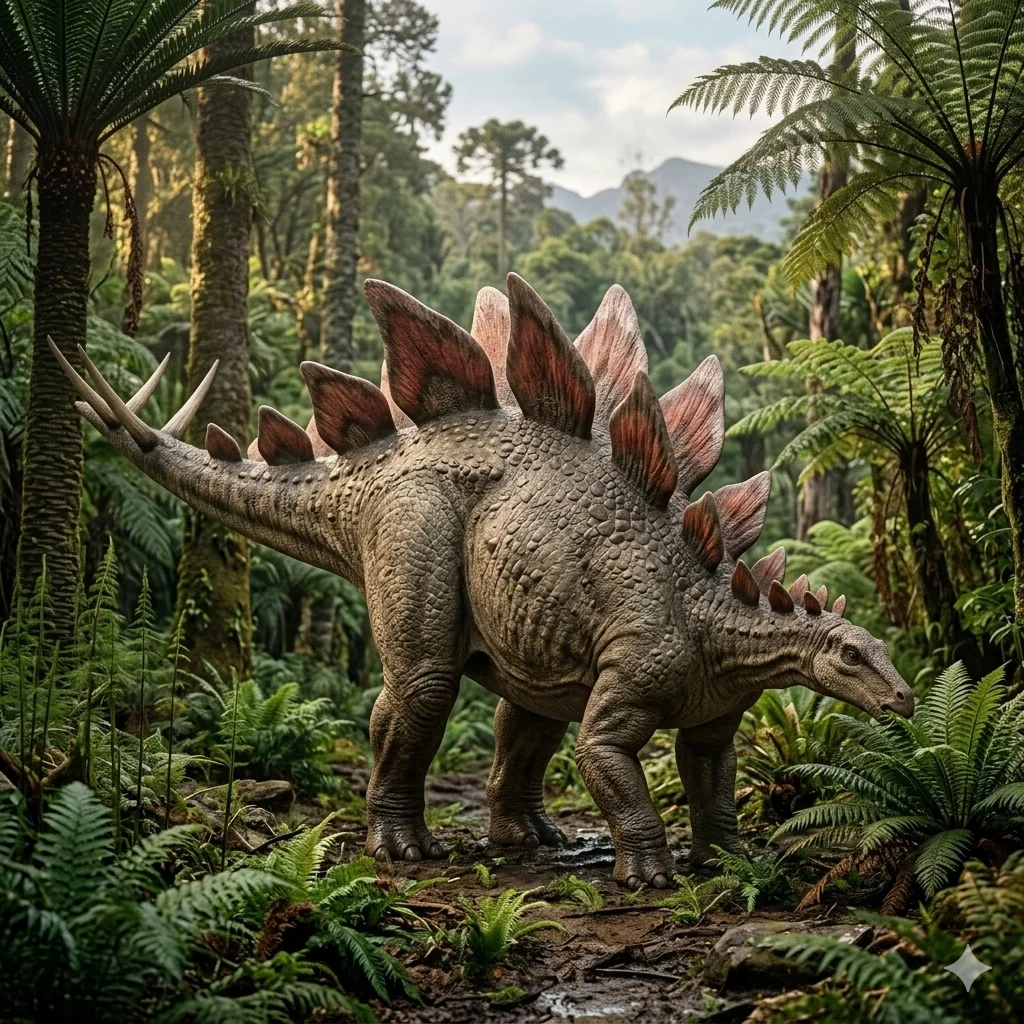
🌱Low BrowseStegosaurusस्टेगोसॉरस

Small, leaf-shaped teeth for processing soft ferns and cycads at ground level. Could not chew — fermentation gut broke down plant material slowly. Ate nearly continuously to meet its caloric needs.

ज़मीन के स्तर पर नरम फर्न के लिए छोटे, पत्ती के आकार के दाँत। चबा नहीं सकता था — किण्वन आंत ने पौधे सामग्री को धीरे-धीरे तोड़ा।

💀Pack HunterAllosaurusएलोसॉरस

12-metre apex predator. Evidence suggests cooperative hunting: slash-and-retreat attacks on juvenile sauropods, delivering deep wounds and then backing away until blood loss weakened the prey. Fossilised hunt sites confirm group attacks.

12 मीटर शीर्ष शिकारी। साक्ष्य सहकारी शिकार का सुझाव देते हैं: किशोर सॉरोपॉड पर स्लैश-और-पीछे हटो हमले।

27m

The age of true giants — nothing this large has walked Earth before or sinceसच्चे दिग्गजों का युग — इससे पहले या बाद में इतना बड़ा कुछ नहीं चला

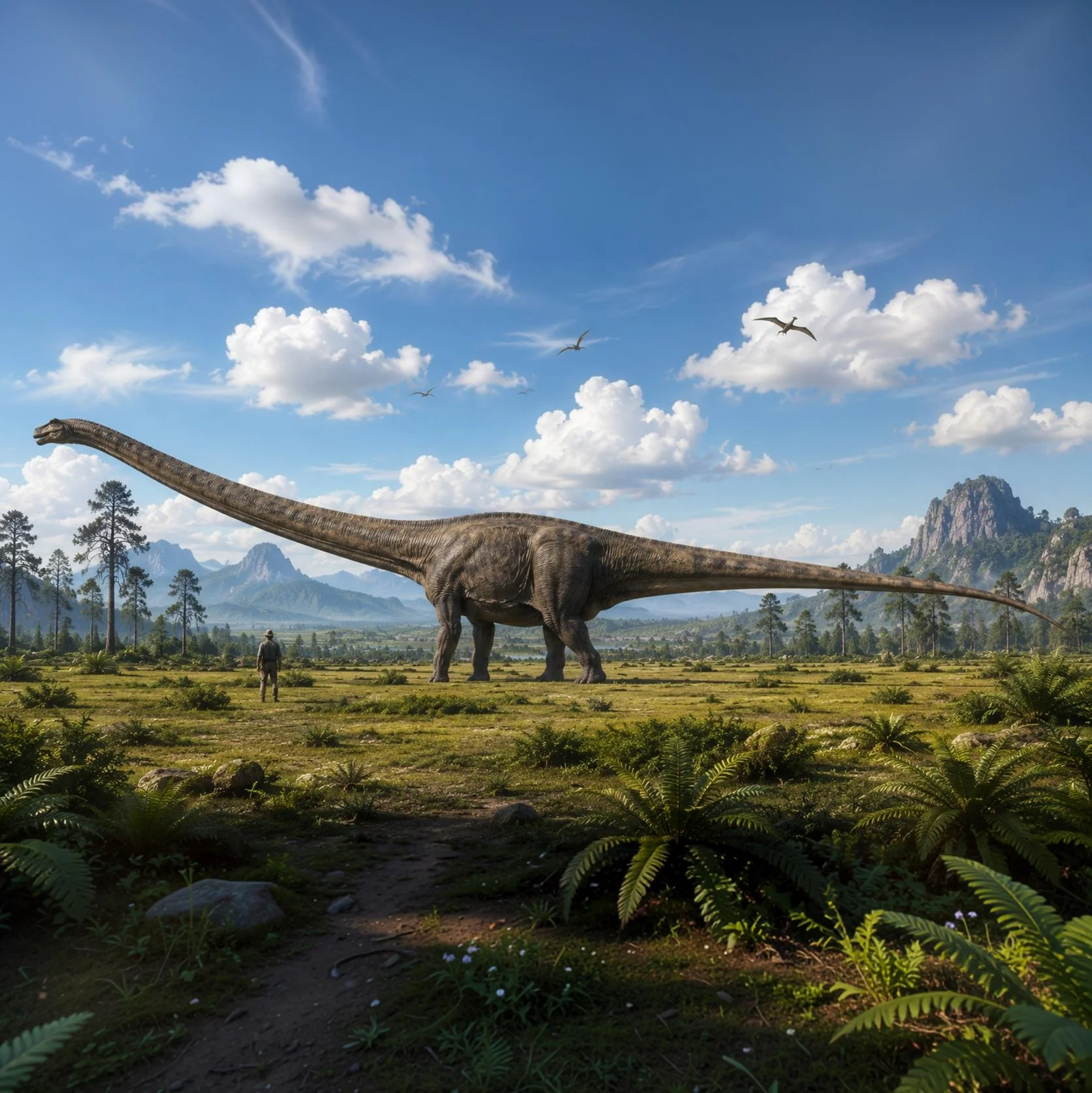
The Jurassic sauropods were the largest land animals in the history of life on Earth — and nothing that evolved before or after has matched them in sheer body mass. Brachiosaurus weighed 56 tonnes — roughly the weight of 9 African elephants. Diplodocus stretched 27 metres end to end. Supersaurus may have exceeded 33 metres.

जुरासिक सॉरोपॉड पृथ्वी पर जीवन के इतिहास में सबसे बड़े स्थलीय जानवर थे। ब्रैकियोसॉरस का वजन 56 टन था — लगभग 9 अफ्रीकी हाथियों का वजन। डिप्लोडोकस सिरे से सिरे तक 27 मीटर था।

Why so big? Several factors: the high-calorie diet of abundant vegetation; the lack of competition from other megafauna; and a physiological secret — their respiratory system, like modern birds, used air sacs that extracted oxygen more efficiently than mammalian lungs, allowing them to sustain such enormous bodies.

इतने बड़े क्यों? कई कारक: प्रचुर वनस्पति का उच्च-कैलोरी आहार; अन्य मेगाफॉना से प्रतिस्पर्धा की कमी; और एक शारीरिक रहस्य — उनका श्वसन तंत्र, आधुनिक पक्षियों की तरह, वायु थैलों का उपयोग करता था।

Jurassic size
Diplodocus at 27m was among the longest animals ever to walk on land
डिप्लोडोकस 27 मीटर पर भूमि पर चलने वाले अब तक के सबसे लंबे जानवरों में था
Diplodocus
27m
Brachiosaurus
26m
Allosaurus
12m
Stegosaurus
9m
You (Human)आप (इंसान)
1.7m

10 Most Significant Jurassic Dinosaurs10 सबसे महत्वपूर्ण जुरासिक डायनासोर

All Tours →सभी टूर →
01
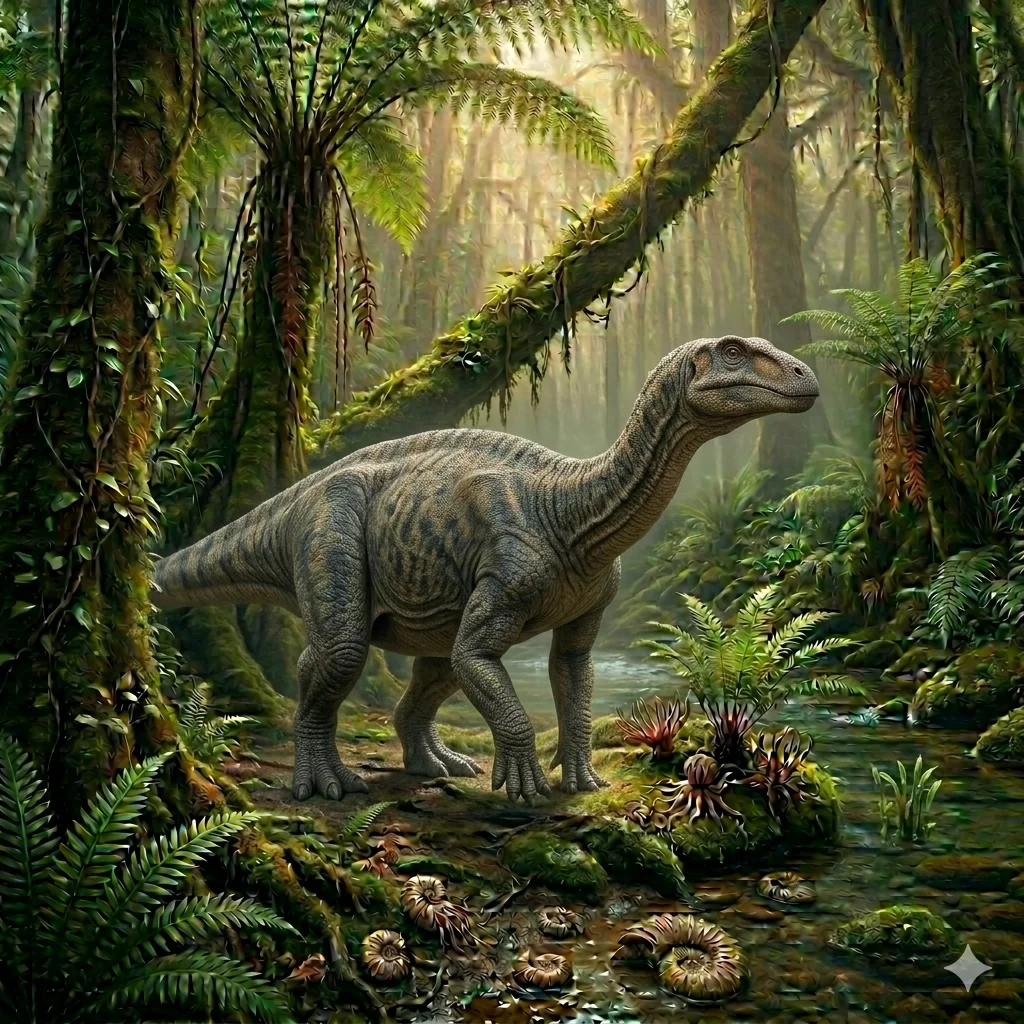
Brachiosaurus
Brachiosaurus
🌿 Herbivoreशाकाहारी
02
Stegosaurus
Stegosaurus
🌿 Herbivoreशाकाहारी
03
Diplodocus
Diplodocus
🌿 Herbivoreशाकाहारी
04
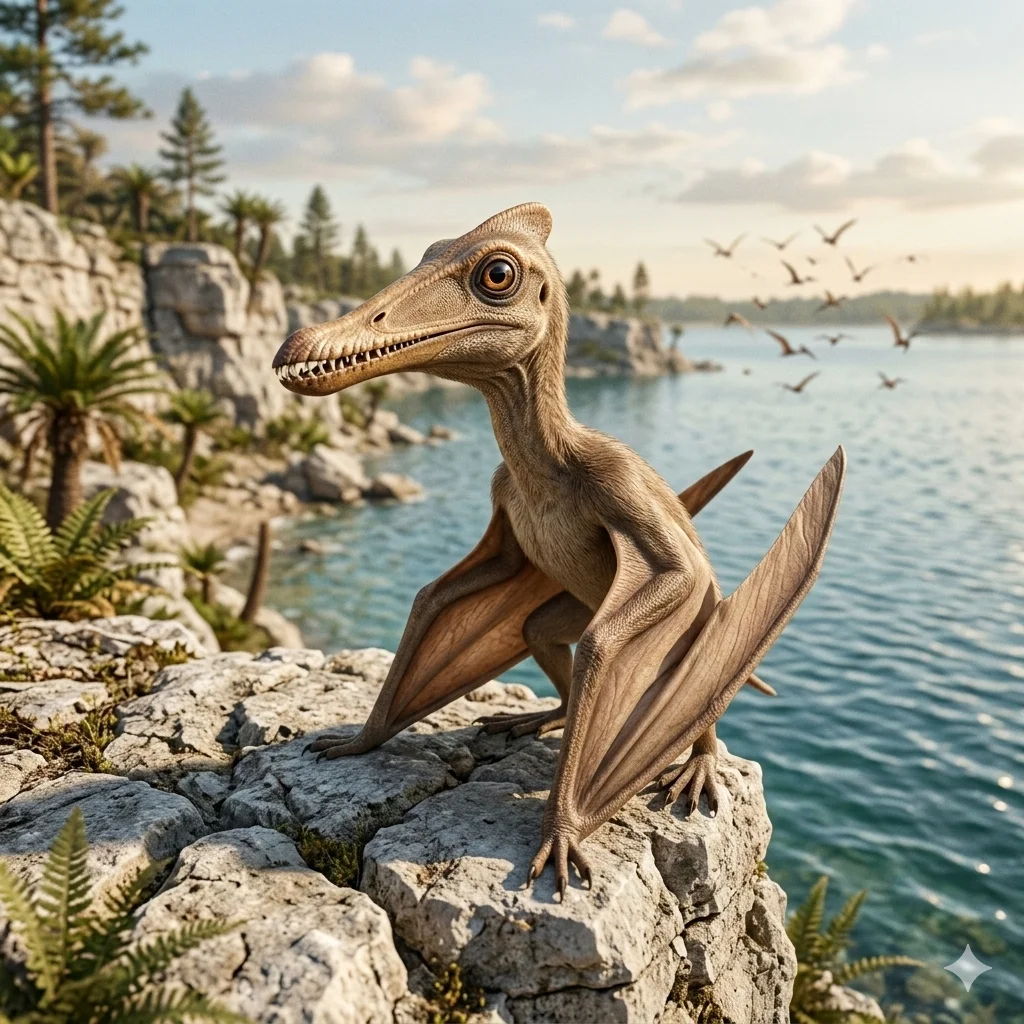
Pterodactylus
Pterodactylus
🐟 Fish-eaterमछली खाने वाला
05
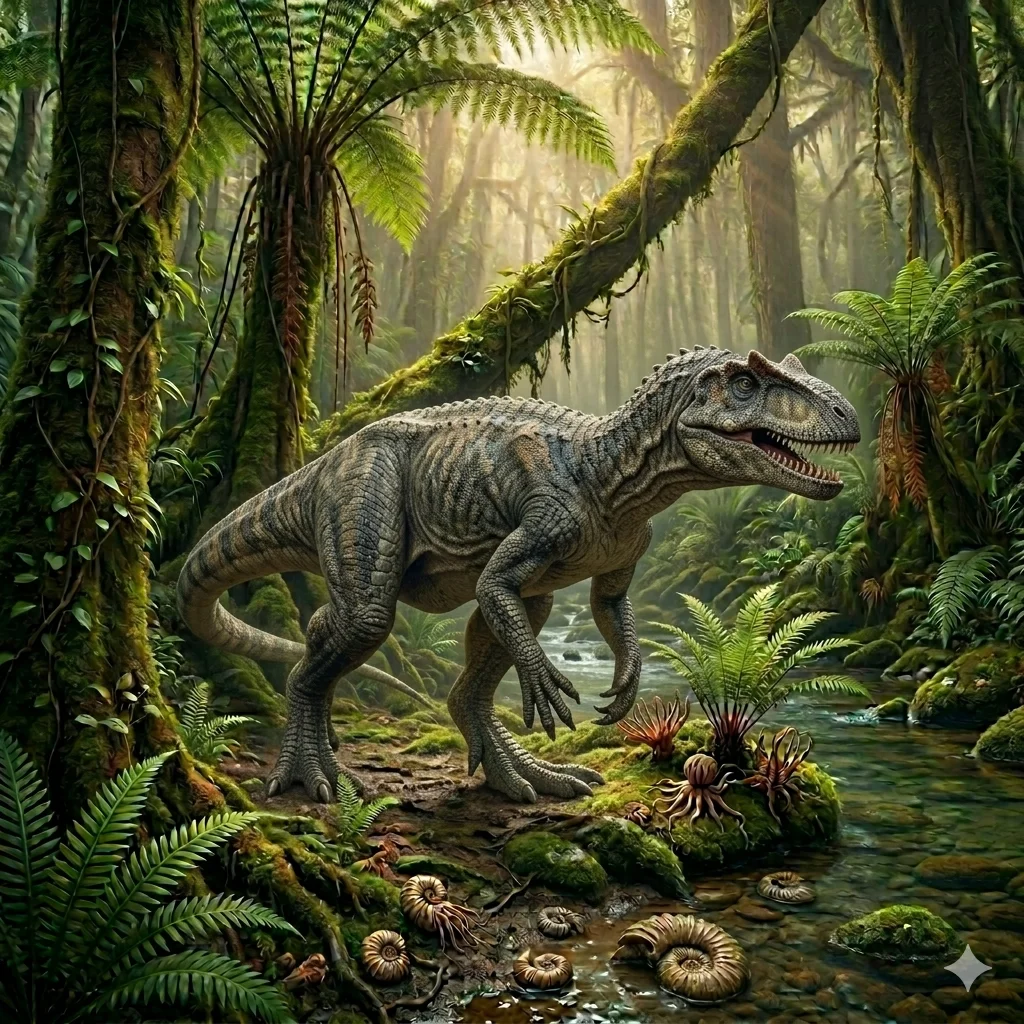
Allosaurus
Allosaurus
🥩 Carnivoreमांसाहारी
06
Archaeopteryx
Archaeopteryx
🐛 Insectivoreकीटभक्षी
07
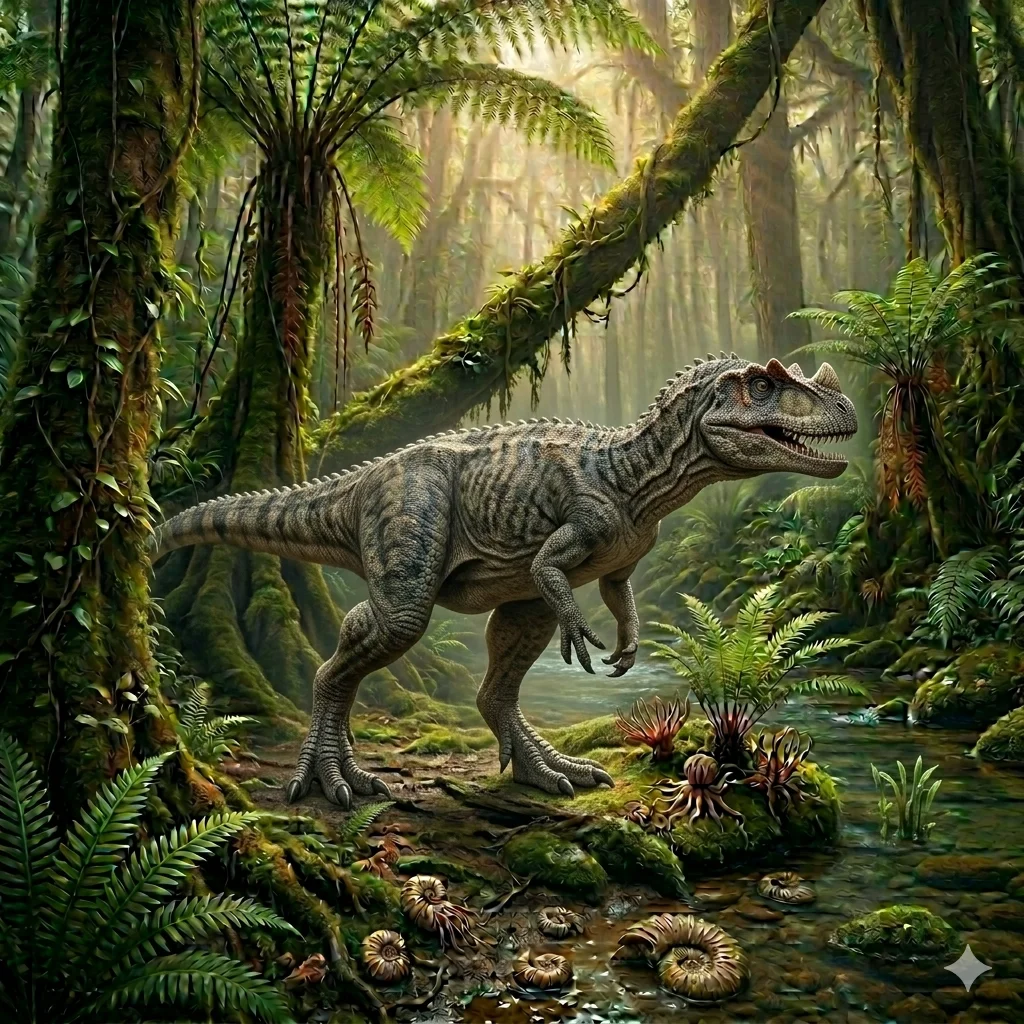
Ceratosaurus
Ceratosaurus
🥩 Carnivoreमांसाहारी
08
Apatosaurus
Apatosaurus
🌿 Herbivoreशाकाहारी
09
Camptosaurus
Camptosaurus
🌿 Herbivoreशाकाहारी
10
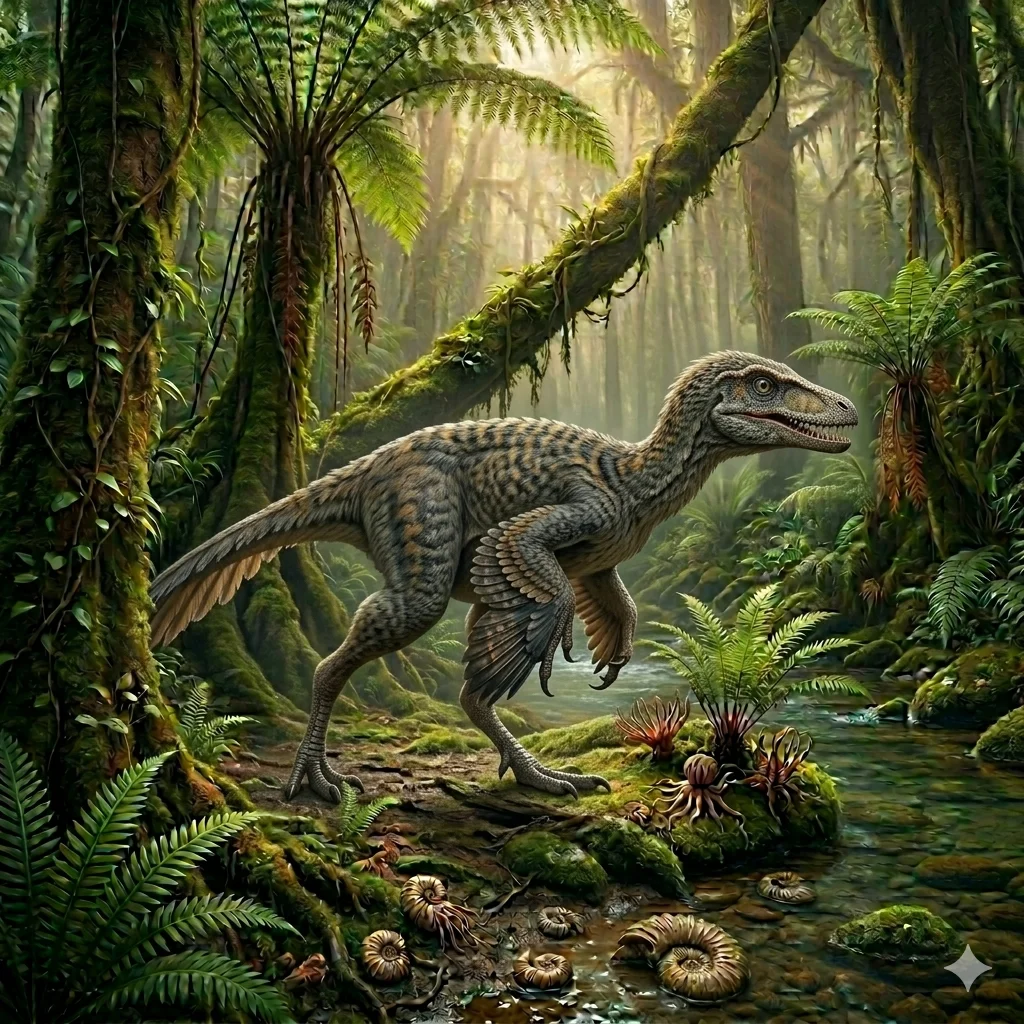
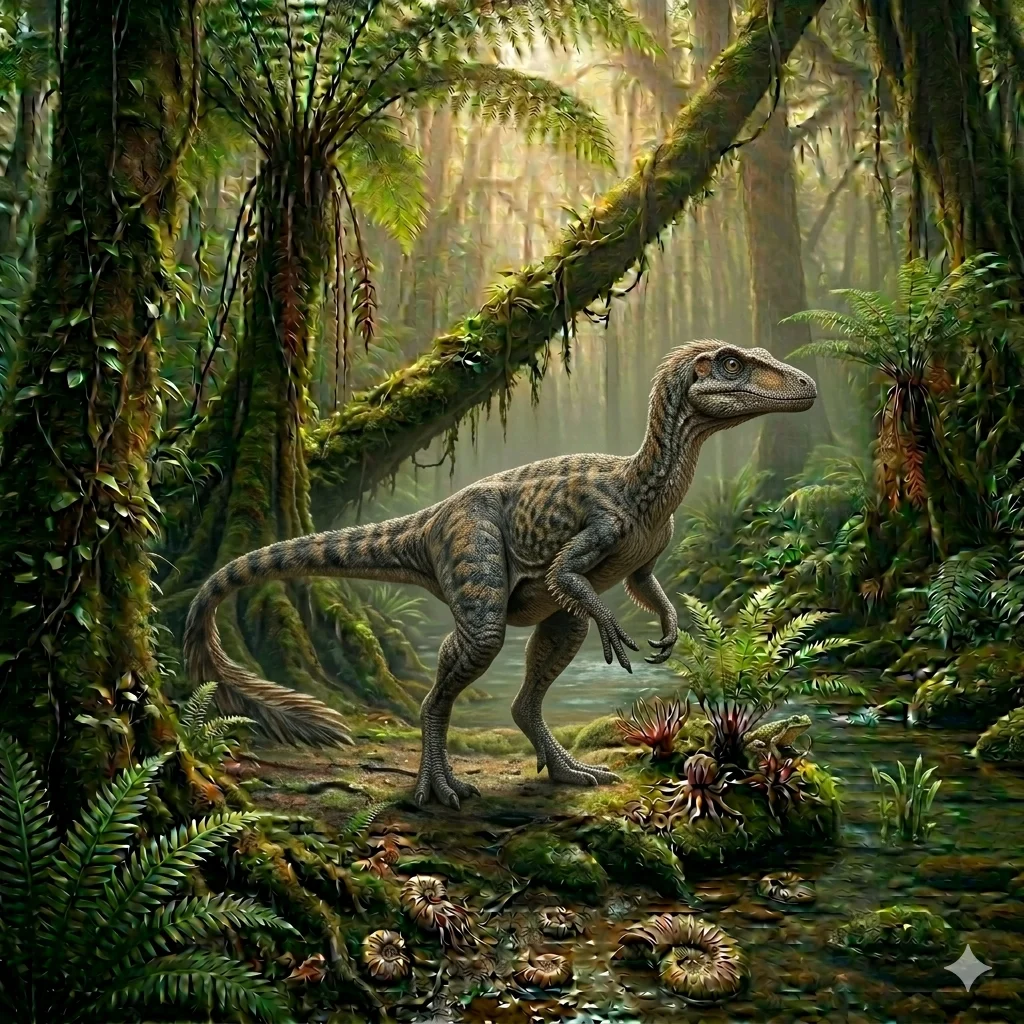
Ornitholestes
Ornitholestes
🥩 Carnivoreमांसाहारी
🌿

The most spectacular era of life on Earthपृथ्वी पर जीवन का सबसे शानदार युग

For 56 million years, the Jurassic was Earth's great green paradise. When it ended, the world changed — but the dinosaurs kept going, evolving into even more extraordinary forms in the Cretaceous that followed. And one lineage of theropods began the journey that would become birds.56 करोड़ वर्षों तक, जुरासिक पृथ्वी का महान हरा स्वर्ग था। जब यह समाप्त हुआ, दुनिया बदल गई — लेकिन डायनासोर जारी रहे। और थेरोपॉड की एक वंशावली ने वह यात्रा शुरू की जो पक्षी बनेगी।

Triassic Eraट्राइऐसिक युग Cretaceous Era →क्रेटेशियस युग →