Diplodocus
All Toursसभी टूर
🌿 Herbivoreशाकाहारी Jurassicजुरासिक

Diplodocus

"The Long Whip"
"लंबा चाबुक"
27mLengthलंबाई
15TWeightवजन
5mHeightऊँचाई
70–80Lifespanजीवनकाल
SonicTail Boomपूँछ की आवाज़
155MYears Agoवर्ष पूर्व

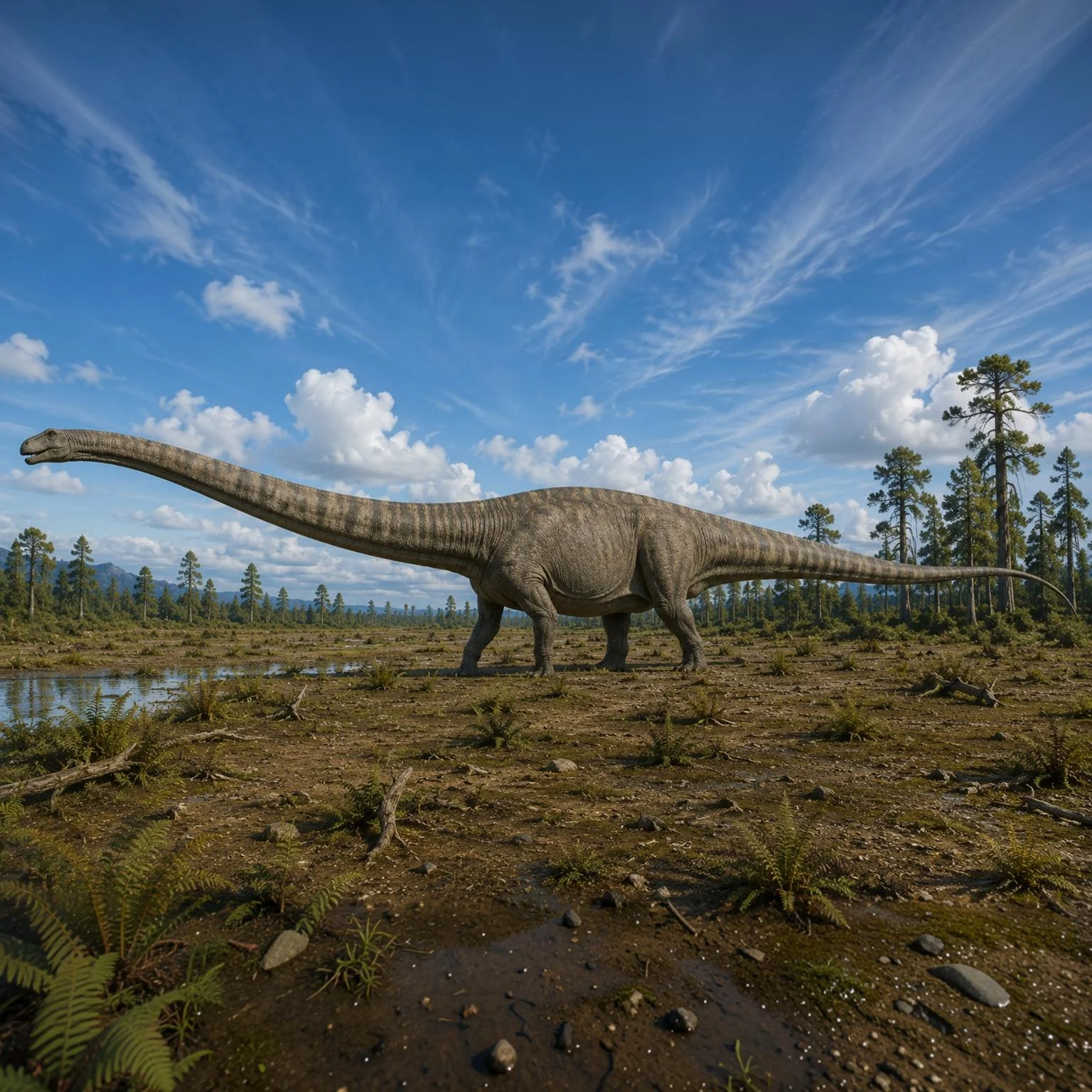
One of the longest land animals ever to exist. At 27 metres, Diplodocus's tail alone was 14 metres long — and scientists believe it could crack this tail like a bullwhip at supersonic speeds, creating a sonic boom to communicate and ward off predators. अब तक के सबसे लंबे स्थलीय जानवरों में से एक। 27 मीटर पर, डिप्लोडोकस की अकेली पूँछ 14 मीटर लंबी थी — और वैज्ञानिकों का मानना है कि यह पराध्वनि गति से सोनिक बूम पैदा कर सकती थी।
🏞

How it livedयह कैसे जीता था

Diplodocus lived in vast open plains and river valleys of what is now the Morrison Formation of western North America. Despite being one of the longest animals ever to live, it was actually lighter than Brachiosaurus due to hollow vertebrae — making it more agile for such a massive creature. It moved in large herds, which provided essential protection for vulnerable juveniles. Its whip-like tail was half its total body length and could be cracked at supersonic speeds — producing a sonic boom loud enough to be heard kilometres away, used for communication, threat display, and deterring predators.

डिप्लोडोकस आज के उत्तरी अमेरिका के मोरिसन फॉर्मेशन के विशाल खुले मैदानों में रहता था। इसकी पूँछ इसकी कुल शरीर लंबाई की आधी थी और पराध्वनि गति से फटकारी जा सकती थी।

What it ateयह क्या खाता था

Diplodocus was a horizontal sweeper — unlike Brachiosaurus which reached up, Diplodocus swept its long neck sideways like a living vacuum cleaner, stripping leaves from a wide arc of vegetation without taking a step. Its peg-like teeth were only in the front of the jaw, designed purely for raking leaves off branches in a backwards stroke — it could not chew at all. Food was swallowed whole and processed by gastroliths in a massive fermentation stomach.

डिप्लोडोकस एक क्षैतिज स्वीपर था — ब्रैकियोसॉरस के विपरीत जो ऊपर पहुँचता था, डिप्लोडोकस अपनी लंबी गर्दन को साइड में झुलाता था। इसके खूँटी जैसे दाँत केवल जबड़े के सामने थे।

🍖

How long it livedयह कितने समय तक जीया

Like other large sauropods, Diplodocus was effectively immune to predation once fully grown — no known Jurassic predator could successfully hunt a healthy adult. Growth ring analysis suggests lifespans of 70–80 years, with natural death resulting primarily from dental failure. Their remarkable longevity and the protection offered by herd living made Diplodocus one of the most successfully resilient large animals of the Mesozoic.

अन्य बड़े सॉरोपॉड की तरह, डिप्लोडोकस पूरी तरह बड़े होने पर प्रभावी रूप से शिकार के प्रतिरक्षित था। वृद्धि वलय विश्लेषण 70–80 वर्षों का जीवनकाल बताता है।

Its greatest enemyइसका सबसे बड़ा दुश्मन

What Diplodocus actually looked likeDiplodocus वास्तव में कैसा दिखता था

Diplodocus had a remarkably slender body for a 15-tonne animal — its hollow vertebrae reduced weight significantly. Its neck was held roughly horizontally (not angled up like Brachiosaurus). The tail tapered to a whip-like tip that could be cracked at supersonic speed. Its four columnar legs were positioned directly beneath the body. Fossil skin impressions reveal a pattern of small hexagonal scales with occasional larger, studded scales running along the spine.

डिप्लोडोकस का 15 टन जानवर के लिए एक उल्लेखनीय रूप से पतला शरीर था। इसकी गर्दन मोटे तौर पर क्षैतिज रूप से रखी गई थी। पूँछ एक चाबुक जैसी नोक तक पतली होती थी।

🔨
3D Model — Under Development 3D मॉडल — विकासाधीन

A fully interactive 3D reconstruction of Diplodocus is being developed. This scientifically accurate model will feature its extremely long neck and tail, quadrupedal stance, and realistic animation. Check back soon! डिप्लोडोकस का एक पूरी तरह से इंटरैक्टिव 3D पुनर्निर्माण विकसित किया जा रहा है। यह वैज्ञानिक रूप से सटीक मॉडल जल्द ही उपलब्ध होगा!

Where Diplodocus has been foundDiplodocus कहाँ पाया गया है

01
Morrison Formation, Wyoming
USA

The primary Diplodocus fossil zone and the site of the first discovery in 1877 by S.W. Williston. The Carnegie Museum's famous Diplodocus carnegii skeleton was found here and has been replicated for museums on four continents.

मोरिसन फॉर्मेशन — डिप्लोडोकस जीवाश्म क्षेत्र और 1877 में पहली खोज का स्थान।

02
Bone Cabin Quarry, Wyoming
USA

A legendary fossil site where the bones were so numerous that early ranchers used them to build cabin walls. Multiple complete Diplodocus skeletons were excavated here in the 1890s during the famous 'Bone Wars'.

बोन केबिन क्वारी — एक प्रसिद्ध जीवाश्म स्थल जहाँ हड्डियाँ इतनी अधिक थीं कि प्रारंभिक किसानों ने उनका उपयोग केबिन की दीवारें बनाने के लिए किया।

What did Diplodocus sound like?Diplodocus कैसा सुनाई देता था?

The sounds of Diplodocus are still a matter of active scientific research. Its enormous body cavities would have acted as resonating chambers, and its long neck could potentially have produced infrasonic calls — below the range of human hearing — that travelled vast distances through the ground, similar to how elephants communicate across kilometres of savannah.

डिप्लोडोकस की ध्वनियाँ अभी भी सक्रिय वैज्ञानिक शोध का विषय हैं। इसकी विशाल शरीर गुहाएँ प्रतिध्वनि कक्ष के रूप में काम करतीं, और इसकी लंबी गर्दन इन्फ्रासोनिक पुकारें उत्पन्न कर सकती थी।

🔬
ROARS / VOCALISATIONS — COMING SOON
ध्वनियाँ / स्वर — प्लेसहोल्डर

Coming Soon — Roar sounds will be added when audio files are sourced. The sounds of this dinosaur are still a matter of active scientific research — no direct recordings exist.

आने वाले समय में ध्वनि फ़ाइलें जोड़ी जाएंगी। इस डायनासोर की ध्वनियाँ अभी भी सक्रिय वैज्ञानिक शोध का विषय हैं।

🔮 Future Scope — Roar audio files will be added here once they are sourced and ready. The exact vocalisations of dinosaurs remain an active area of scientific research. 🔮 भविष्य की योजना — दहाड़ ऑडियो फ़ाइलें यहाँ जोड़ी जाएंगी जब वे तैयार होंगी। डायनासोरों की सटीक ध्वनियाँ वैज्ञानिक शोध का एक सक्रिय क्षेत्र बनी हुई हैं।

Your Survival Odds Against DiplodocusDiplodocus के खिलाफ आपकी जीवित रहने की संभावना

0% Death Rate मृत्यु दर
👣
The Accidental Trampling
आकस्मिक रौंदना

A Diplodocus foot covers 1.5 square metres and comes down with 15 tonnes of force. In a herd, being accidentally stepped on is a genuine fatal risk. Diplodocus has poor downward visibility from 5 metres up.

डिप्लोडोकस का पैर 1.5 वर्ग मीटर ढकता है और 15 टन बल के साथ उतरता है। झुंड में, गलती से कुचले जाना घातक जोखिम है।

🌿
Mostly Peaceful
अधिकतर शांतिपूर्ण

As a pure herbivore with no predatory interest in humans, Diplodocus would typically ignore human-sized animals entirely. The 40% survival rate assumes you're unlucky enough to be in its path.

एक शुद्ध शाकाहारी के रूप में, डिप्लोडोकस आमतौर पर मानव आकार के जानवरों को पूरी तरह अनदेखा करता।

Extinctionविनाश

Diplodocus disappeared approximately 145–150 million years ago at the end of the Jurassic Period. Climate change, sea level rise, and competition from new sauropod lineages most likely contributed. By the time T-Rex evolved 80 million years later, Diplodocus had been extinct for longer than the entire span of primate evolution. Its fossils now sit in museums on four continents — replicated from the same quarry in Wyoming. डिप्लोडोकस लगभग 14.5–15 करोड़ वर्ष पूर्व जुरासिक काल के अंत में गायब हो गया। इसके जीवाश्म अब चार महाद्वीपों के संग्रहालयों में हैं।

Jurassic Eraजुरासिक युग More Dinosaursऔर डायनासोर