Stegosaurus
← All Toursसभी टूर
🌿 Herbivoreशाकाहारी Jurassicजुरासिक

Stegosaurus

"The Plated Giant"
"प्लेटदार विशालकाय"
17 km/hTop Speedअधिकतम गति
9mLengthलंबाई
5TWeightवजन
4mHeightऊँचाई
30–40Lifespanजीवनकाल
17Back Platesपीठ की प्लेटें
155MYears Agoवर्ष पूर्व

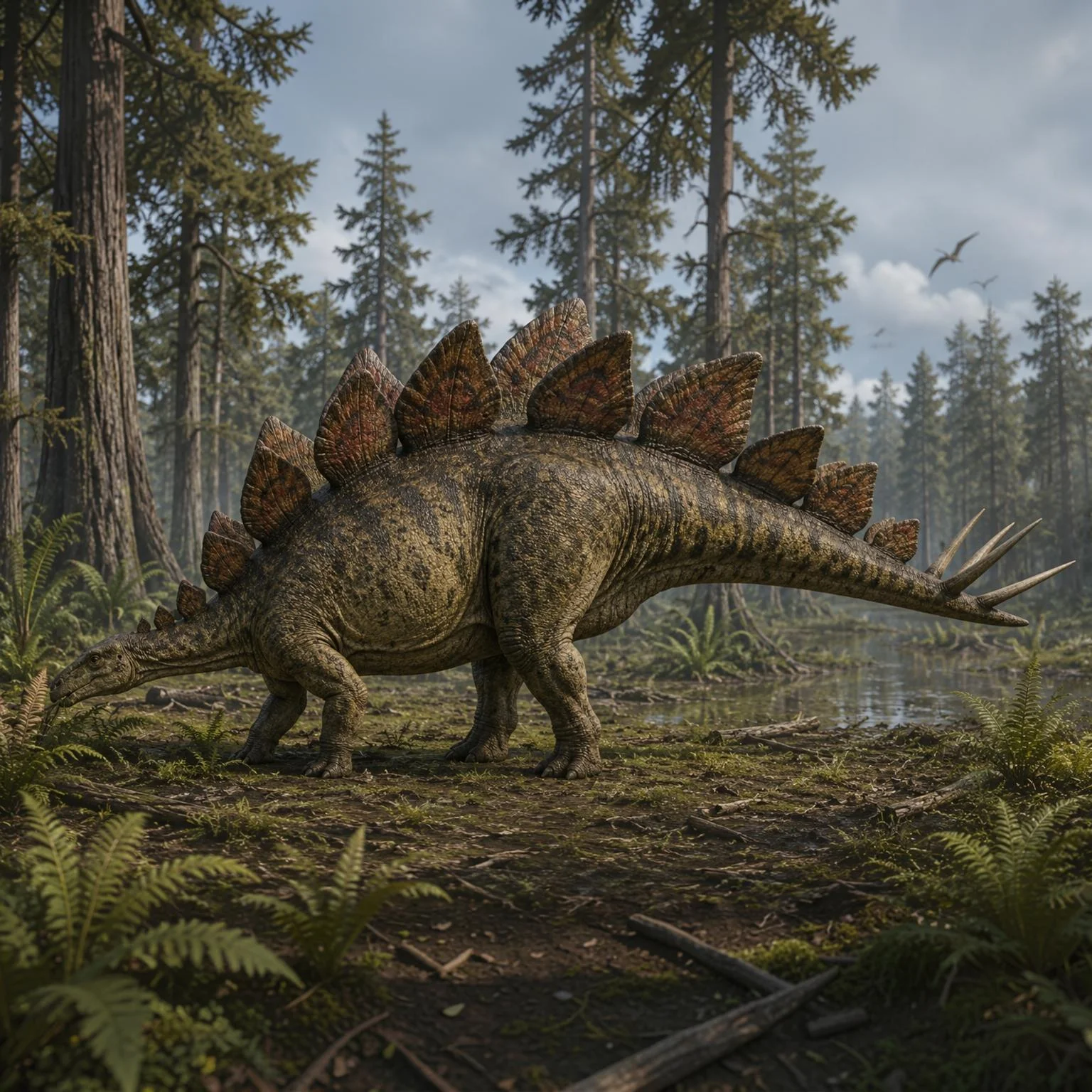
The most recognisable dinosaur silhouette in the world. Stegosaurus carried 17 diamond-shaped plates along its back and four lethal tail spikes — the 'thagomizer' — capable of driving through bone. दुनिया में सबसे पहचानने योग्य डायनासोर सिल्हूट। स्टेगोसॉरस 17 हीरे के आकार की प्लेटें और चार घातक पूँछ की कीलें — 'थैगोमाइज़र' — लेकर चलता था।
Name & Identityनाम और पहचान

What the name meansनाम का अर्थ क्या है

Scientific Nameवैज्ञानिक नाम
Stegosaurus stenops
Pronunciationउच्चारण
STEG-oh-SORE-us
/ˌstɛɡəˈsɔːrəs/
Name Meaning (Etymology)नाम का अर्थ
Stegosaurus means 'roof lizard' from Greek stegos (roof) and sauros (lizard). Marsh initially thought the plates lay flat over the back like roof shingles. Stenops means 'narrow face'.
स्टेगोसॉरस का अर्थ है 'छत छिपकली' ग्रीक stegos (छत) और sauros (छिपकली) से। मार्श ने शुरू में सोचा कि प्लेटें पीठ पर सपाट छत की खपरैल की तरह बिछी थीं। Stenops का अर्थ 'संकीर्ण चेहरा' है।
🏞

How it livedयह कैसे जीता था

Stegosaurus lived in the open floodplains and woodlands of what is now western North America, approximately 155–150 million years ago. It was a slow, low-browsing herbivore that spent most of its day eating continuously to meet its enormous caloric requirements. The 17 large diamond-shaped plates running along its back were not armour — they stood upright and were richly supplied with blood vessels. Current evidence strongly suggests they were used as thermal regulators: the animal could orient itself to catch or avoid sunlight, warming or cooling the blood flowing through the plates. Stegosaurus had the smallest brain relative to body size of any dinosaur known.

स्टेगोसॉरस आज के पश्चिमी उत्तरी अमेरिका के खुले बाढ़ के मैदानों में रहता था। यह एक धीमा, निम्न-चराई करने वाला शाकाहारी था। 17 बड़ी हीरे के आकार की प्लेटें थर्मल नियामकों के रूप में काम करती थीं।

What it ateयह क्या खाता था

Stegosaurus fed on low-growing ferns, mosses, cycads, and early flowering plants. Its tiny head contained small, leaf-shaped teeth set far back in the jaw — suggesting it cropped plants with its toothless beak, then used its teeth for minimal processing before swallowing. Unlike most large herbivores, it couldn't chew efficiently. It relied on a large fermentation chamber in its gut to break down tough plant material.

स्टेगोसॉरस फर्न, काई, साइकैड और शुरुआती फूल वाले पौधे खाता था। इसके छोटे, पत्ती के आकार के दाँत जबड़े में पीछे स्थित थे।

🍖
⏳

How long it livedयह कितने समय तक जीया

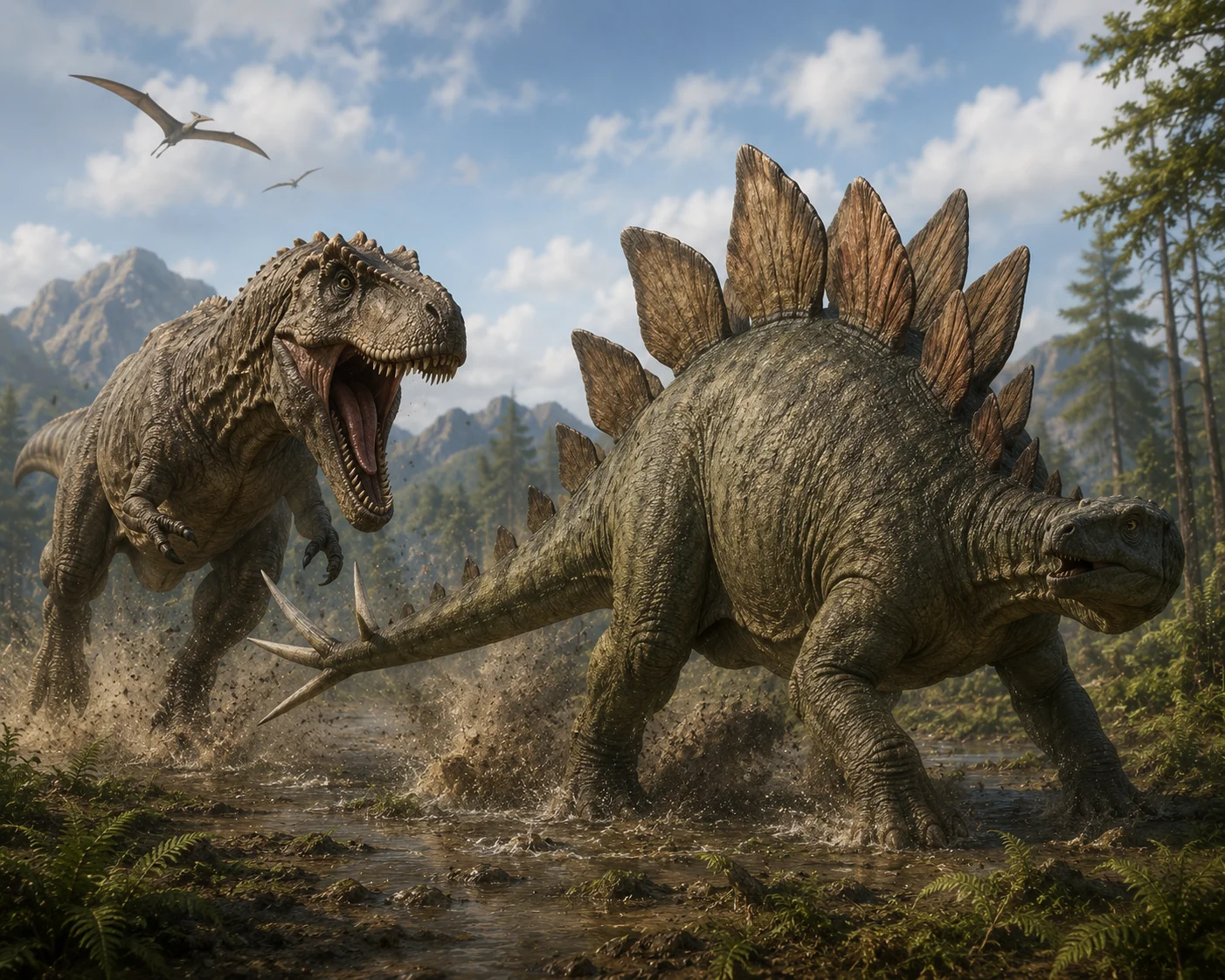
Stegosaurus was a sturdy herbivore with a reasonable defensive arsenal. Its four tail spikes — each up to 90 cm long — provided genuine protection against the apex predators of its time, particularly Allosaurus. Adults reaching full size had few serious natural threats. Fossil evidence suggests a lifespan of 30–40 years, with most natural deaths resulting from old age, disease, and dental wear.

स्टेगोसॉरस एक मज़बूत शाकाहारी था। इसकी चार पूँछ की कीलें — प्रत्येक 90 सेमी तक — अपने समय के शीर्ष शिकारियों के खिलाफ वास्तविक सुरक्षा प्रदान करती थीं।

Scientific Classificationवैज्ञानिक वर्गीकरण

The full family treeपूरा वंश वृक्ष

Scientific Nameवैज्ञानिक नाम
Stegosaurus stenops
Kingdomजगत
Animalia
Phylumसंघ
Chordata
Classवर्ग
Reptilia
Cladeक्लेड
Dinosauria
Orderगण
Ornithischia
Suborderउपगण
Thyreophora
Infraorderअधिगण
Stegosauria
Familyकुल
Stegosauridae
Subfamilyउपकुल
Stegosaurinae
Genusवंश
Stegosaurus
Speciesप्रजाति
S. stenops (type), S. ungulatus, S. sulcatus
Taxonomic Groupवर्गीकरण समूह
Stegosaursस्टेगोसॉर
Plated dinosaurs with spikes on tails. Include Stegosaurus and Kentrosaurus.
पूंछ पर कांटे वाले प्लेटेड डायनासोर। स्टेगोसॉरस और केंट्रोसॉरस शामिल हैं।
Jurassic-Cretaceous
Anatomy & Fossil Featuresशरीर रचना और जीवाश्म विशेषताएँ
Thagomizerथैगोमाइज़र
The arrangement of four to ten spikes on the tail of Stegosaurus and related dinosaurs, used for defense.
स्टेगोसॉरस और संबंधित डायनासोरों की पूंछ पर चार से दस कांटों की व्यवस्था, रक्षा के लिए उपयोग की जाती है।
Acetabulumएसिटाबुलम
Hip socket - dinosaurs have an open hip socket (hole) which is a key characteristic distinguishing them from other reptiles.
कूल्हे का सॉकेट - डायनासोरों में एक खुला कूल्हे का सॉकेट (छेद) होता है जो उन्हें अन्य रेंगने वाले जानवरों से अलग करने वाली एक प्रमुख विशेषता है।
Coprolitesकोप्रोलाइट
Fossilized dinosaur dung that provides evidence about diet and digestive processes.
जीवाश्मित डायनासोर मल जो आहार और पाचन प्रक्रियाओं के बारे में सबूत प्रदान करता है।
Habitat & Environmentनिवास स्थान और पर्यावरण

Where it lived and how it movedयह कहाँ रहता था और कैसे चलता था

Regionsक्षेत्र
North AmericaEurope
Modern Locationsआधुनिक स्थान
ColoradoWyomingUtahMontanaOklahomaPortugal
Environmentपर्यावरण
Floodplains, open woodlands with ferns and conifers, semi-arid climate with seasonal rainfall
बाढ़ के मैदान, फर्न और कोनिफर के साथ खुले जंगल, मौसमी वर्षा के साथ अर्ध-शुष्क जलवायु
Climateजलवायु
Semi-arid with seasonal wet periods
Time Periodसमय काल
Late Jurassic, Kimmeridgian to Tithonian (155-145 million years ago)
Top Speedअधिकतम गति
17 km/h (11 mph)
Estimated 15-18 km/h (9-11 mph) maximum - relatively slow, defensive rather than flight-oriented
अनुमानित 15-18 किमी/घंटा (9-11 मील/घंटा) अधिकतम - अपेक्षाकृत धीमा, उड़ान की बजाय रक्षात्मक

Its greatest enemyइसका सबसे बड़ा दुश्मन

Close Relativesनिकट संबंधी

Family worth knowingजानने योग्य परिवार

Kentrosaurus
African relative with more spikes than plates
Tanzania
Hesperosaurus
Earlier North American stegosaur
North America (Wyoming)
Dacentrurus
European stegosaur
Europe
Tuojiangosaurus
Asian stegosaur
China
Miragaia
Long-necked stegosaur
Portugal

What Stegosaurus actually looked likeStegosaurus वास्तव में कैसा दिखता था

Stegosaurus had one of the most distinctive body plans of any dinosaur. The arched body with high hips and low shoulders created the characteristic 'rooftop' profile. The 17 plates alternated in two rows and were made of bone covered in skin richly supplied with blood vessels — not attached to the skeleton but embedded in skin, like a dorsal fin. The tail carried four lethal 90cm spikes arranged in two pairs.

स्टेगोसॉरस का सबसे विशिष्ट शरीर डिज़ाइन था। ऊँचे कूल्हों और नीचे कंधों के साथ धनुषाकार शरीर ने विशेषता 'छत' प्रोफ़ाइल बनाई। 17 प्लेटें दो पंक्तियों में बारी-बारी से थीं।

🔨
3D Model — Under Development 3D मॉडल — विकासाधीन

A fully interactive 3D reconstruction of Stegosaurus is being developed. This scientifically accurate model will feature its iconic plates, spiked tail (thagomizer), and realistic animation. Check back soon! स्टेगोसॉरस का एक पूरी तरह से इंटरैक्टिव 3D पुनर्निर्माण विकसित किया जा रहा है। यह वैज्ञानिक रूप से सटीक मॉडल जल्द ही उपलब्ध होगा!

Where Stegosaurus has been foundStegosaurus कहाँ पाया गया है

01
Morrison Formation, Colorado/Utah
USA

The primary Stegosaurus fossil zone. Multiple complete specimens have been found, including 'Sophie' (now in the Natural History Museum, London) — one of the best preserved Stegosaurus ever found.

मोरिसन फॉर्मेशन — प्राथमिक स्टेगोसॉरस जीवाश्म क्षेत्र। 'सोफी' यहाँ पाई गई थी।

02
Tendaguru Formation, Tanzania
Tanzania

Related Stegosaurus specimens have been found in Africa, suggesting the animal had a much wider geographic range than previously thought — spanning both North America and Africa when they were still connected.

तंज़ानिया में संबंधित स्टेगोसॉरस नमूने पाए गए हैं।

Discovery & Fossil Recordखोज और जीवाश्म रिकॉर्ड

Who found it, and what we haveकिसने खोजा, और हमारे पास क्या है

Discovered Byखोजकर्ता
Arthur Lakes and H.C. Beckwith
1877
Described Byवर्णनकर्ता
Othniel Charles Marsh
1877
Discovery Locationखोज स्थान
Morrison, Colorado, USA (Morrison Formation)
Type Specimenप्रकार नमूना
YPM 1850
Known Specimensज्ञात नमूने
Over 80 individuals discovered
Best Preservedसर्वोत्तम संरक्षित
Sophie (NHMUK R36730) - 85% complete
Significant Findsमहत्वपूर्ण खोजें
Sophie (2003)
Red Canyon Ranch, Wyoming, USA - NHMUK R36730

Most complete Stegosaurus skeleton ever found (85% complete), on display at London's Natural History Museum

Marsh's holotype (1877)
Morrison, Colorado, USA - YPM 1850

First described Stegosaurus specimen

Allosaurus neck vertebra with thagomizer wound (2005)
Wyoming, USA - MOR 693

Direct fossil evidence of Stegosaurus-Allosaurus combat

What did Stegosaurus sound like?Stegosaurus कैसा सुनाई देता था?

The sounds of Stegosaurus are still a matter of active scientific research. Its small head and limited vocal anatomy suggest relatively simple vocalisations — possibly low hissing or bellowing sounds for basic communication. Its blood-flushed plates may have also served as visual signals, reducing the need for complex vocalisation.

स्टेगोसॉरस की ध्वनियाँ अभी भी सक्रिय वैज्ञानिक शोध का विषय हैं। इसका छोटा सिर और सीमित स्वर शरीर रचना अपेक्षाकृत सरल स्वर का सुझाव देती है।

🔬
ROARS / VOCALISATIONS — COMING SOON
ध्वनियाँ / स्वर — प्लेसहोल्डर

Coming Soon — Roar sounds will be added when audio files are sourced. The sounds of this dinosaur are still a matter of active scientific research — no direct recordings exist.

आने वाले समय में ध्वनि फ़ाइलें जोड़ी जाएंगी। इस डायनासोर की ध्वनियाँ अभी भी सक्रिय वैज्ञानिक शोध का विषय हैं।

🔮 Future Scope — Roar audio files will be added here once they are sourced and ready. The exact vocalisations of dinosaurs remain an active area of scientific research. 🔮 भविष्य की योजना — दहाड़ ऑडियो फ़ाइलें यहाँ जोड़ी जाएंगी जब वे तैयार होंगी। डायनासोरों की सटीक ध्वनियाँ वैज्ञानिक शोध का एक सक्रिय क्षेत्र बनी हुई हैं।

In Popular Cultureलोकप्रिय संस्कृति में

On screen and in museumsस्क्रीन और संग्रहालयों में

The Far Side
1982 - Comic

Gary Larson's comic coined the term 'thagomizer' for the tail spikes - later adopted by paleontologists

Fantasia
1940 - Film

Featured in Rite of Spring sequence

The Land Before Time
1988 - Film

Spike the Stegosaurus character

Jurassic World: Fallen Kingdom
2018 - Film

Featured prominently in volcanic eruption scene

Your Survival Odds Against StegosaurusStegosaurus के खिलाफ आपकी जीवित रहने की संभावना

0% Death Rate मृत्यु दर
🗡
The Thagomizer
थैगोमाइज़र

The four 90cm tail spikes could be swung with enough force to puncture bone. Multiple Stegosaurus specimens show battle damage suggesting active defence. A direct hit on a human would be immediately fatal.

चार 90 सेमी पूँछ की कीलें हड्डी छेदने के लिए पर्याप्त बल के साथ झुलाई जा सकती थीं। एक सीधी चोट तुरंत घातक होगी।

🦶
Trampling Risk
रौंदने का जोखिम

At 5 tonnes, Stegosaurus's body weight alone makes any encounter potentially lethal — it doesn't need to attack deliberately. A Stegosaurus simply turning around or taking a step backward could crush a human.

5 टन पर, स्टेगोसॉरस का शरीर भार अकेले किसी भी मुठभेड़ को संभावित रूप से घातक बनाता है।

Extinctionविनाश

Stegosaurus disappeared approximately 150 million years ago at the Jurassic-Cretaceous boundary — long before the famous asteroid impact. Climate shifts, changing vegetation, and competition from new herbivore lineages most likely caused their gradual decline. By the time T-Rex evolved 80 million years later, Stegosaurus had been extinct for longer than the entire Age of Mammals. स्टेगोसॉरस लगभग 15 करोड़ वर्ष पूर्व जुरासिक-क्रेटेशियस सीमा पर गायब हो गया। जब टी-रेक्स 8 करोड़ वर्ष बाद विकसित हुआ, स्टेगोसॉरस स्तनधारियों के पूरे युग से अधिक समय से विलुप्त था।

Jurassic Eraजुरासिक युग More Dinosaursऔर डायनासोर