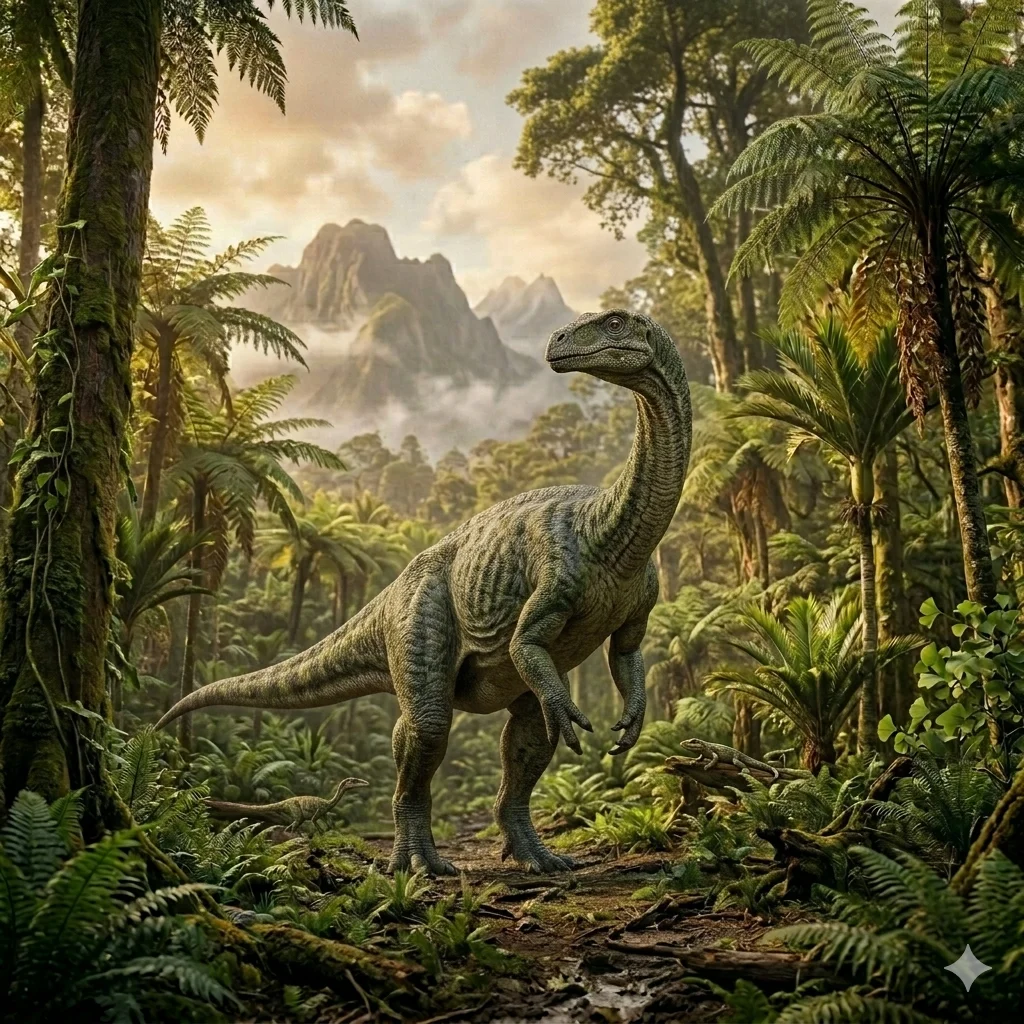
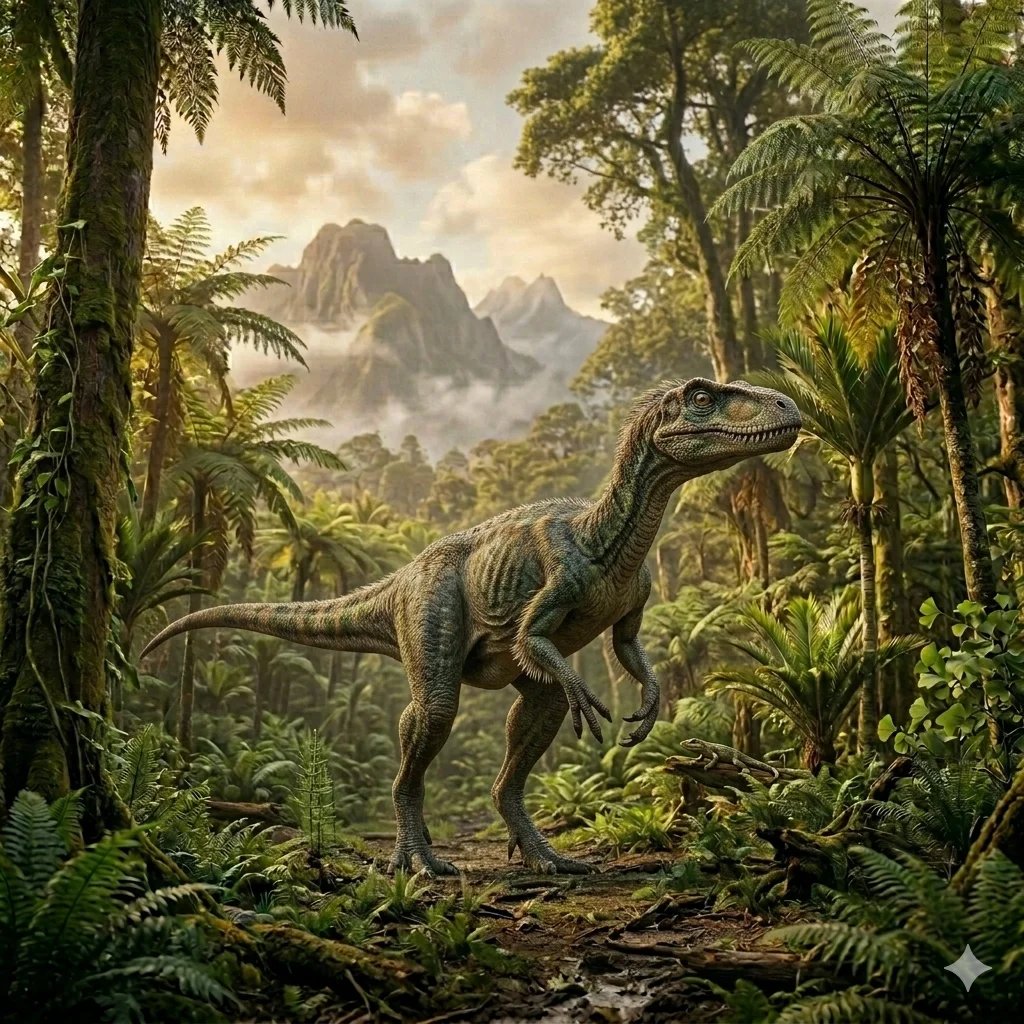
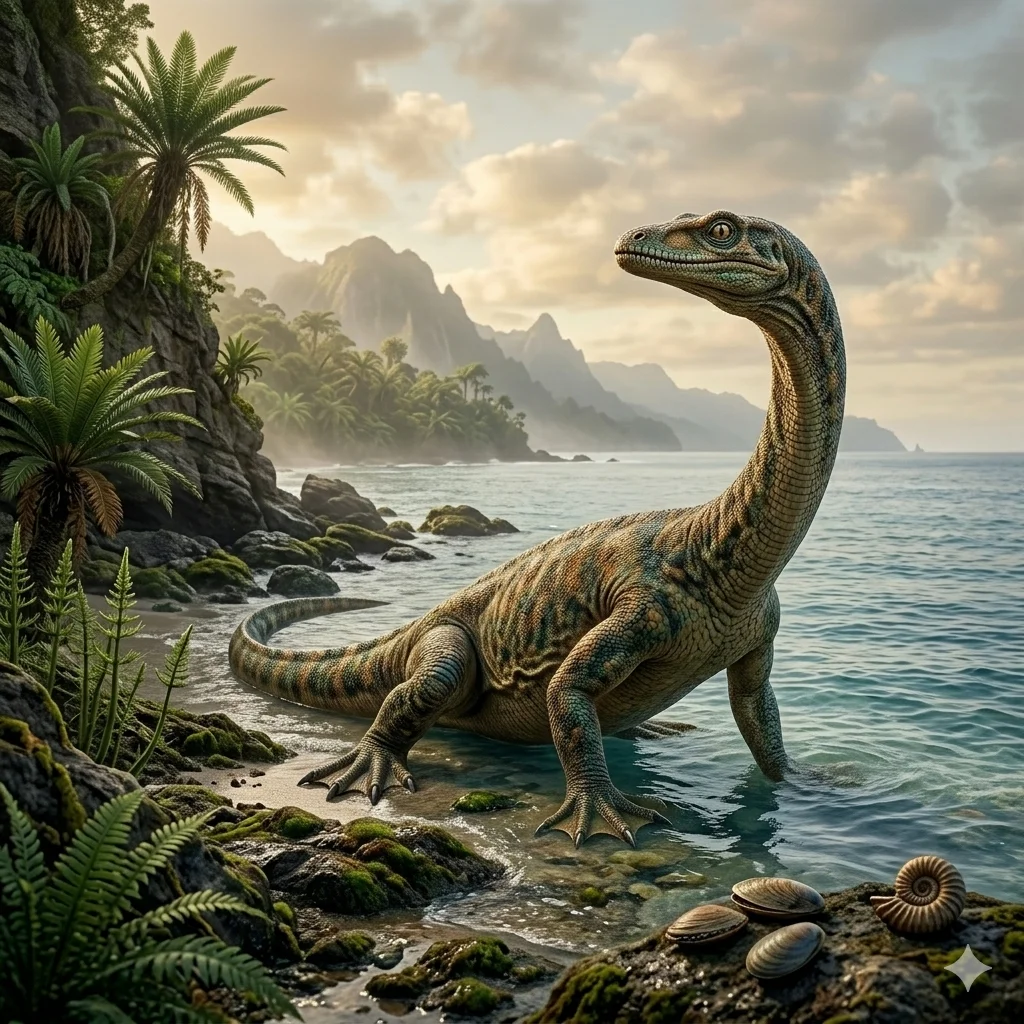
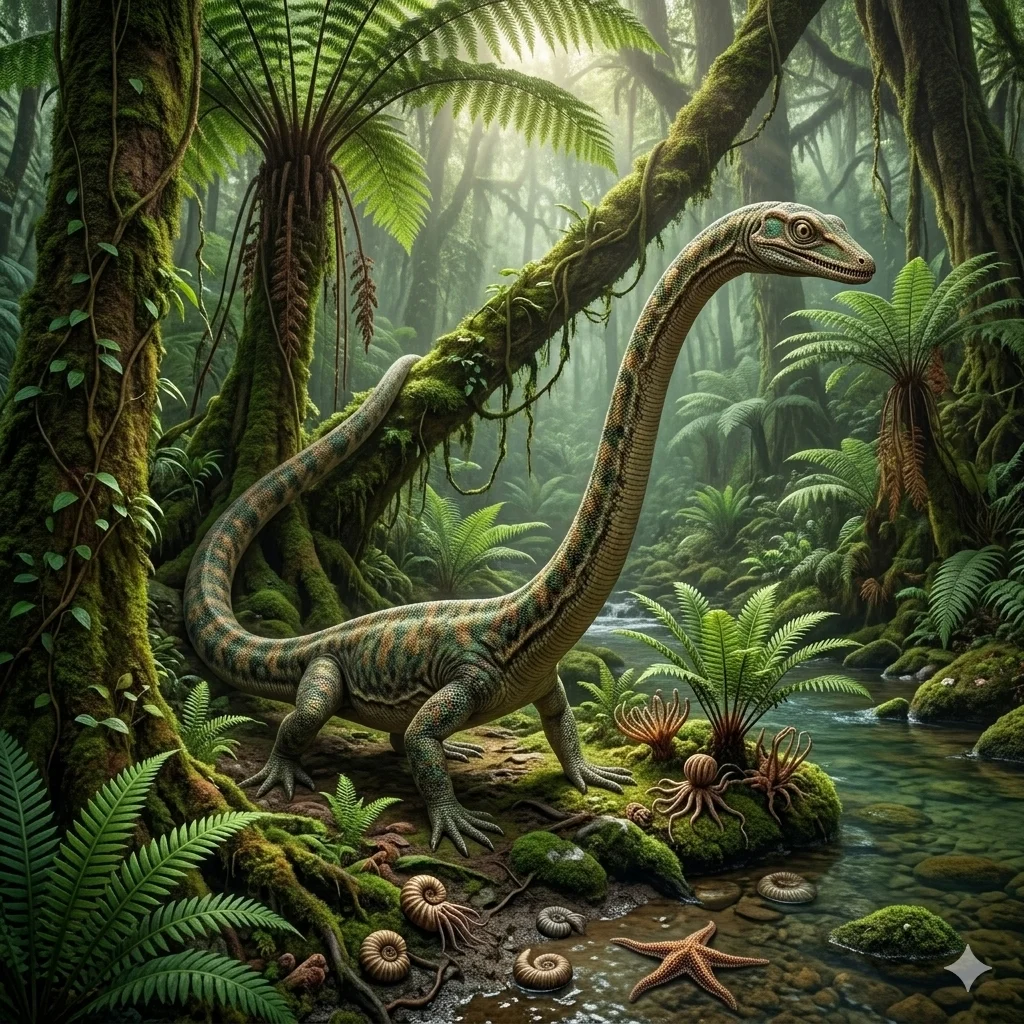
The dawn of dinosaurs. Born from the ashes of Earth's greatest extinction, these pioneers would go on to rule the planet for 165 million years. डायनासोरों की शुरुआत। पृथ्वी के सबसे बड़े विनाश की राख से जन्मे, ये अग्रदूत 16.5 करोड़ वर्षों तक ग्रह पर राज करेंगे।
The Permian-Triassic extinction wiped out 90–96% of all species on Earth just before the Triassic began. The worst die-off in history.
पर्मियन-ट्राइऐसिक विनाश ने ट्राइऐसिक से ठीक पहले पृथ्वी की 90–96% प्रजातियाँ समाप्त कीं।
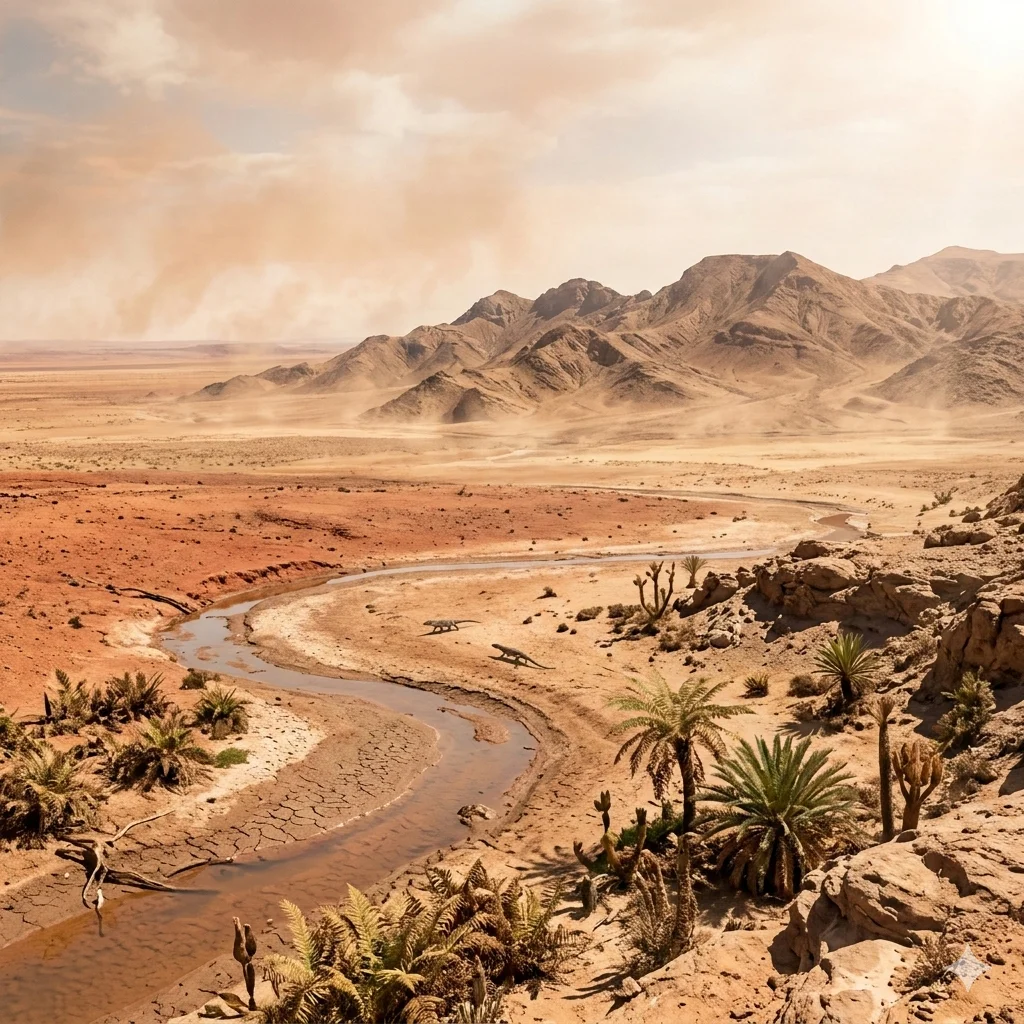
Hot, dry, and largely desert-like. The interior of Pangaea was a scorching wasteland reaching 50°C+ in summer.
गर्म, शुष्क और अधिकतर रेगिस्तान जैसा। पैंजिया का आंतरिक भाग गर्मियों में 50°C+ पहुँचता था।
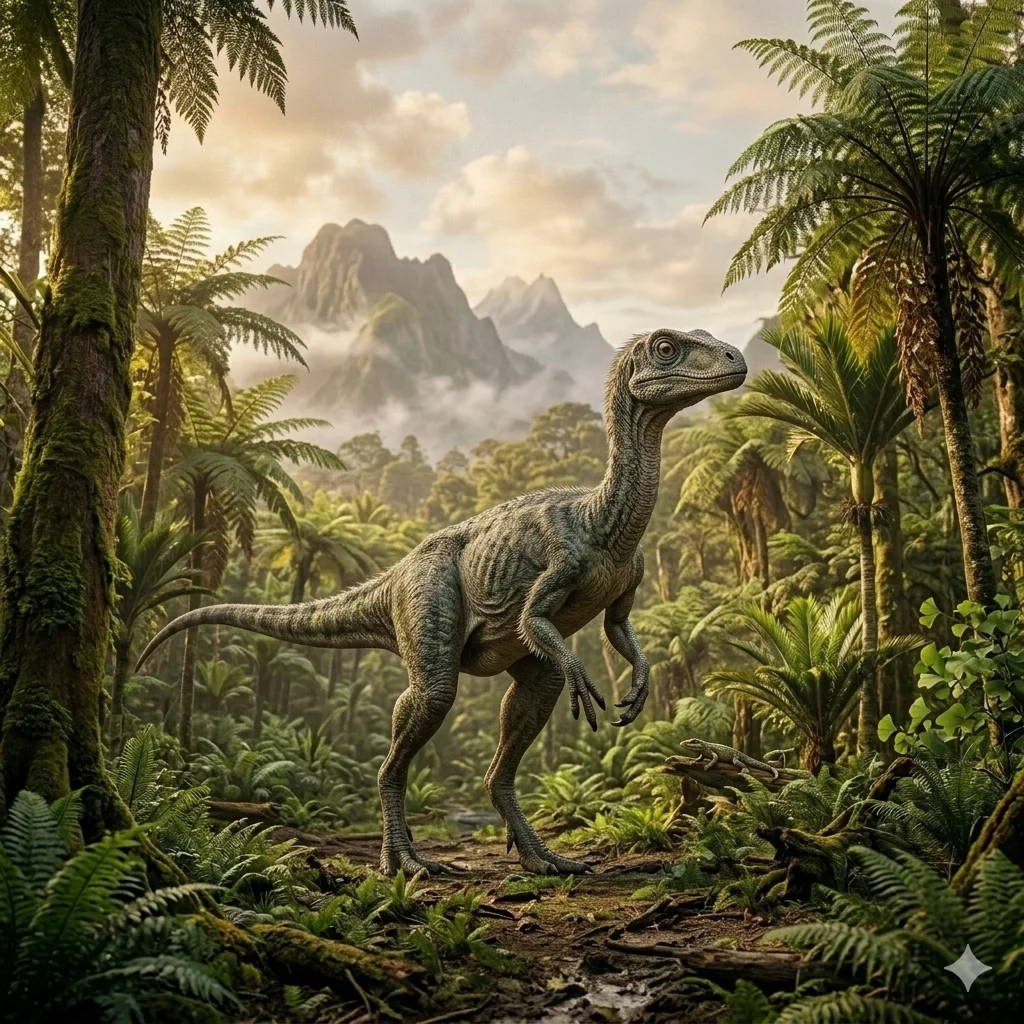
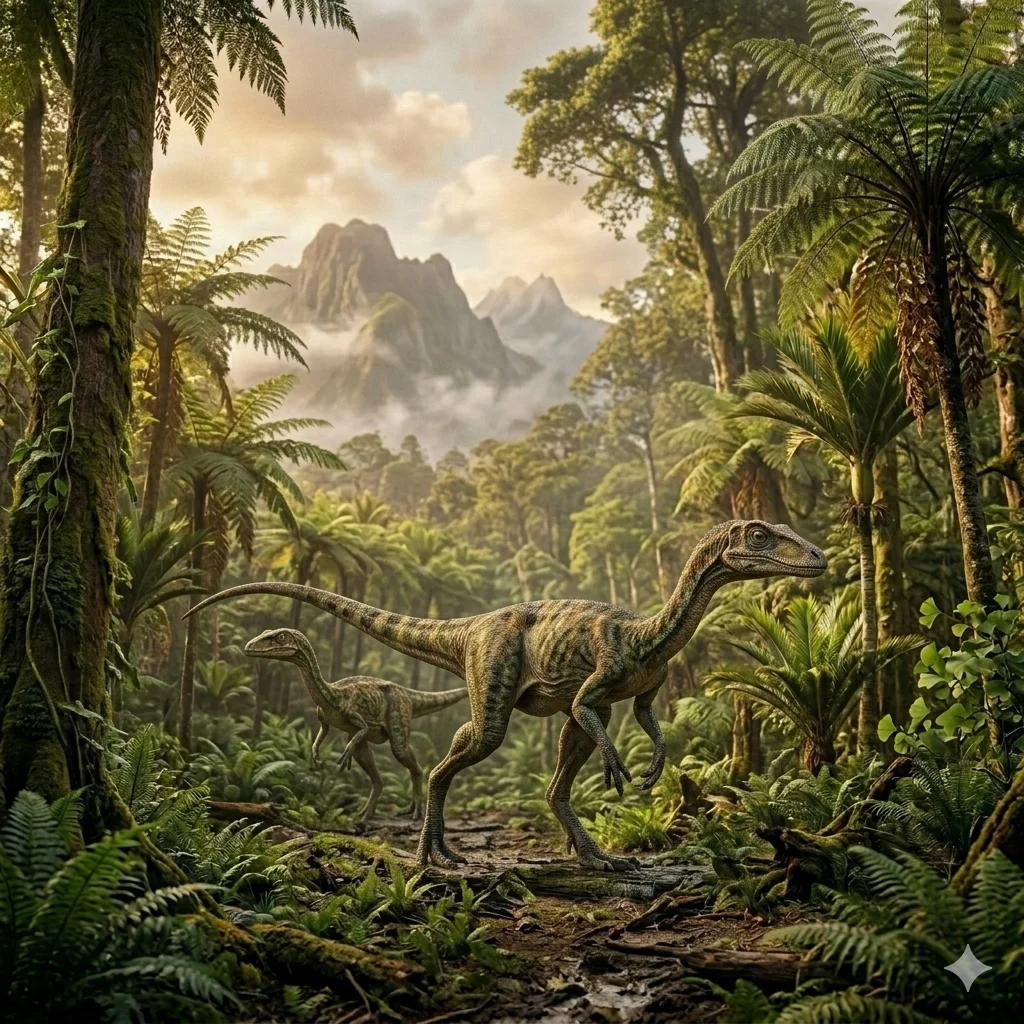
Eoraptor and Herrerasaurus — the first known dinosaurs — appeared ~230 million years ago in what is now Argentina.
ईओरैप्टर और हेरेरासॉरस — पहले ज्ञात डायनासोर — ~23 करोड़ वर्ष पूर्व प्रकट हुए।
All land on Earth was joined in one supercontinent. You could walk from what is now India to Antarctica to North America without crossing an ocean.
पृथ्वी की सारी भूमि एक महाद्वीप में जुड़ी थी। बिना महासागर पार किए भारत से अंटार्कटिका तक चल सकते थे।
The Triassic began 252 million years ago — immediately after the single most catastrophic event in the history of life on Earth: the Permian-Triassic extinction. Over 90% of all marine species and 70% of all land species were wiped out in what scientists call "The Great Dying." Oceans became acidic and anoxic. The land was stripped bare. It took 10 million years for ecosystems to begin recovering.
ट्राइऐसिक 25.2 करोड़ वर्ष पूर्व शुरू हुआ — पृथ्वी पर जीवन के इतिहास में सबसे विनाशकारी घटना के तुरंत बाद: पर्मियन-ट्राइऐसिक विनाश। 90% से अधिक समुद्री प्रजातियाँ और 70% स्थलीय प्रजातियाँ समाप्त हुईं। महासागर अम्लीय और ऑक्सीजन-रहित हो गए।
Into this emptied, battered world, 230 million years ago, a new group of reptiles evolved a revolutionary set of traits: fully upright posture (legs directly under the body, not sprawling like lizards), an efficient one-way breathing system using air sacs, rapid growth rates, and high energy metabolism. These were the first dinosaurs — and they were built to dominate.
इस खाली, क्षत-विक्षत दुनिया में, 23 करोड़ वर्ष पूर्व, सरीसृपों के एक नए समूह ने क्रांतिकारी लक्षण विकसित किए: पूरी तरह सीधी मुद्रा, कुशल एक-दिशा श्वास प्रणाली, तेज़ वृद्धि दर और उच्च ऊर्जा चयापचय। ये पहले डायनासोर थे।
"The first dinosaurs were small, opportunistic survivors in a world still recovering from catastrophe. Nothing about their origin hinted they would one day rule every continent on Earth."
"पहले डायनासोर तबाही से अभी उबर रही दुनिया में छोटे, अवसरवादी जीवित थे। उनकी उत्पत्ति में कुछ भी संकेत नहीं था कि वे एक दिन पृथ्वी के हर महाद्वीप पर राज करेंगे।"
The Permian-Triassic extinction wipes out 90–96% of all species. Massive Siberian volcanic eruptions release CO₂, triggering extreme global warming and ocean acidification. Life hangs by a thread. The recovery takes 10 million years.
पर्मियन-ट्राइऐसिक विनाश 90–96% प्रजातियाँ समाप्त करता है। साइबेरियाई ज्वालामुखीय विस्फोट CO₂ छोड़ते हैं, चरम वैश्विक गर्मी और महासागर अम्लीकरण को ट्रिगर करते हैं।
The earliest mammals — small, shrew-like creatures — evolve from cynodont therapsids. They scurry in the shadow of the archosaurs and early dinosaurs, eating insects and staying alive through nocturnal behaviour. These tiny survivors are our direct ancestors.
सबसे पहले स्तनपायी — छोटे, छछूंदर जैसे प्राणी — साइनोडॉन्ट थेरैप्सिड से विकसित होते हैं। वे आर्कोसॉर और शुरुआती डायनासोर की छाया में दौड़ते हैं।
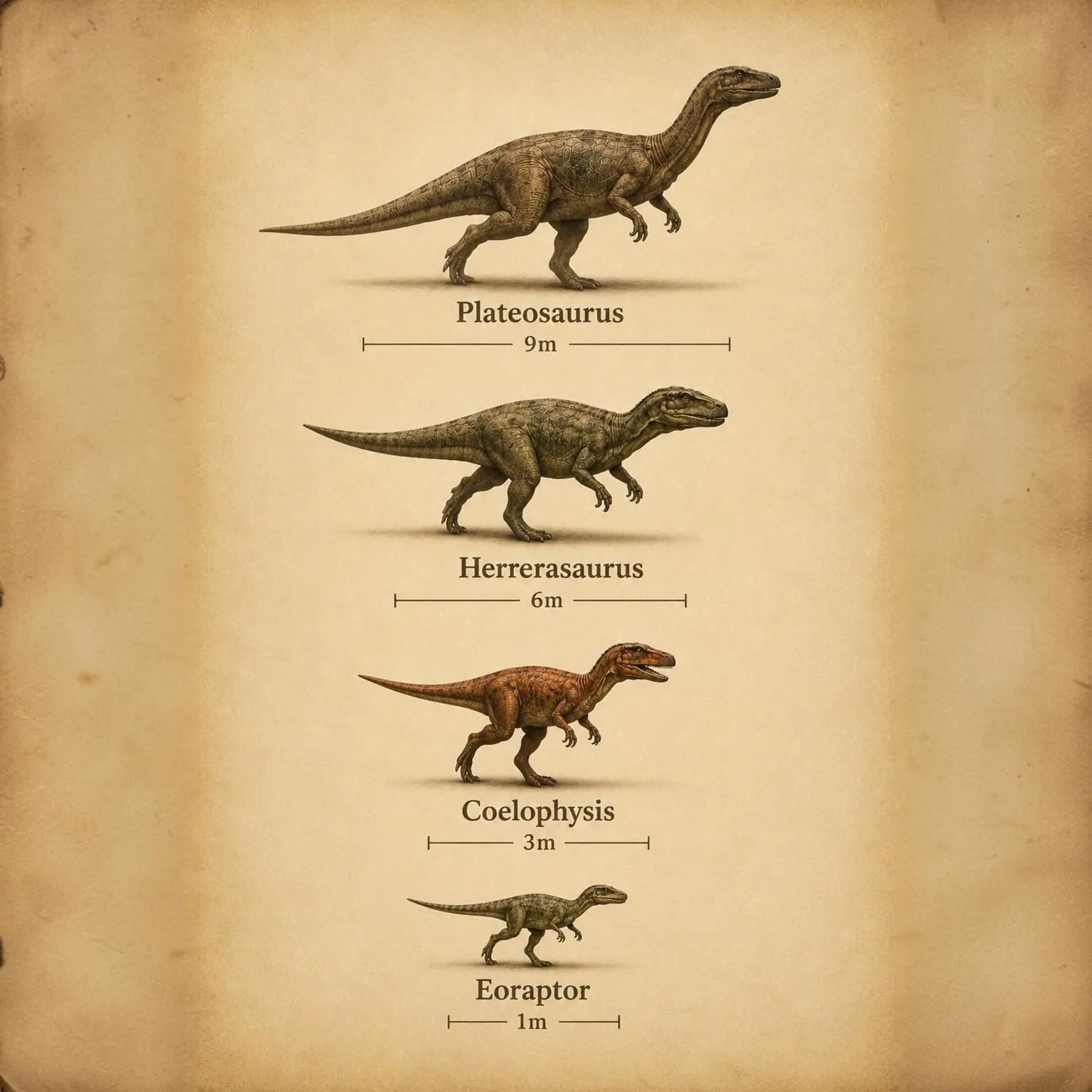
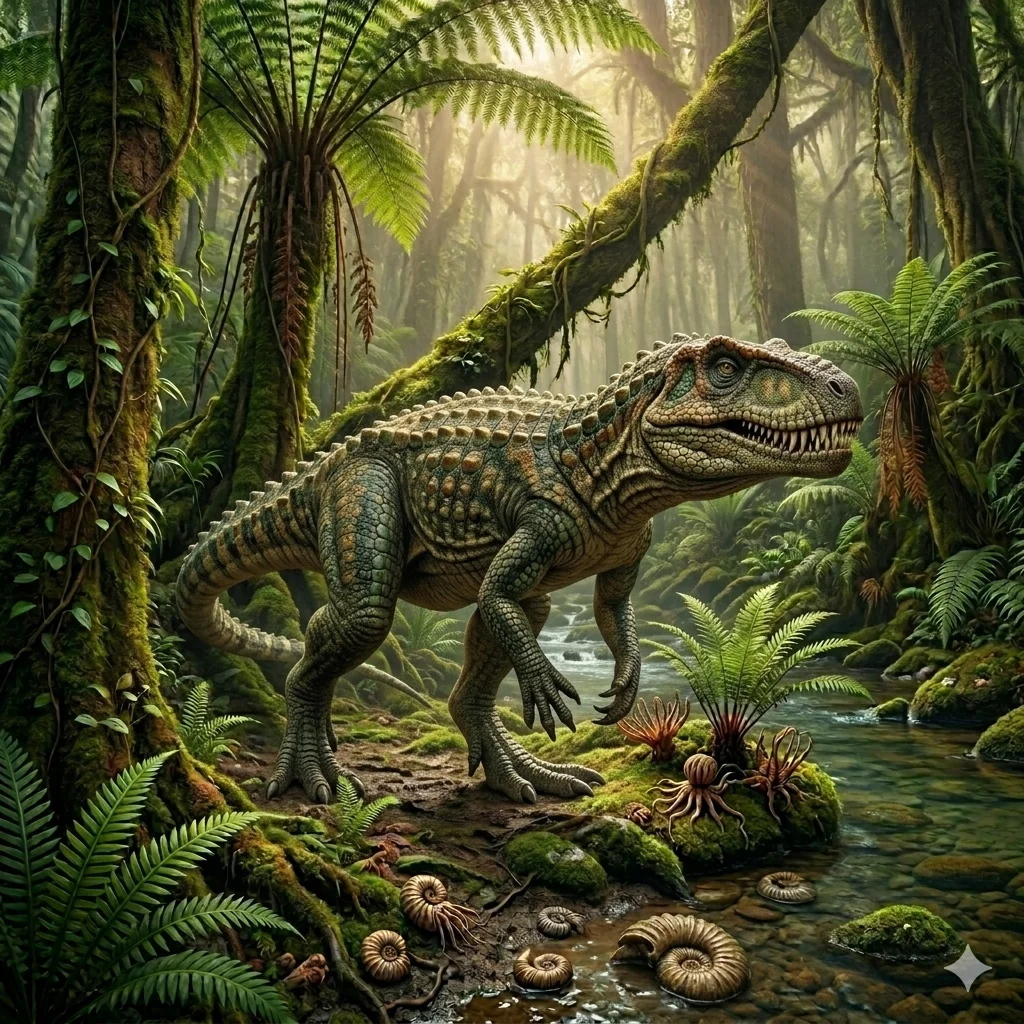
Eoraptor (1m, 10kg) and Herrerasaurus (6m) appear in what is now Argentina. They are small, fast, and bipedal — minor players in an ecosystem dominated by aetosaurs, phytosaurs, and rauisuchians. Nobody, looking at these small creatures, could predict what was coming.
ईओरैप्टर (1m, 10kg) और हेरेरासॉरस (6m) जो आज अर्जेंटीना है वहाँ प्रकट होते हैं। वे छोटे, तेज़ और द्विपाद हैं।
Because all continents are joined, dinosaurs spread rapidly across the entire planet. Coelophysis is found across North America. Plateosaurus, a large early herbivore reaching 9m, spreads across Europe. The dinosaur radiation has begun in earnest.
सभी महाद्वीप जुड़े होने के कारण, डायनासोर पूरे ग्रह में तेज़ी से फैलते हैं। कोलोफिसिस उत्तरी अमेरिका में पाया जाता है।
A second major extinction event ends the Triassic, killing the non-dinosaur archosaurs (aetosaurs, phytosaurs, rauisuchians) that had kept dinosaurs in check. The competitors disappear. The field is open. The dinosaurs step through the door — and the Jurassic explosion begins.
एक दूसरी बड़ी विनाश घटना ट्राइऐसिक को समाप्त करती है, गैर-डायनासोर आर्कोसॉर को मारती है जो डायनासोरों को नियंत्रण में रखते थे। प्रतिद्वंद्वी गायब हो जाते हैं।
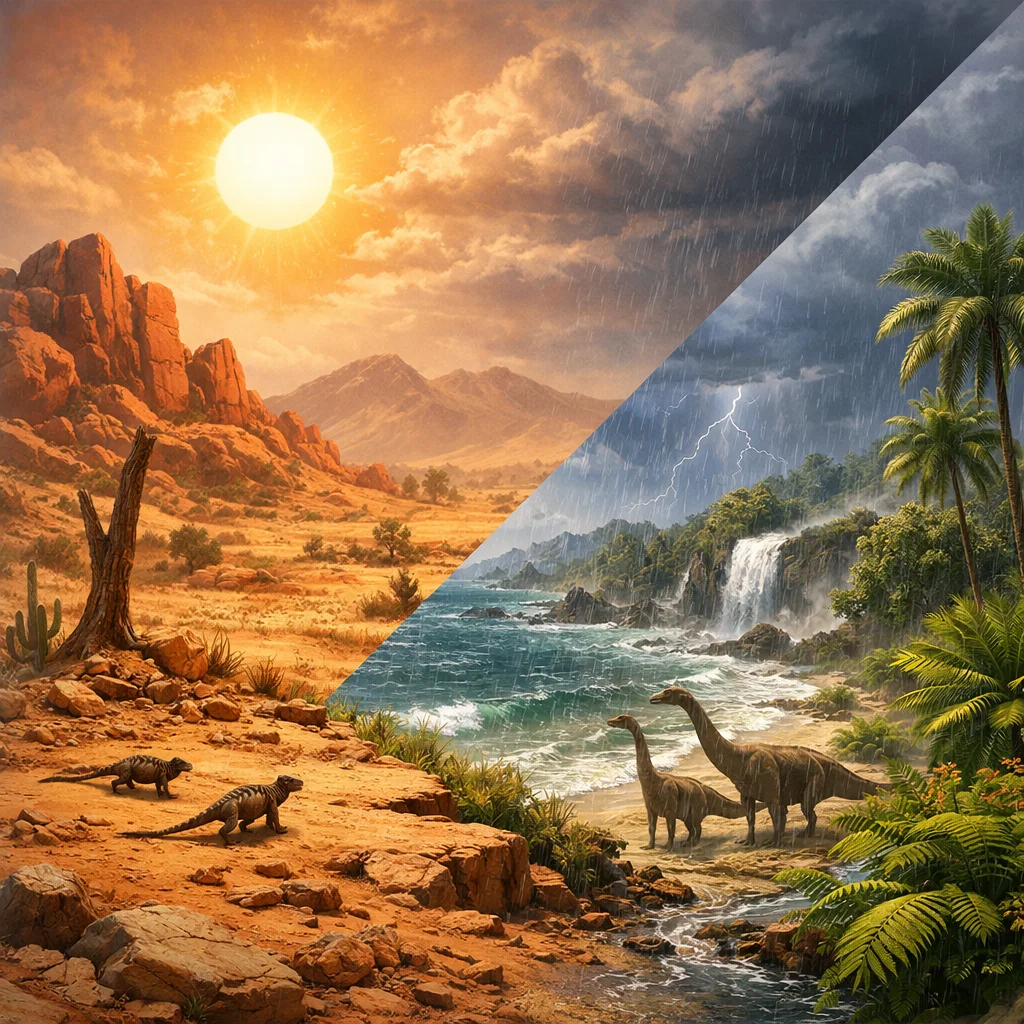
The Triassic climate was defined by Pangaea. Because all the land was bunched together in one enormous continent, the coastal moisture from oceans barely penetrated the interior. The vast centre of Pangaea was a scorching mega-desert — summer temperatures reaching 50°C in some areas. Life was concentrated near the coasts and river systems where water was available.
ट्राइऐसिक जलवायु पैंजिया द्वारा परिभाषित थी। क्योंकि सारी भूमि एक विशाल महाद्वीप में इकट्ठी थी, महासागरों से तटीय नमी आंतरिक भाग में शायद ही पहुँचती थी। पैंजिया का विशाल केंद्र एक जलता हुआ मेगा-रेगिस्तान था।
Yet even in these harsh conditions, life was recovering and innovating. The coast and river margins were ringed with ferns, conifers, and cycads. Monsoon rains came seasonally, flooding the red desert rock with life. And in these difficult conditions, the earliest dinosaurs found their competitive advantage — their upright posture and efficient breathing let them outperform competitors even in the heat.
फिर भी इन कठोर परिस्थितियों में, जीवन ठीक हो रहा था और नवाचार कर रहा था। तटीय और नदी किनारे फर्न, कोनिफर और साइकैड से भरे थे। मानसूनी बारिश मौसमी आई।
The hottest of the three Mesozoic eras. Global average ~25°C, but the interior of Pangaea saw temperatures reaching 50°C in summer. The poles were cool but not frozen — temperate conifer forests grew even there. Extreme temperature swings between day and night across the desert interior.
तीन मेसोज़ोइक युगों में सबसे गर्म। वैश्विक औसत ~25°C, लेकिन पैंजिया के आंतरिक भाग में गर्मियों में 50°C तक। ध्रुव ठंडे लेकिन जमे नहीं।
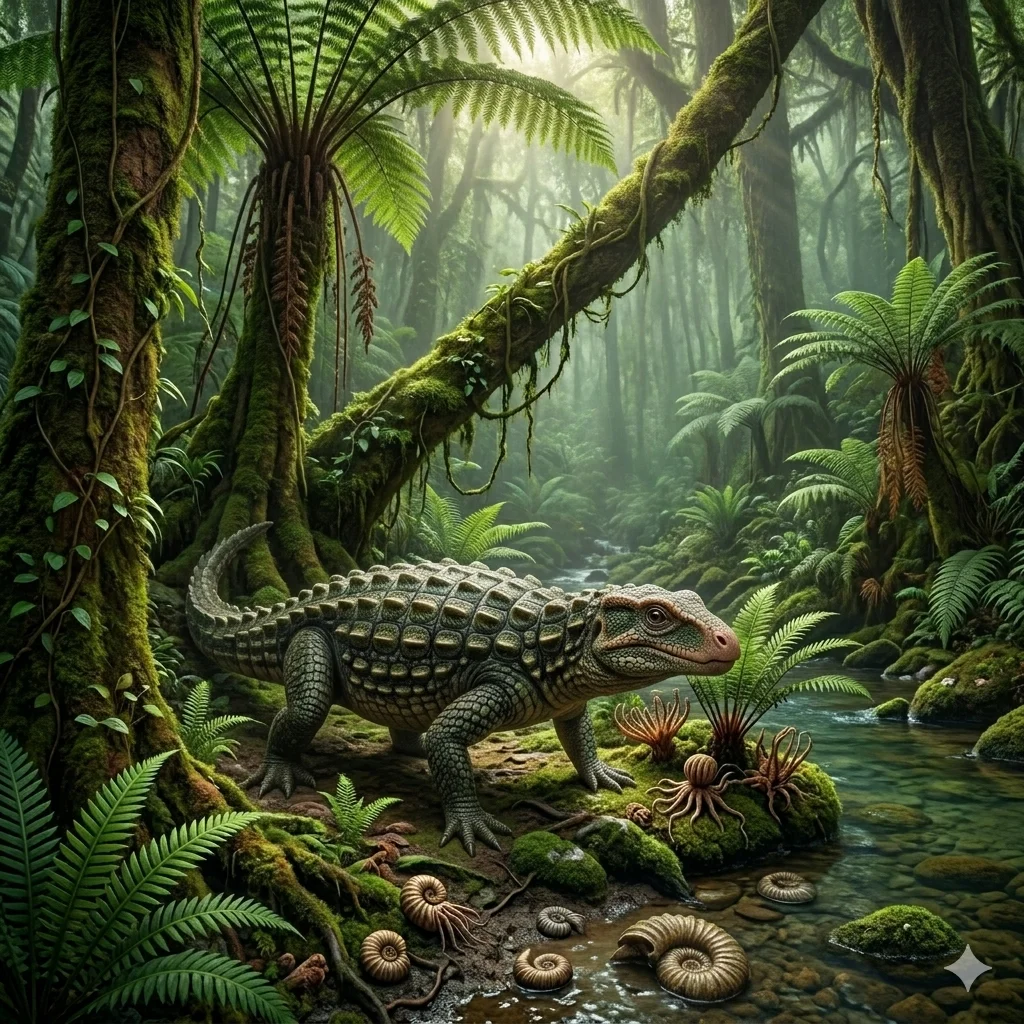
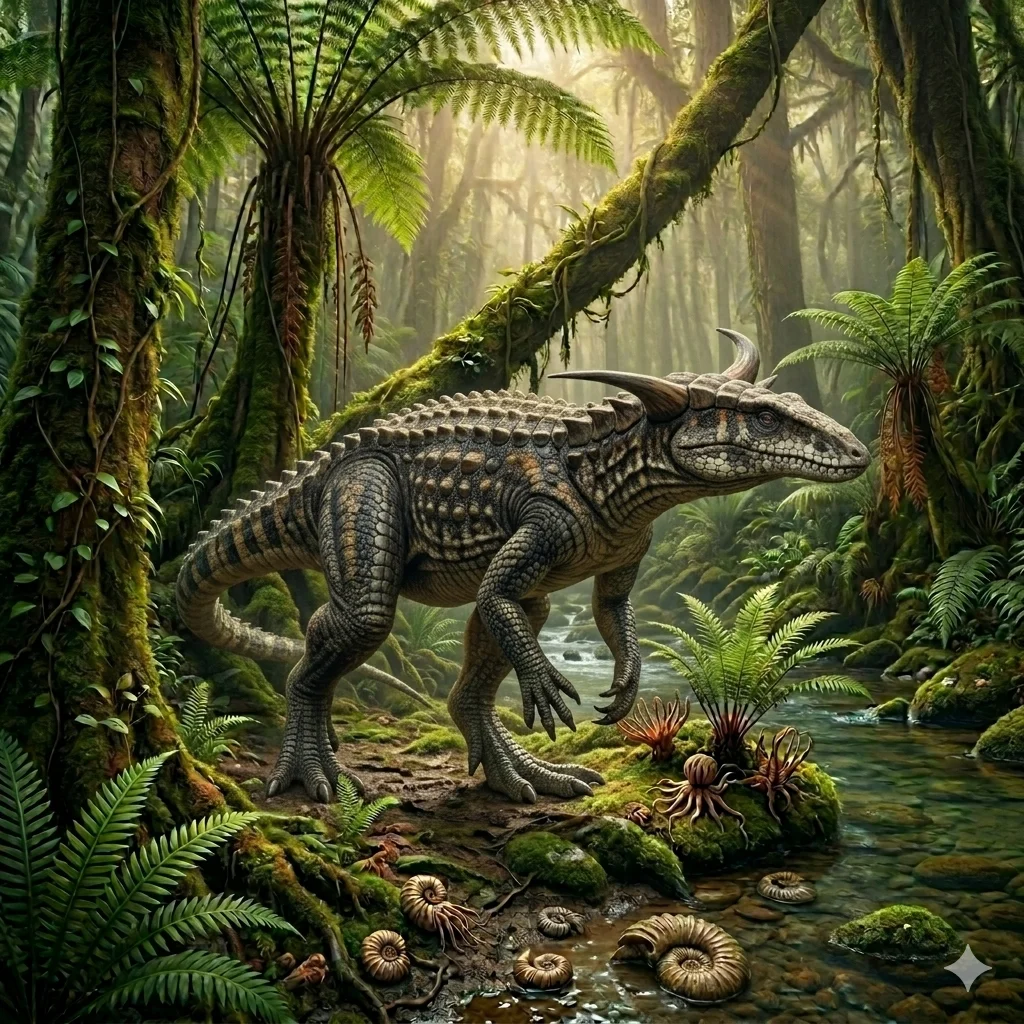
The dominant Triassic landscape was red desert rock — the iron oxide-rich sediments of Pangaea's interior. River valleys and coastal areas were lined with fern groundcover, conifer trees, cycads, and horsetails. The contrast between the red rock desert and the green river oases was stark and dramatic.
प्रमुख ट्राइऐसिक परिदृश्य लाल रेगिस्तान चट्टान था — पैंजिया के आंतरिक भाग के लौह-ऑक्साइड समृद्ध तलछट। नदी घाटियाँ और तटीय क्षेत्र फर्न, कोनिफर और साइकैड से भरे थे।
Seasonal mega-monsoons were a defining feature of the Triassic climate. The size of Pangaea created intense low-pressure systems that drew in ocean moisture in massive seasonal surges. Brief, intense rainy seasons flooded the dry interior, creating temporary lakes and rivers that supported brief explosions of life before drying again.
मौसमी मेगा-मानसून ट्राइऐसिक जलवायु की एक निर्धारित विशेषता थे। पैंजिया के आकार ने तीव्र निम्न-दबाव प्रणालियाँ बनाईं जो महासागरीय नमी को विशाल मौसमी उछाल में खींचती थीं।
Recovery from the Permian extinction was slow for plants too. Early Triassic plant communities were sparse and low-diversity. By the Middle-Late Triassic, conifers, cycads, and tree ferns had recovered and diversified. No grasses. No flowers. Seed ferns (pteridosperms) still survived from the Permian.
पर्मियन विनाश से पौधों के लिए भी ठीक होना धीमा था। शुरुआती ट्राइऐसिक पौधे समुदाय विरल और कम-विविध थे।
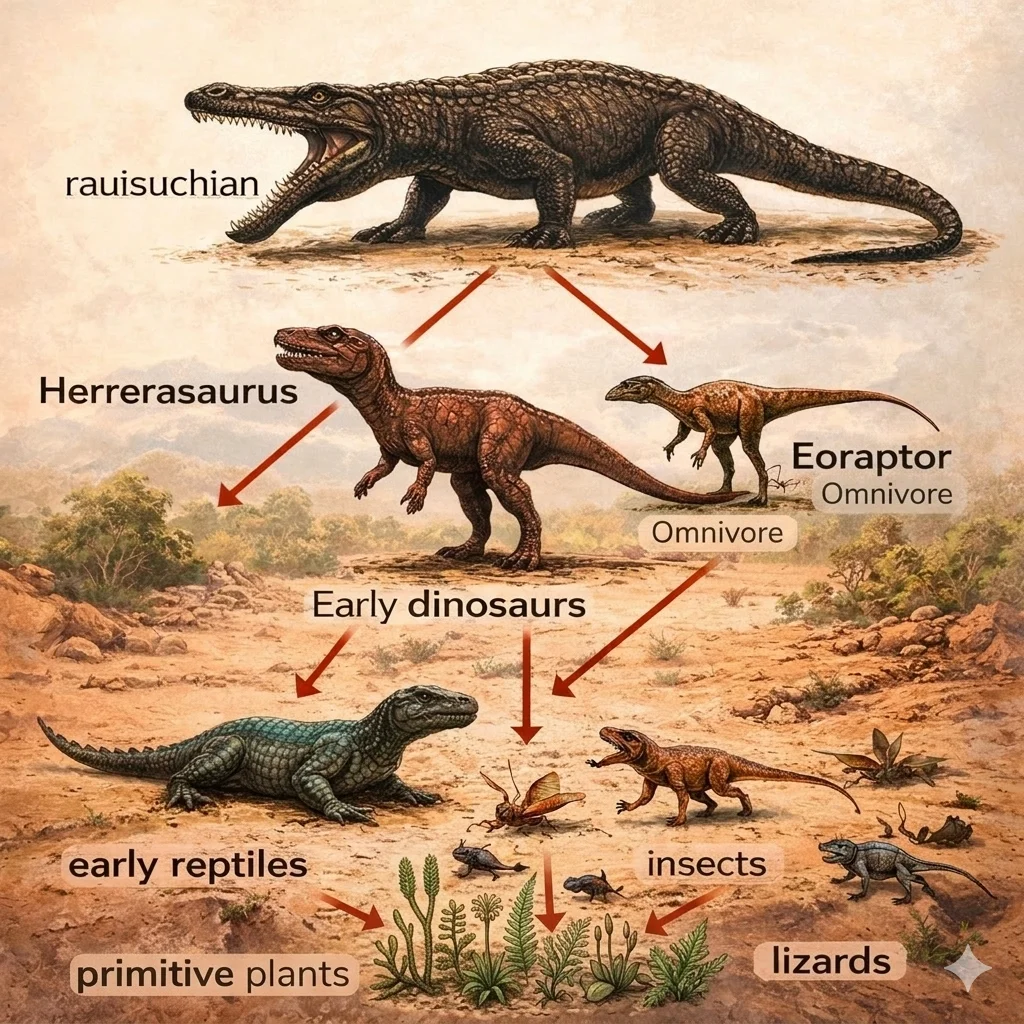
Dinosaurs shared the Triassic with fierce competition: aetosaurs (armoured, pig-like herbivores), phytosaurs (crocodile-like predators), and rauisuchians (the dominant large predators of the early Triassic, reaching 6m). These groups actually kept dinosaurs as a minor part of the fauna until the Triassic-Jurassic extinction cleared them away.
डायनासोरों ने ट्राइऐसिक को कड़ी प्रतिस्पर्धा के साथ साझा किया: एटोसॉर (कवचधारी, सूअर जैसे शाकाहारी), फाइटोसॉर (मगरमच्छ जैसे शिकारी), और रॉइसुकियन।
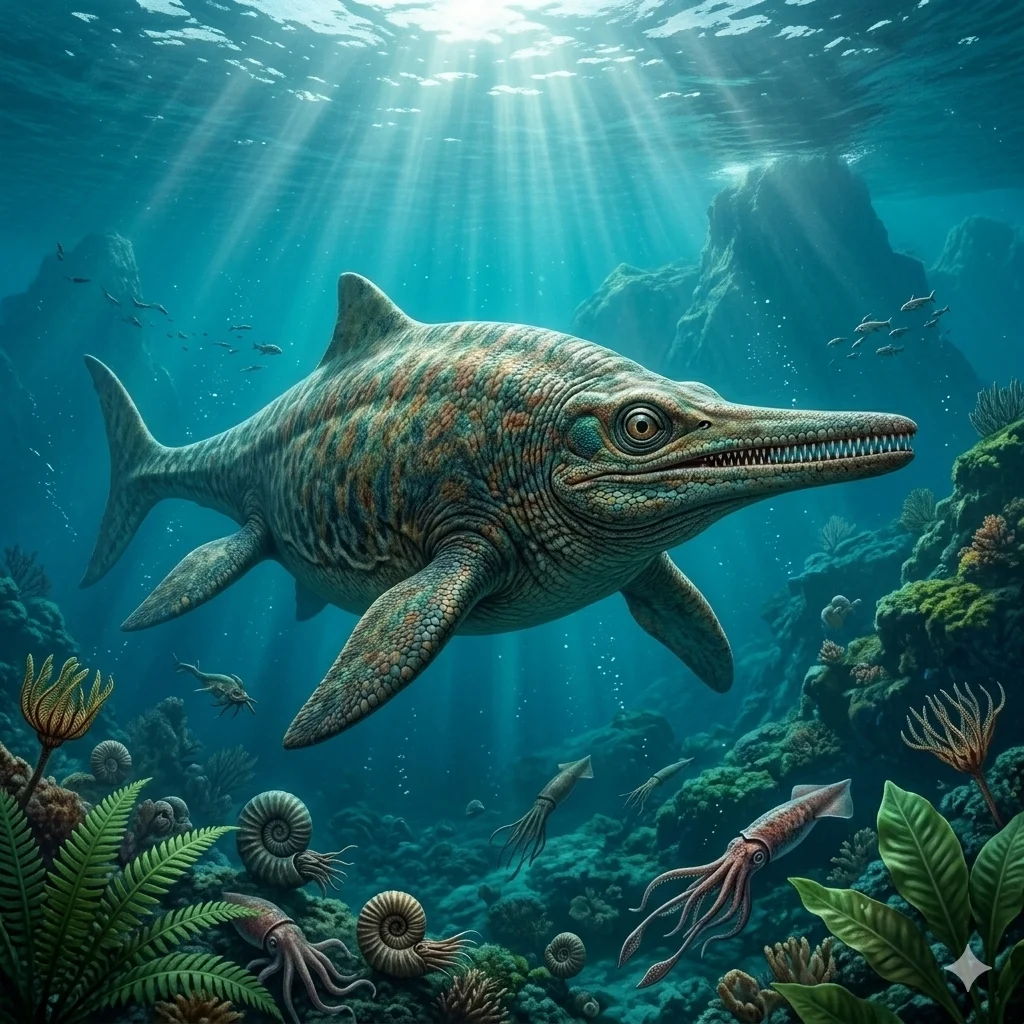
A massive tropical ocean — the Tethys Sea — occupied the space between the northern and southern halves of Pangaea. It was the world's largest tropical ocean, full of ammonites, ichthyosaurs, and early marine reptiles. Its warm currents influenced the global climate and drove the mega-monsoons inland.
एक विशाल उष्णकटिबंधीय महासागर — टेथिस समुद्र — पैंजिया के उत्तरी और दक्षिणी हिस्सों के बीच था। यह अम्मोनाइट, इक्थियोसॉर से भरा था।
The Triassic food web was simpler and less specialised than the later eras — but no less brutal. Dinosaurs were relative newcomers in an ecosystem dominated by other reptile groups. The earliest dinosaurs were mostly small carnivores and omnivores: Eoraptor ate insects and small lizards; Herrerasaurus hunted smaller dinosaurs and lizard-like animals.
ट्राइऐसिक खाद्य जाल बाद के युगों की तुलना में सरल और कम विशेष था — लेकिन कम क्रूर नहीं। डायनासोर अन्य सरीसृप समूहों द्वारा हावी पारितंत्र में अपेक्षाकृत नए आने वाले थे।
The dominant large predators of the early Triassic were the rauisuchians — massive, croc-like animals up to 6m long with erect posture (they independently evolved this before dinosaurs). They hunted the early dinosaurs as prey. It wasn't until the end-Triassic extinction that rauisuchians disappeared — and suddenly, the small dinosaurs found themselves the biggest predators in the room.
शुरुआती ट्राइऐसिक के प्रमुख बड़े शिकारी रॉइसुकियन थे — विशाल, मगरमच्छ जैसे जानवर 6m तक। वे शुरुआती डायनासोरों का शिकार करते थे। अंत-ट्राइऐसिक विनाश तक रॉइसुकियन गायब नहीं हुए।
The first dinosaur was an omnivore — eating insects, small lizards, and occasionally plant matter. Its small size (1m) and speed made it an effective opportunist in a dangerous world of larger predators.
पहला डायनासोर एक सर्वाहारी था — कीड़े, छोटी छिपकलियाँ खाता था। इसका छोटा आकार (1m) और गति इसे बड़े शिकारियों की खतरनाक दुनिया में एक प्रभावी अवसरवादी बनाती थी।
The largest Triassic dinosaur reached 9m. A prosauropod — the ancestor of the great Jurassic sauropods. Gastroliths (stomach stones) helped it grind plant material. It walked on all fours but could rear up to browse high vegetation.
सबसे बड़ा ट्राइऐसिक डायनासोर 9 मीटर तक पहुँचा। एक प्रोसॉरोपॉड — महान जुरासिक सॉरोपॉड का पूर्वज।
The earliest large predatory dinosaur (6m). Serrated teeth and powerful arms for gripping prey. Hunted smaller dinosaurs, rhynchosaurs, and dicynodonts. Fast, bipedal, and already more efficient than the non-dinosaur predators it competed with.
सबसे पहले बड़े शिकारी डायनासोर (6m)। दाँतेदार दाँत और शिकार पकड़ने के लिए शक्तिशाली भुजाएँ।
For most of the Triassic, the dominant large predators weren't dinosaurs at all — they were rauisuchians, croc-like reptiles up to 6–7m. They kept dinosaurs in check as minor, marginal animals until the end-Triassic extinction cleared them out.
अधिकांश ट्राइऐसिक के लिए, प्रमुख बड़े शिकारी बिल्कुल डायनासोर नहीं थे — वे रॉइसुकियन थे, 6–7m तक मगरमच्छ जैसे सरीसृप।
Triassic dinosaurs were modest in size compared to their Jurassic successors. Most ranged from 1–6m. Even the largest — Plateosaurus at 9m — was tiny compared to a Brachiosaurus. This smallness wasn't a weakness: it allowed fast growth rates, efficient energy use, and the ability to hide and survive in a world where larger, more powerful non-dinosaur reptiles dominated. Small meant adaptable. Adaptable meant survivable.
ट्राइऐसिक डायनासोर अपने जुरासिक उत्तराधिकारियों की तुलना में आकार में मामूली थे। अधिकांश 1–6 मीटर तक। यह छोटापन कमज़ोरी नहीं था: इसने तेज़ वृद्धि दर, कुशल ऊर्जा उपयोग और छिपने की क्षमता दी।


🔮 Future Scope — Dedicated pages for these Triassic creatures will be available in future updates. Their 10 Hall of Fame slots represent ecological significance, not just dinosaurs — some are marine reptiles, archosaurs, and other prehistoric contemporaries. 🔮 भविष्य की योजना — इन ट्राइऐसिक प्राणियों के लिए समर्पित पृष्ठ भविष्य में जोड़े जाएंगे। ये 10 हॉल ऑफ फ़ेम स्लॉट पारिस्थितिक महत्व दर्शाते हैं।