Parasaurolophus
All Toursसभी टूर
🌿 Herbivoreशाकाहारी Cretaceousक्रेटेशियस

Parasaurolophus

"The Trumpet Dinosaur"
"तुरही डायनासोर"
10mLengthलंबाई
2.5TWeightवजन
3mHeightऊँचाई
25–35Lifespanजीवनकाल
1000+Teethदाँत
73MYears Agoवर्ष पूर्व

The musician of the Cretaceous. Parasaurolophus possessed a hollow crest that functioned as a natural musical instrument — producing a deep, resonant, trombone-like call that echoed for miles through ancient forests, allowing herds to communicate across vast distances. क्रेटेशियस का संगीतकार। पैरासॉरोलोफस की खोखली कलगी एक प्राकृतिक वाद्य यंत्र के रूप में काम करती थी — एक गहरी, प्रतिध्वनित ट्रॉम्बोन जैसी पुकार उत्पन्न करती थी।
🏞

How it livedयह कैसे जीता था

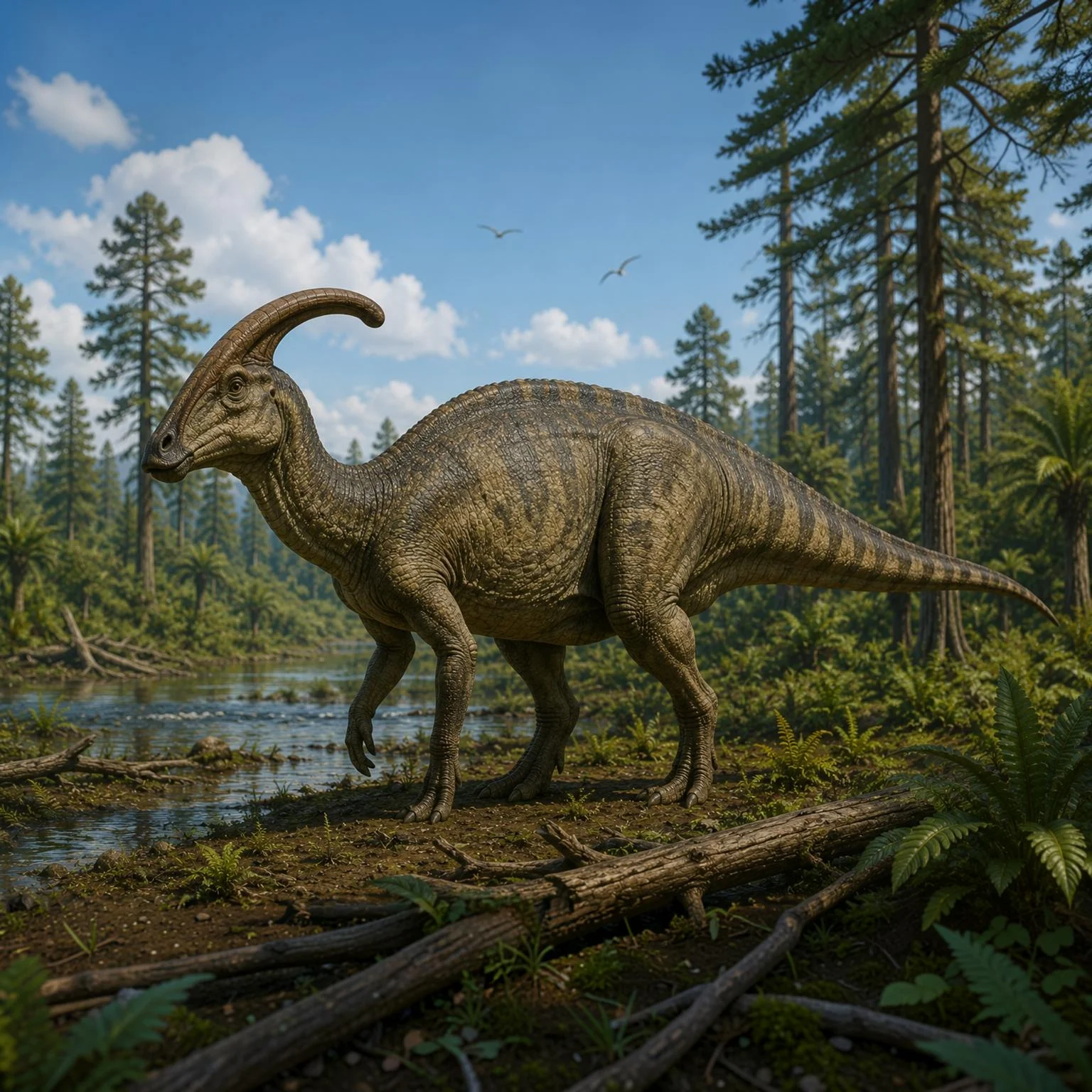
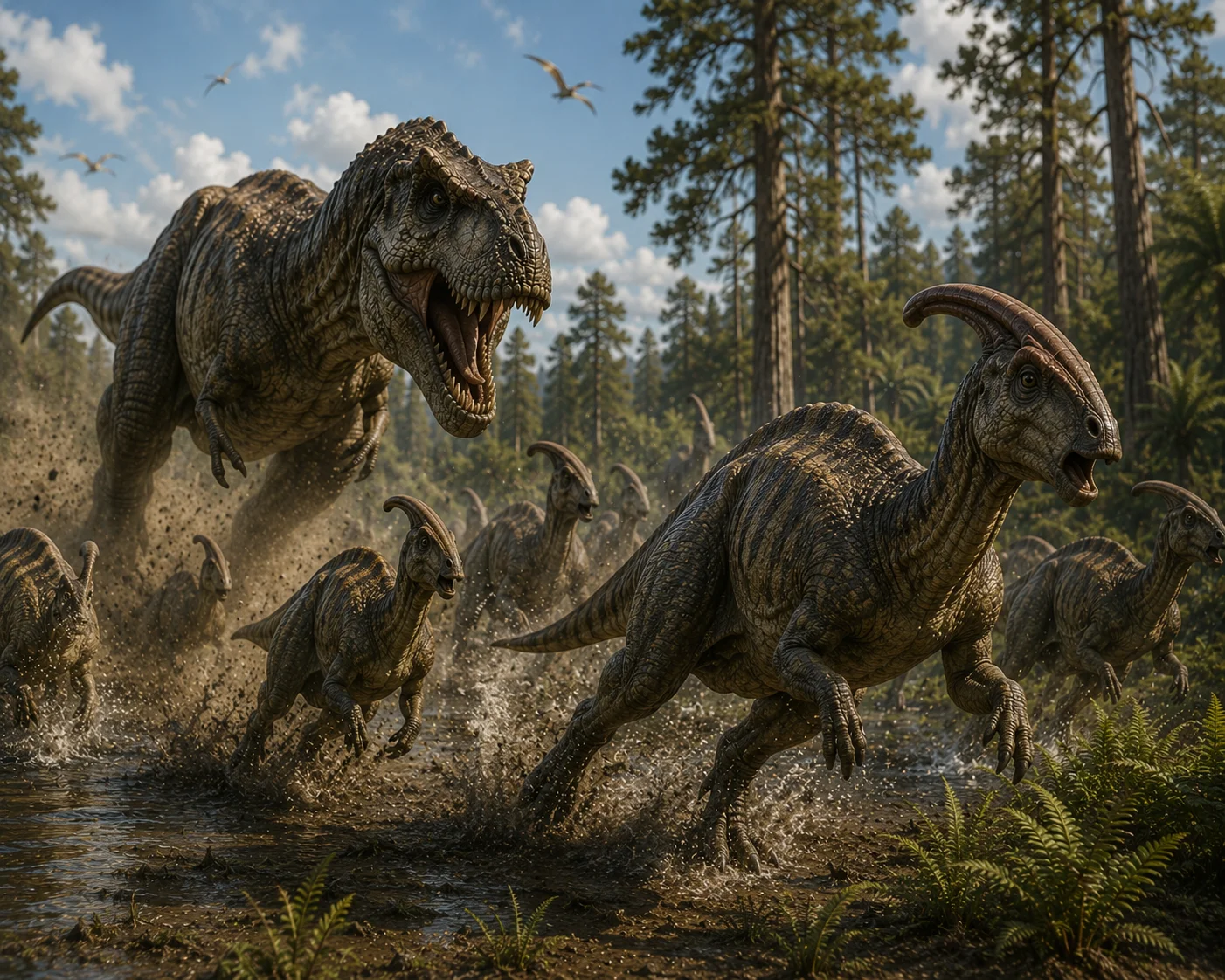
Parasaurolophus lived in vast herds across the forested coastal plains of what is now North America, approximately 73–76 million years ago. Its most extraordinary feature — the 1.8-metre hollow crest — was a resonating chamber that amplified vocalizations into haunting, musical calls audible for kilometres. Different crest shapes between males, females, and juveniles produced distinct calls, allowing individuals to identify herd members, call to young, and alert the herd to approaching predators. In the face of danger, the stampeding herd itself was the primary defence — hundreds of 2.5-tonne animals moving together could trample any pursuing predator.

पैरासॉरोलोफस आज के उत्तरी अमेरिका के जंगली तटीय मैदानों में विशाल झुंडों में रहता था। इसकी 1.8 मीटर खोखली कलगी किलोमीटर तक सुनाई देने वाली मनमोहक, संगीतमय पुकारें उत्पन्न करती थी।

What it ateयह क्या खाता था

Parasaurolophus was a highly efficient herbivore equipped with the most sophisticated dental system of any dinosaur — up to 1,000 tiny teeth arranged in a self-replacing dental battery that worked like a continuously renewing millstone. As each tooth wore down, a new tooth moved up to replace it from below — meaning Parasaurolophus always had sharp, fresh grinding teeth throughout its life. This allowed it to process pine needles, tough conifer bark, seeds, magnolia leaves, and other plant material that most herbivores couldn't efficiently digest.

पैरासॉरोलोफस एक अत्यधिक कुशल शाकाहारी था जो किसी भी डायनासोर की सबसे परिष्कृत दंत प्रणाली से लैस था — 1,000 तक छोटे दाँत स्व-बदलने वाली दंत बैटरी में व्यवस्थित।

🍖

How long it livedयह कितने समय तक जीया

As a large herbivore with no physical armour or weapons, Parasaurolophus relied entirely on vigilance, speed, and herd living for survival. In dense forest environments with T-Rex and other large predators, most individuals in the wild likely lived 15–25 years before predation, disease, or injury ended their lives. Those lucky enough to survive in large, well-organised herds could potentially reach 25–35 years.

शारीरिक कवच या हथियारों के बिना, पैरासॉरोलोफस जीवित रहने के लिए पूरी तरह सतर्कता, गति और झुंड में रहने पर निर्भर था।

Its greatest enemyइसका सबसे बड़ा दुश्मन

What Parasaurolophus actually looked likeParasaurolophus वास्तव में कैसा दिखता था

Parasaurolophus had a distinctive duck-billed snout and a dramatic backward-sweeping hollow crest up to 1.8 metres long. The crest contained an elaborate system of air tubes — air from the nostrils passed through these tubes, resonating and amplifying before exiting through the mouth, creating the trombone-like call. Males had the longest crests. The body was covered in bumpy, pebbly scales with larger, scute-like scales running down the back. Colouration is unknown but likely patterned for forest camouflage.

पैरासॉरोलोफस का एक विशिष्ट बत्तख जैसा थूथन और 1.8 मीटर तक लंबी नाटकीय पीछे की ओर झुकी खोखली कलगी थी। कलगी में हवा की नलियों की एक विस्तृत प्रणाली थी।

🔨
3D Model — Under Development 3D मॉडल — विकासाधीन

A fully interactive 3D reconstruction of Parasaurolophus is being developed. This scientifically accurate model will feature its distinctive long crest, bipedal/quadrupedal stance, and realistic animation. Check back soon! पैरासॉरोलोफस का एक पूरी तरह से इंटरैक्टिव 3D पुनर्निर्माण विकसित किया जा रहा है। यह वैज्ञानिक रूप से सटीक मॉडल जल्द ही उपलब्ध होगा!

Where Parasaurolophus has been foundParasaurolophus कहाँ पाया गया है

01
Kirtland Formation, New Mexico
USA

The first and most important Parasaurolophus discovery site. The type specimen was found here in 1921. The formation has yielded multiple specimens of different ages, providing a growth series showing how the crest developed from juveniles to adults.

न्यू मैक्सिको — पहला और सबसे महत्वपूर्ण पैरासॉरोलोफस खोज स्थल।

02
Dinosaur Provincial Park, Alberta
Canada

Multiple Parasaurolophus specimens have been found in this UNESCO World Heritage Site, which has yielded more dinosaur species per square kilometre than anywhere else on Earth.

अल्बर्टा — इस यूनेस्को विश्व धरोहर स्थल में कई पैरासॉरोलोफस नमूने पाए गए हैं।

03
Fruitland Formation, New Mexico
USA

Additional specimens found here have helped refine our understanding of Parasaurolophus crest development and species variation across different populations.

न्यू मैक्सिको में अतिरिक्त नमूने पाए गए।

What did Parasaurolophus sound like?Parasaurolophus कैसा सुनाई देता था?

Unlike most dinosaurs, we have strong scientific evidence for how Parasaurolophus sounded. Computer modelling of its hollow crest — using CT scan data from real fossils — has produced a reconstructed call: a deep, resonant, trombone-like tone ranging from 48–240 Hz. It was not a roar but a musical, haunting sound — and it could be heard for kilometres through dense forest. Different individuals produced different pitches based on crest size and shape.

अधिकांश डायनासोरों के विपरीत, हमारे पास पैरासॉरोलोफस की ध्वनि के लिए मज़बूत वैज्ञानिक प्रमाण हैं। इसकी खोखली कलगी के कम्प्यूटर मॉडलिंग ने 48–240 Hz तक की एक गहरी, ट्रॉम्बोन जैसी ध्वनि का पुनर्निर्माण किया।

🔬
ROARS / VOCALISATIONS — COMING SOON
ध्वनियाँ / स्वर — प्लेसहोल्डर

Coming Soon — Roar sounds will be added when audio files are sourced. The sounds of this dinosaur are still a matter of active scientific research — no direct recordings exist.

आने वाले समय में ध्वनि फ़ाइलें जोड़ी जाएंगी। इस डायनासोर की ध्वनियाँ अभी भी सक्रिय वैज्ञानिक शोध का विषय हैं।

🔮 Future Scope — Roar audio files will be added here once they are sourced and ready. The exact vocalisations of dinosaurs remain an active area of scientific research. 🔮 भविष्य की योजना — दहाड़ ऑडियो फ़ाइलें यहाँ जोड़ी जाएंगी जब वे तैयार होंगी। डायनासोरों की सटीक ध्वनियाँ वैज्ञानिक शोध का एक सक्रिय क्षेत्र बनी हुई हैं।

Your Survival Odds Against ParasaurolophusParasaurolophus के खिलाफ आपकी जीवित रहने की संभावना

0% Death Rate मृत्यु दर
🐾
Herd Safety
झुंड की सुरक्षा

Parasaurolophus lived in enormous herds. Encountering one means encountering hundreds. A stampede of 2.5-tonne hadrosaurs is one of the most dangerous situations in the prehistoric world — for predators and accidental bystanders alike.

पैरासॉरोलोफस विशाल झुंडों में रहता था। 2.5 टन हैड्रोसॉर की भगदड़ प्रागैतिहासिक दुनिया में सबसे खतरनाक स्थितियों में से एक है।

Speed Warning
गति चेतावनी

Parasaurolophus could run at up to 25 km/h on all fours. Its crest call could alert the herd to your presence before you even knew it was aware of you. The 45% survival rate assumes you keep distance and don't trigger a herd response.

पैरासॉरोलोफस चारों पैरों पर 25 किमी/घंटा तक दौड़ सकता था।

Extinctionविनाश

Parasaurolophus disappeared in the Chicxulub mass extinction 66 million years ago. As a large herbivore entirely dependent on living plant matter, the collapse of photosynthesis caused by the asteroid's dust cloud devastated its food supply within weeks of the impact — even before global temperatures dropped to lethal levels. The haunting trombone calls that once echoed through Cretaceous forests fell silent forever. पैरासॉरोलोफस 6.6 करोड़ वर्ष पूर्व विलुप्त हो गया। क्षुद्रग्रह की धूल के बादल से हुए प्रकाश संश्लेषण के पतन ने हफ्तों में इसकी खाद्य आपूर्ति को बर्बाद कर दिया।

Cretaceous Eraक्रेटेशियस युग More Dinosaursऔर डायनासोर